Automotive Traceability: Why OEMs Are Turning to Smart Labels
Why automotive OEMs use smart labels for traceability: copy-proof codes, tamper-evident seals and blockchain records that follow each part to the vehicle.
By Abhijeet Kumar, ARVOPublished Updated 5 min read
In short
OEMs are turning to smart labels because a modern vehicle has roughly 30,000 components from thousands of suppliers, and paper or siloed systems cannot trace them. Smart labels combine copy-proof codes, tamper-evident seals and blockchain records, so each component can be followed from raw material to final assembly and the affected parts are pinpointed in a recall.
- A modern vehicle contains roughly 30,000 components sourced from thousands of suppliers.
- Without end-to-end visibility, tracing a defective component's origin can take weeks.
- Smart labels add copy-proof codes, tamper-evident seals and blockchain records to standard identification.
- Track and trace follows each component from raw material to final assembly, so a recall can target the affected parts.
- The most effective systems combine physical and digital security layers.
The Growing Challenge in Automotive Supply Chains
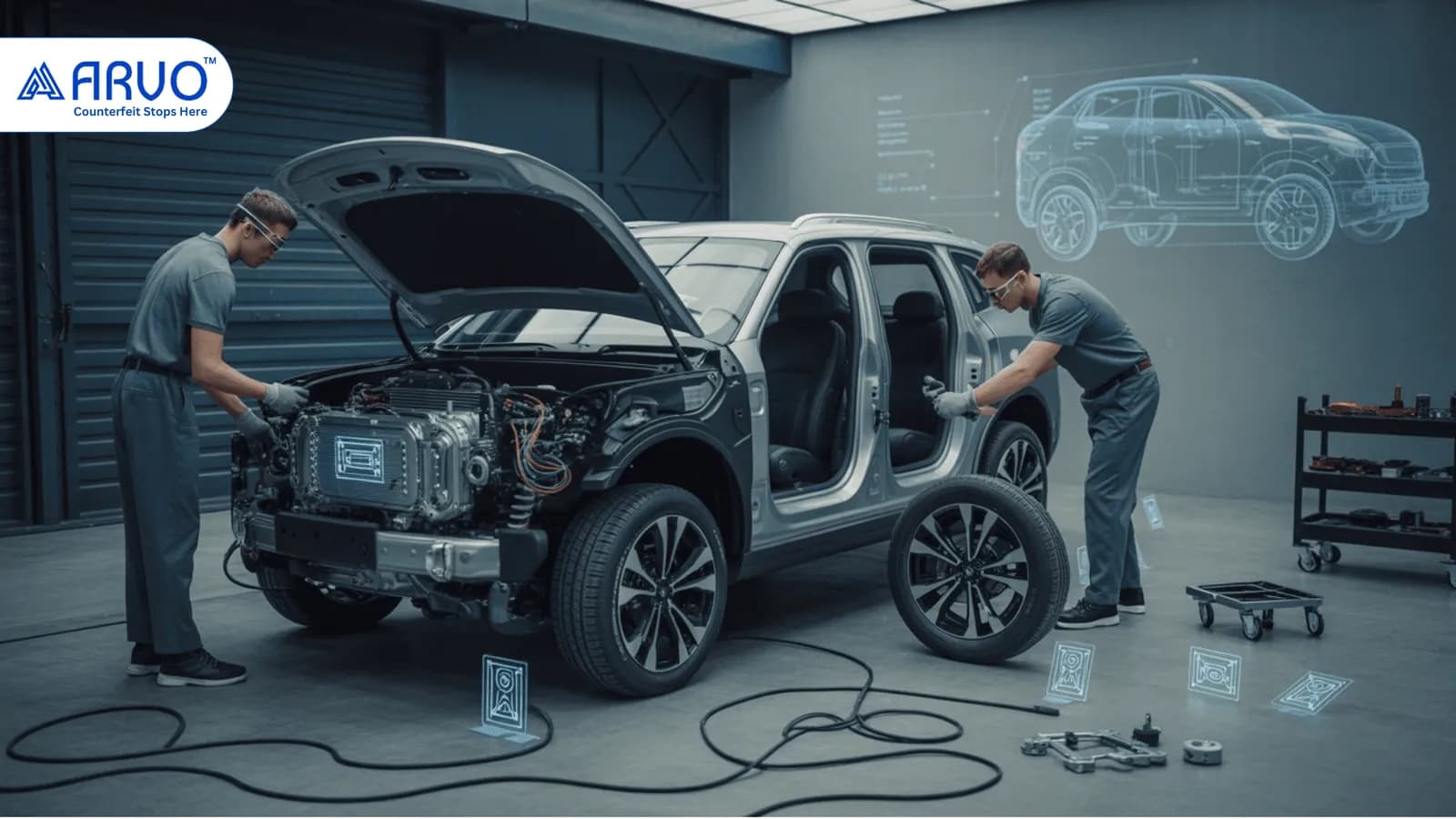
Automotive Traceability has become a strategic necessity as today’s OEMs contend with unprecedented complexity across global supply networks. A modern vehicle contains roughly 30,000 components, sourced from thousands of suppliers spread across multiple continents. Managing this scale with traditional, paper-based, or siloed systems is no longer sustainable.
The lack of end-to-end visibility creates blind spots in quality, compliance, and risk management. A single defective component can trigger massive recalls, regulatory penalties, and reputational damage, yet tracing its origin may take weeks. As vehicles become more software-driven, electrified, and regulated, the industry requires real-time, item-level traceability that spans tiers of suppliers. Automotive traceability is no longer about operational efficiency alone; it is about resilience, safety, and the ability to compete in an increasingly regulated and transparent market.
This complexity brings a host of vulnerabilities:
- Counterfeit parts are infiltrating supply chains, costing the industry over $45 billion annually
- Limited traceability during quality issues or recalls
- Regulatory compliance hurdles across regions
- Inefficiencies in inventory management are leading to production delays
- Elevated safety and liability risks
Without strong supply chain transparency, manufacturers face growing difficulty in maintaining quality control, protecting their brand, and meeting consumer and regulatory expectations.
Smart Labels: Transforming Automotive Manufacturing
Smart labeling technologies are emerging as a powerful solution for modern automotive supply chains. Unlike traditional barcodes, smart labels offer dynamic, multi-layered security and tracking capabilities that enable real-time monitoring and authentication across the supply chain.
Advanced smart labeling systems include:
- Copy-proof codes that are nearly impossible to replicate
- Invisible watermarking for discreet verification
- Tamper-evident seals to flag unauthorized access
- Blockchain integration for immutable, end-to-end traceability
By implementing smart labels, OEMs can gain operational efficiencies, reduce losses from counterfeits, and improve overall supply chain agility, all with seamless integration into existing ERP and manufacturing systems.
Track and Trace: From Raw Materials to Finished Vehicles
Modern track and trace solutions allow OEMs to follow each component throughout its lifecycle, from raw material to final assembly. This continuous chain of custody delivers unmatched transparency, allowing manufacturers to pinpoint exactly which parts are affected during a defect or recall.
Successful implementation often includes:
- Standardizing data formats across suppliers
- Balancing data security and accessibility
- Managing high volumes of traceability data
- Integrating with legacy manufacturing platforms
The results? Streamlined compliance, lower recall costs (up to 40% reduction for early adopters), and better insight into every component’s origin and movement.
Anti-Counterfeiting and Authentication
The rise in counterfeit automotive components is not just a financial issue; it’s a critical safety concern. As a result, investment in anti-counterfeiting and authentication technology has surged by over 35% in the past five years.
The most effective systems combine physical and digital security layers, making it extremely difficult for counterfeiters to replicate or infiltrate supply chains. Blockchain-based systems, in particular, are proving to be a game-changer by ensuring that each component has a secure, tamper-proof record of its journey.
For OEMs, every dollar invested in authentication solutions yields an estimated $7 in counterfeit-related savings, according to industry research.
How ARVO Helps Achieve Supply Chain Transparency?
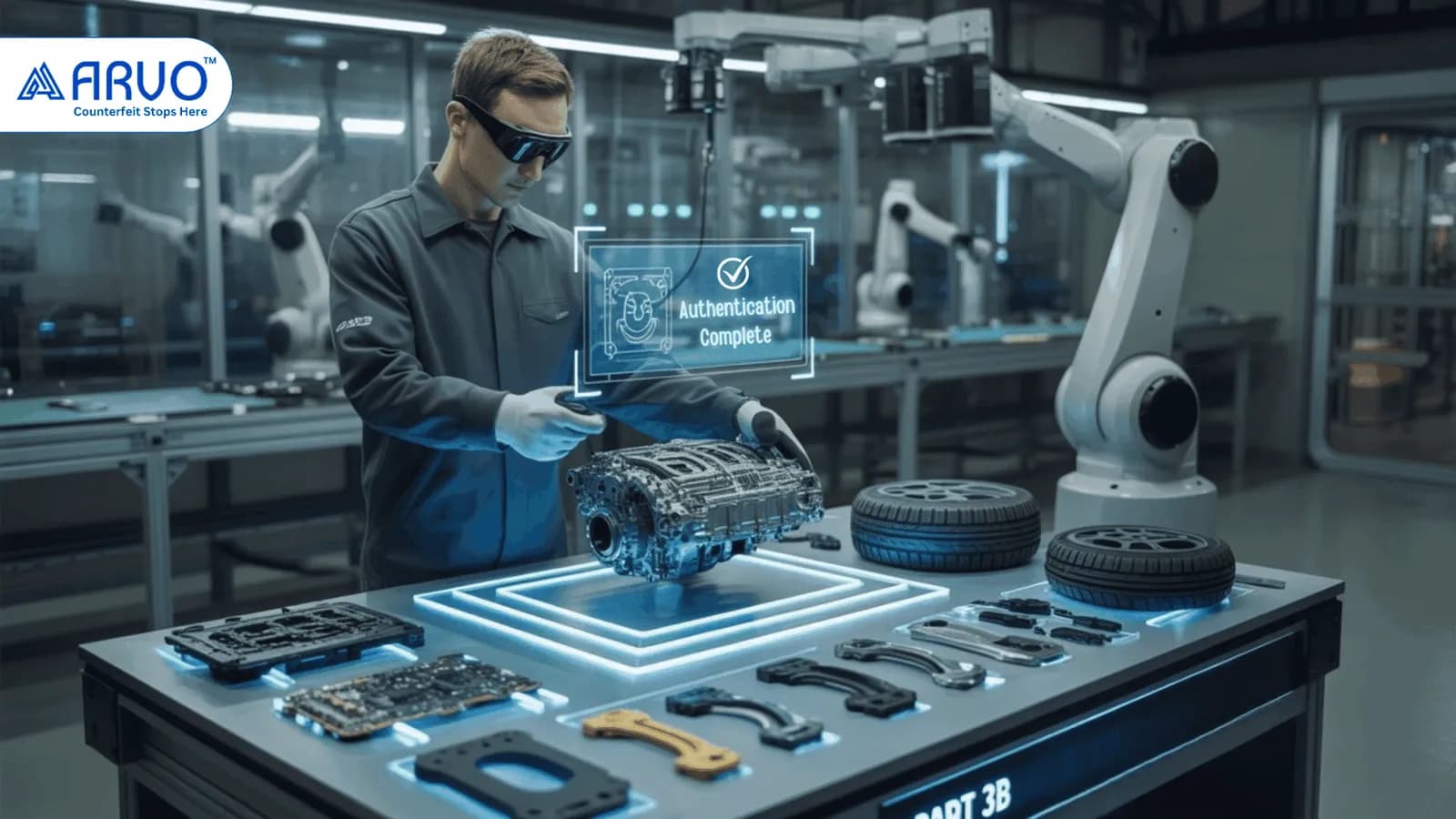
At ARVO, we specialize in integrated anti-counterfeiting solutions that help automotive OEMs protect their supply chains, brands, and customers. Our smart label technology goes beyond tracking, delivering powerful tools for authentication and traceability.
We offer:
- Copy-proof NOVA codes for secure, tamper-resistant product verification
- Vision AI, trained to detect even a minor variation in a copied code, and Spectre tamper-proof labels, which show any attempt at unauthorized access
- Digital Product Passports, powered by blockchain, assign each component a unique, tamper-proof identity
- End-to-end traceability from raw material sourcing to final assembly and distribution
- Seamless system integration, tailored to meet the specific challenges of the automotive industry
What sets ARVO apart is our flexible technology architecture. Our system easily integrates with existing ERP and MES platforms, minimizing disruption and accelerating ROI. Whether you’re launching a pilot program or scaling across multiple production lines, ARVO provides tailored implementation strategies built around your specific challenges.
Our expert team collaborates closely with your operations, IT, and supply chain stakeholders to ensure a smooth rollout and long-term success.
Ready to Build a Transparent, Resilient Supply Chain?
Don’t let blind spots in your supply chain jeopardize your production quality or brand trust. Partner with ARVO and take control of your supply network with intelligent labeling solutions purpose-built for the automotive industry.
Contact us today to schedule a personalized consultation and discover how ARVO can help you enhance transparency, fight counterfeiting, and future-proof your manufacturing operations.
Questions answered in this article
- What are smart labels, and how do they help automotive OEMs?
- Smart labels are identification tags with security features such as copy-proof codes and tamper-evident seals. They give OEMs real-time tracking, component authentication and visibility across the supply chain, which helps reduce counterfeits and streamline recalls.
- How does ARVO help keep counterfeit parts out of the supply chain?
- ARVO gives each component a copy-proof code and a blockchain-backed digital product passport, so every part is uniquely identified and traceable at every stage, from raw material sourcing to final assembly and distribution.
- What is a digital product passport for automotive parts?
- It is a blockchain-powered digital identity for each component that stores its origin, movement and ownership. It gives tamper-proof traceability and helps OEMs meet regulatory and sustainability requirements.
- What does track and trace mean in automotive manufacturing?
- It means following each component through its lifecycle, from raw material to final assembly, as a continuous chain of custody. During a defect or recall, manufacturers can pinpoint exactly which parts are affected.
Sources
- How many parts are in a car?, Collectors Auto Supply