EV & Batteries
Battery passports are the first to become mandatory.
A Digital Product Passport is a product's verified record: what it's made of, where it came from, how to use and repair it, and what happens at end of life. All of it is one scan away.
Scanning the code on the pack
18 Feb 2027
The first mandatory passport: EV, light-transport and industrial batteries over 2 kWh placed on the EU market need a battery passport.
Source: Regulation (EU) 2023/1542, EU Battery Regulation, Article 77, 2023
20 Jul 2026
The EU's Digital Product Passport Registry went live. Operators register each passport's unique identifier there.
Source: European Commission, Digital Product Passport Registry now live, 2026
2026–2029
The Commission's indicative order for the first product rules: steel in 2026, textiles, tyres and aluminium in 2027, furniture in 2028, mattresses and ICT in 2029.
Source: European Commission, Digital Product Passport page and ESPR working plan 2025-2030, 2025
Under the ESPR, once a product group has its rules, those products can only be placed on the EU market if their passport is available. For Indian exporters, this isn't a future problem. EU importers will need passport-ready data from their suppliers, and manufacturers who can provide it will be the easier ones to buy from.
Requirements are set product group by product group through delegated acts, so the detail differs by product. Last reviewed: 5 November 2026.
Bring together product, material, origin and certification data, with production data captured on the line.
Every unit gets a Nova code as its secure data carrier. Each code is unique to its unit, so it can serve as the unique product identifier that links the physical product to its passport.
AIC hosts the passport as a branded page, with the right information shown to the right audience.
Repairs, ownership changes, recycling and second-life events are added over the product's lifetime.
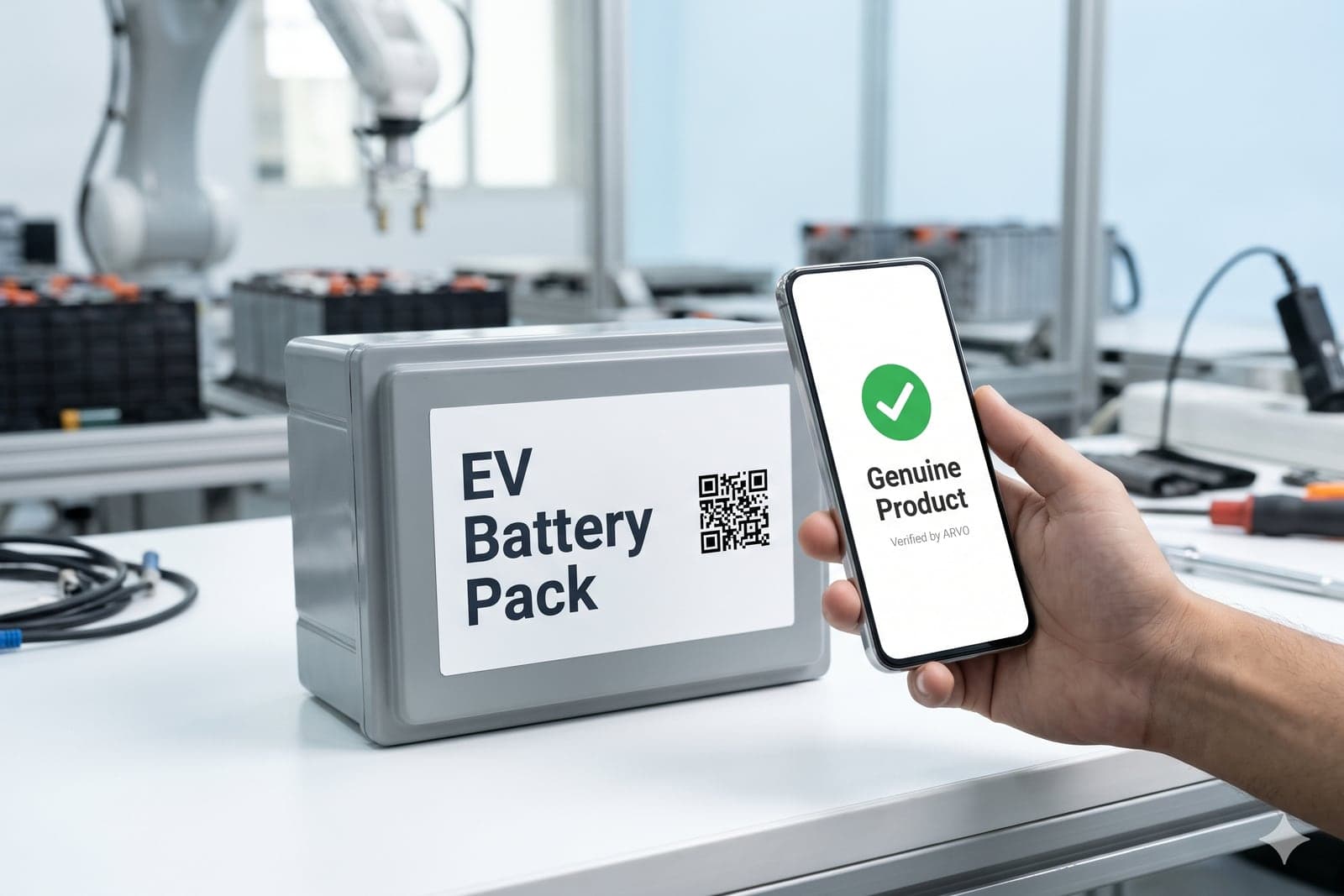
Scan the code on an example EV battery pack, then choose who is looking. The same passport shows each person only the data they are entitled to.
Scan the code
Point a phone at the code on the pack, as anyone with a phone camera could.
Example EV battery pack
The code is printed on the pack at the plant.
Ready to scan.
How the code links to the passport
ESPR, Article 2: the unique product identifier is a unique string of characters that also enables a web link to the passport.
Who is looking?
Unlocks once you have scanned the code.
Fields visible to this viewer
Locked
Scan the code to see what each person can read.
Passport locked
Scan the code on the pack to open it.
Who counts as having a legitimate interest is still being defined by the European Commission.
Tick what you already have. We'll show what is still open.
Based on the ESPR (Regulation (EU) 2024/1781) and the EU Battery Regulation. Each product group's delegated act sets its own detail, so confirm yours against it.
Tick the points you already have in place.
Battery passports are the first to become mandatory.
Parts and components that enter EU supply chains.

Ingredient and origin data for products sold abroad.
Origin and composition for products shipped to the EU.

Composition and origin records for export shipments.
India's draft BPAN and the EU battery passport compared: scope, identifier, data, access, timelines and what an exporter selling into both should prepare.
ReadIndia's battery passport is the draft Battery Pack Aadhaar System. Its three data layers, how it follows a pack through life and how it compares with the EU's.
ReadHow to trace an EV battery pack in India from raw material to recycling: the six stages where data must be captured, and what the draft BPAN guidelines ask for.
ReadA digital record linked to a physical product by a scannable code, holding verified information about its materials, origin, use and end of life.
Tell us what you make and where you sell it. We'll outline the passport it would need.