Grey Market Diversion in Automotive: How Non-Cloneable QR Codes Protect Margins
Grey market diversion moves genuine OEM auto parts into unauthorised markets and erodes margins. Why it hurts more than fakes and how unit-level codes help.
By Abhijeet Kumar, ARVOPublished Updated 5 min read
In short
Grey market diversion is when genuine OEM parts are sold outside their intended channel or region. Unlike counterfeits, the parts are real, so diversion undercuts official prices, weakens dealer trust and can bring in parts that do not meet local standards. Batch-level barcodes cannot stop it; a non-cloneable code on every unit shows where each part surfaces.
- Diverted parts are genuine OEM parts sold in markets or channels they were never meant for, which makes diversion harder to see than counterfeiting.
- Diversion erodes dealer channels, destabilises official pricing and creates warranty and compliance problems when parts meet the wrong region's standards.
- Batch-level serialisation and basic barcodes are easy to copy and give no unit-level view, which lets diverted stock move freely.
- A non-cloneable code unique to each unit, with every scan reported to the OEM, reveals where a part surfaced and the source of the leak.

Poll insight: Studies suggest that 20 to 30 percent of aftermarket margins disappear through grey market diversion. Do you track it, or do you absorb it as part of the business?
The Margin Leak Nobody Tracks
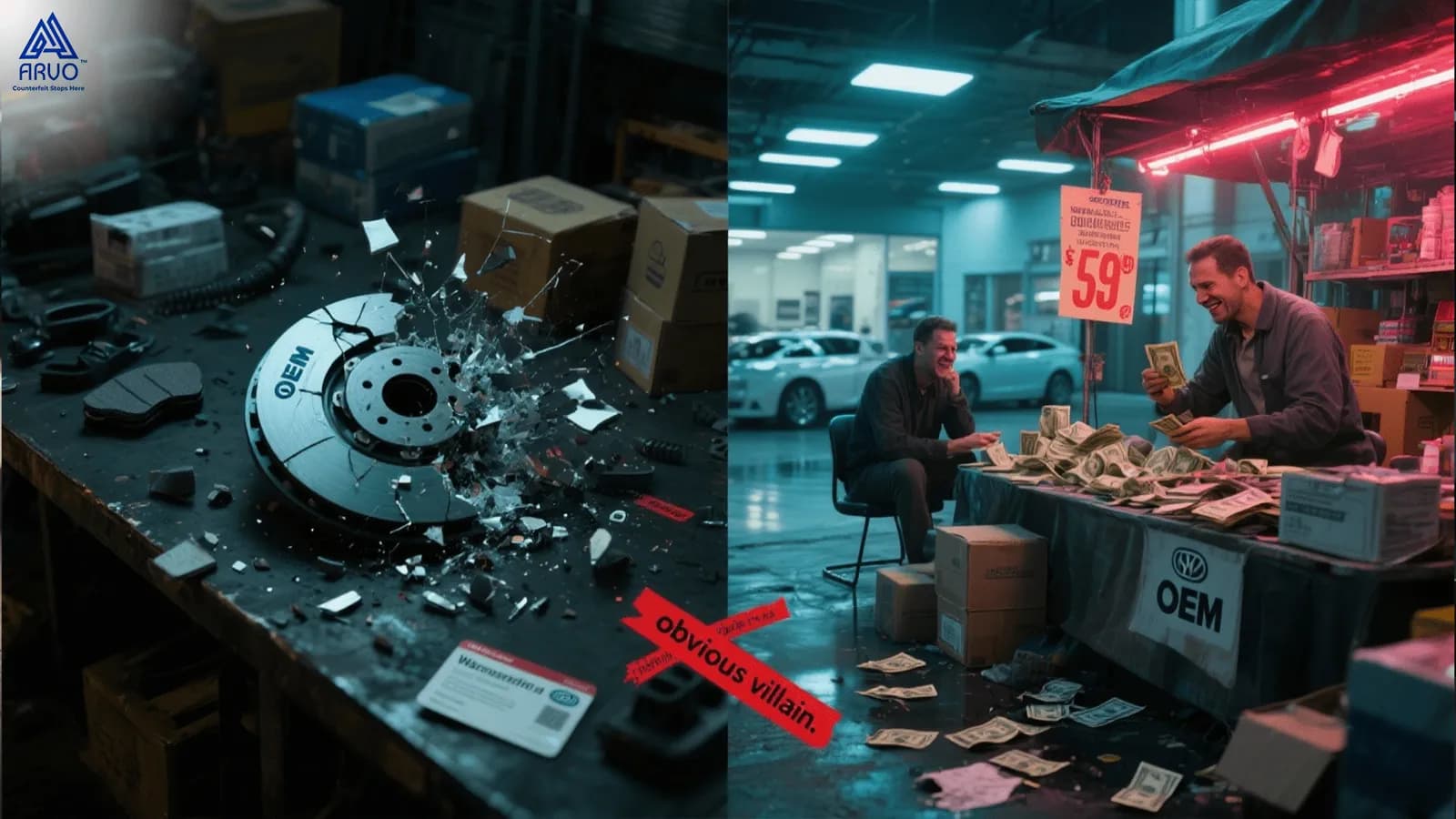
Counterfeits have always taken the spotlight. They are visible, they are easy to condemn, and they make headlines when enforcement succeeds. The quieter threat is diversion. These are genuine OEM parts that find their way into markets or channels where they were never intended to be sold.
The fallout is serious. Pricing structures collapse, dealers lose faith, and the brand’s reputation starts to slip. When as much as a third of margins are lost this way, it is not just a financial hit. It is a long-term erosion of competitiveness.
Why Diversion Hurts More Than Counterfeits
Counterfeits can be chased down. They are the enemy outside the gates. Diversion is more insidious because it happens inside the system.
- Channel erosion. Dealers who play by the rules suddenly find themselves competing with unauthorized sellers who offer genuine parts at lower prices.
- Pricing instability. Once diverted stock appears in the open market, the official price list loses weight. Dealers discount heavily just to keep business.
- Warranty and compliance issues. Parts meant for one region may not meet the safety or emission standards of another. When failures occur, customers hold the OEM responsible.
- Damage to brand perception. Buyers do not blame the middlemen. They look at the manufacturer and assume the supply chain is out of control.
Counterfeit seizures get attention. Diversion erodes margins quietly until the financial damage becomes impossible to ignore.
The Tech Gap
Most automotive supply chains still rely on serialization at the batch level and basic barcodes for authentication. These systems are decades old and relatively easy to copy. Without visibility at the level of each unit, parts can move into unauthorized markets with little resistance.
This lack of precision is what allows grey market operators to thrive.
A New Layer of Defense
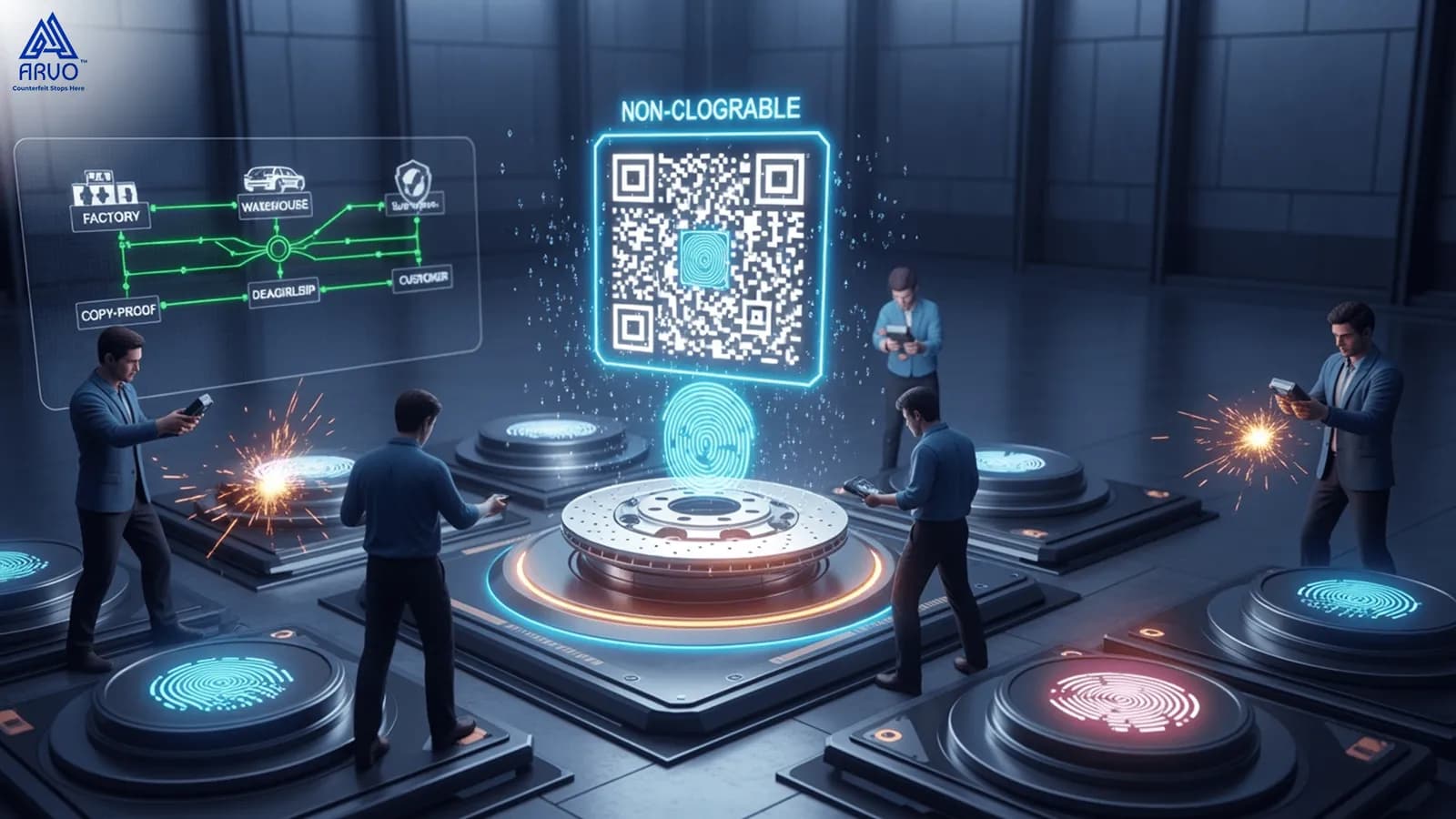
Technology has moved on. Non-cloneable QR codes, built on cryptographic principles and physical unclonable functions (PUFs), create a level of security that earlier systems could not deliver.
Each code is unique to the unit it marks. It cannot be copied or reused, and every scan feeds back into the OEM’s central system. In effect, every part carries its own passport.
What This Means for Margins
When applied across the supply chain, non-cloneable QR codes make diversion far more difficult.
- At the dealer level, every transaction can be traced. If a product surfaces in the wrong geography, the source of the leak becomes clear.
- For OEMs, alerts arrive in real time rather than months later during an audit.
- Dealers regain confidence that they are not being undercut by backdoor sales.
- Even recovering a fraction of the lost 20 to 30 percent can add millions to the bottom line for large manufacturers.


More Than Compliance
Global regulation is tightening. Europe and North America already require stricter authentication for safety-critical components, and other regions are likely to follow.
For OEMs, adopting non-cloneable QR codes now is not only about staying compliant. The advantages are wider:
- Lower warranty costs as diverted parts disappear from circulation.
- Clear visibility of product movement across global markets.
- Data that informs smarter decisions on supply chain planning and dealer support.
In an industry where two or three points of margin can decide competitiveness, losing up to 30 points to diversion is unsustainable.
The Way Forward
Revenue protection is not optional, it is a deliberate strategy. OEMs that move early with non-cloneable QR codes will set the benchmark for trust, compliance, and long-term competitiveness. ARVO partners with manufacturers to close the diversion gap by deploying copy-proof NOVA codes that give every part a unique identity and every margin full visibility. The tools are proven, the results are measurable, and the opportunity is immediate. Do not allow margins to keep slipping away. Secure them with ARVO.
Questions answered in this article
- What is grey market diversion in the automotive industry?
- It happens when genuine OEM parts are sold outside their intended channel or region. The parts are real, but they reach unauthorised markets, often at lower prices, which disrupts official pricing and damages dealer relationships.
- How is diversion different from counterfeit auto parts?
- Counterfeit parts are fakes and an external threat that can be chased down. Diverted parts are genuine but sold in the wrong market, so they create pricing instability, regulatory risk and loss of dealer trust from inside the system.
- Why can't barcodes and batch serialisation stop diversion?
- Barcodes and batch-level serialisation are easy to copy and do not show individual units. Parts that leave their intended path can slip into other regions or reach unauthorised sellers without anyone noticing until the damage is done.
- How do non-cloneable QR codes help against diversion?
- Each code is unique to the part it marks and cannot be copied or reused. Every scan connects back to the OEM's system and shows where the part was sold and how it moved, so each unit can be followed on its own path rather than by batch.
- What do OEMs gain from unit-level codes on parts?
- Revenue protection first, then dealers who trust they are not being undercut, lower warranty costs as diverted parts leave circulation, clearer visibility of movement across markets, and customer engagement through scan-based loyalty and service offers.
Sources
- What is a physical unclonable function (PUF)?, Synopsys
- Original Equipment Manufacturer (OEM), Investopedia