From Blind Recalls to Precision Targeting: How Item-Level Traceability Saves Crores
Batch recalls pull back good products with the bad. Learn how item-level traceability tracks each unit so manufacturers recall only the affected products.
By Abhijeet Kumar, ARVOPublished Updated 6 min read
In short
Item-level traceability gives every product or component its own identifier, such as a QR code, RFID tag or serial number, linked to a record of how it was made and where it went. When a defect appears, manufacturers can find exactly which units contain the faulty part and recall only those, not the whole batch.
- Batch or lot numbers show which production group a product came from, but not which individual units are defective.
- Without unit-level data, a single faulty component can force the recall of an entire batch of good products.
- Item-level traceability links each unit to its manufacturing time, production line, components, inspection data and delivery path.
- Precision recalls isolate only the affected units, which cuts logistics, replacement and disruption costs.
- Unit-level records also speed up root-cause analysis, showing whether a fault began with a supplier, a process or a component.
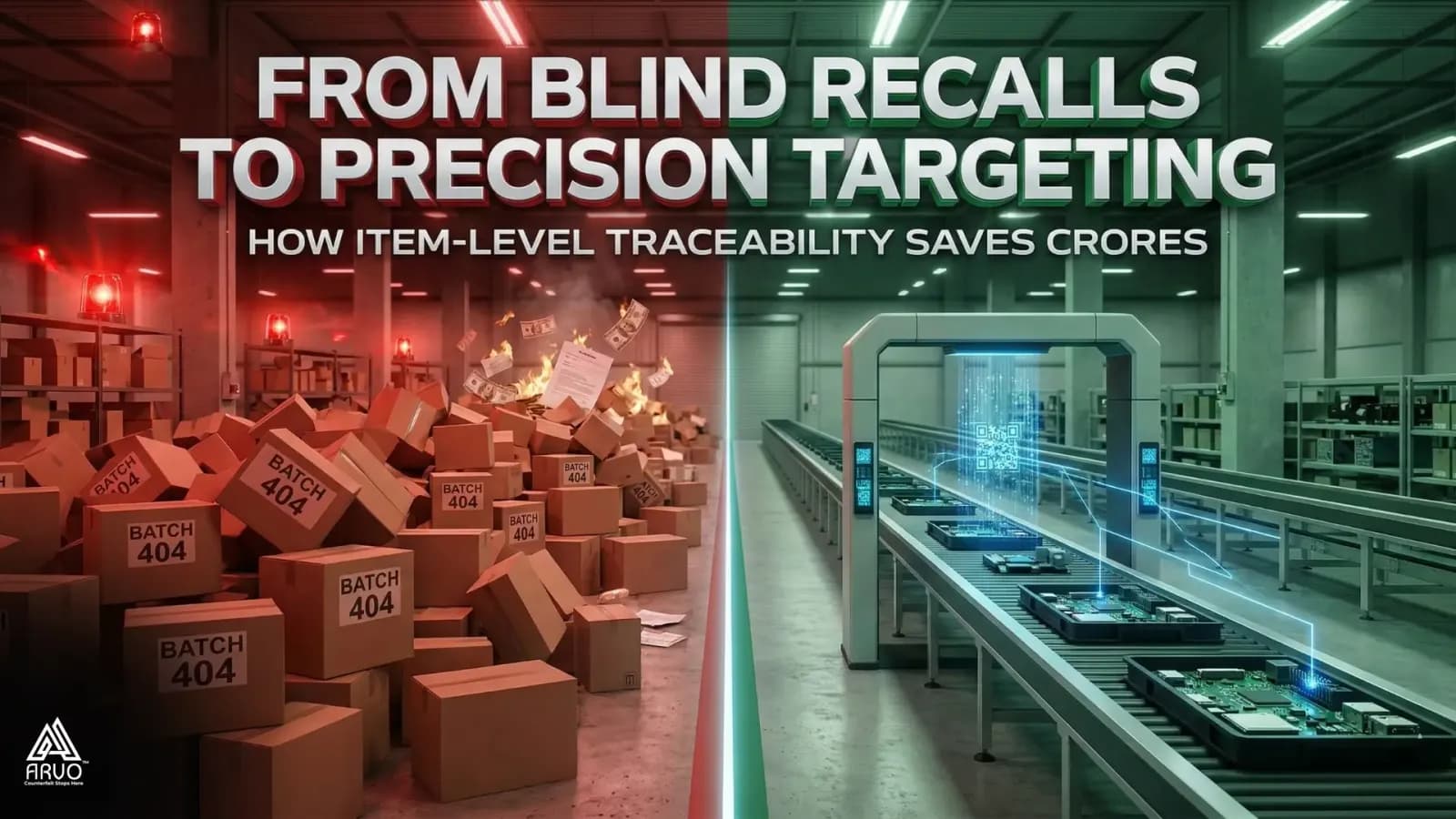
One of the most expensive operational crises companies face today is a product recall in manufacturing. In industries like automotive, electronics, and battery manufacturing, even a single defect can trigger large-scale recalls affecting thousands of products.
The problem?
Most companies still rely on batch-level tracking, which forces them to recall entire production batches even when only a small number of products are actually defective.
This outdated method leads to much higher recall costs.
Today, modern manufacturers are solving this challenge using item-level traceability, which allows them to identify and recall only the specific defective parts instead of entire batches.
The result: crores saved in logistics, reduced operational disruption, and stronger brand protection.
What Is a Product Recall in Manufacturing?
A product recall in manufacturing occurs when a company retrieves defective or unsafe products from the market to prevent safety risks or regulatory violations.
Product recalls typically happen due to:
- Component defects
- Supplier quality issues
- Manufacturing process errors
- Safety compliance failures
- Software or electronics malfunctions
Industries such as automotive, electronics, and battery manufacturing experience some of the most expensive recalls because of the complexity of their supply chains.
Without proper supply chain traceability, identifying the exact defective products becomes extremely difficult.
Why Traditional Batch Recalls Cost More
Most manufacturers still track production using batch numbers or lot numbers.
While batch tracking helps identify production groups, it lacks the precision required during a recall event.
The Problem with Batch Recalls
When a defect is detected in a single component within a batch, companies often recall the entire batch because they cannot pinpoint the exact defective units.
This leads to several costly consequences.
Massive Operational Costs
- Recalling thousands of perfectly functional products
- Increased transportation and logistics expenses
- Disruption across warehouses and dealer networks
Revenue Losses
- Destroying products that are not actually defective
- Additional manufacturing costs for replacements
Brand Damage
- Loss of customer trust
- Negative media coverage
- Long-term reputation risks
In many cases, companies later discover that only a small share of the recalled products were actually defective.
Yet they were forced to recall 100% of the batch, dramatically increasing recall costs.
What Is Item-Level Traceability?
Item-level traceability refers to the ability to track every individual product or component across the entire supply chain using unique identifiers.
These identifiers may include:
- QR codes
- RFID tags
- Serial numbers
- Digital product IDs
Each product carries a digital record of its lifecycle, which can include:
- Manufacturing timestamp
- Production line information
- Supplier components used
- Quality inspection data
- Distribution and delivery path
This level of visibility allows manufacturers to trace any product from the factory floor to the end customer in real time.
How Item-Level Traceability Enables Precision Recalls
With item-level traceability, companies no longer need to recall entire production batches. Instead, they can isolate only the affected products.
Example Scenario
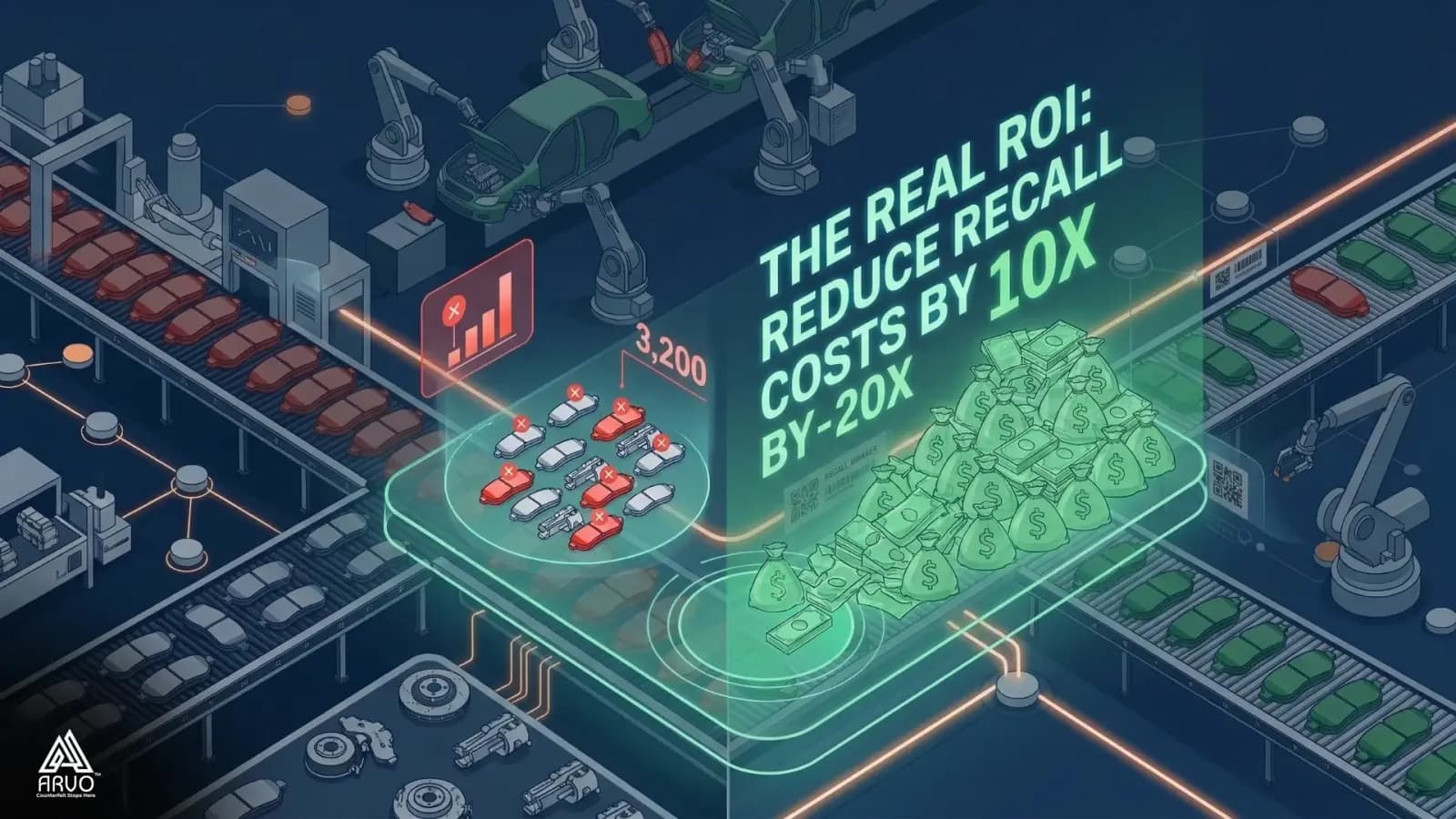
A defective brake pad component is discovered in one production run.
Without traceability:
- The manufacturer recalls 50,000 vehicles from the market.
With item-level traceability:
- Only 3,200 vehicles containing that specific defective component are recalled.
This level of precision significantly reduces recall costs.
Key Benefits of Precision Recalls
1. Targeted Product Isolation
Manufacturers can quickly identify the exact products affected by a defect within seconds.
2. Faster Recall Response
Companies can notify distributors, warehouses, and dealers immediately.
3. Lower Logistics Costs
Only the affected products are recalled instead of recalling an entire batch.
4. Improved Regulatory Compliance
Governments and regulatory bodies increasingly require traceability in safety-critical industries.
5. Stronger Consumer Trust
Customers value faster and more transparent recall communication.
How Automotive Leaders Are Reducing Recall Costs
Leading automotive manufacturers are investing heavily in digital traceability platforms to manage recall risks more effectively.
These platforms connect multiple points across the supply chain, including:
- Manufacturing plants
- Tier-1 and Tier-2 suppliers
- Warehouses
- Distribution partners
- Dealership networks
With real-time supply chain visibility, companies can identify the root cause of a defect within minutes.
Instead of issuing broad recalls, manufacturers can perform precision recalls, targeting only the vehicles or components affected.
This shift from blind recalls to precision targeting is becoming a key competitive advantage in modern manufacturing.
The Real ROI of Item-Level Traceability
Implementing item-level traceability systems delivers significant financial benefits.
Manufacturers adopting advanced traceability often see:
Smaller Recall Scope
Only the affected products are recalled instead of the entire production batch.
Lower Recall Costs
Logistics, replacement manufacturing, and operational costs decrease dramatically.
Faster Root-Cause Analysis
Quality teams can quickly identify whether the issue originated from a supplier, production process, or component.
Stronger Compliance with Regulations
Governments worldwide are increasingly requiring traceability for safety-critical products.
For global manufacturers, these improvements can translate into saving crores in potential recall losses.
How Digital Traceability Is Transforming Supply Chains
Item-level traceability is part of a larger shift toward digital supply chain visibility.
Modern traceability systems integrate technologies such as:
- IoT sensors
- QR-based product identities
- Real-time tracking platforms
- Cloud-based traceability software
Together, these technologies create a transparent product lifecycle, allowing companies to track products from raw materials to the final customer.
Manufacturers adopting digital traceability today are setting the foundation for the next generation of resilient supply chains.
Why Traceability Is No Longer Optional
As regulatory pressure increases and recall costs continue to rise, traceability is becoming a business necessity rather than a competitive advantage.
Companies that fail to adopt traceability systems risk:
- Large-scale recalls
- Regulatory penalties
- Supply chain disruptions
- Loss of customer trust
On the other hand, organizations investing in item-level traceability gain stronger product visibility, faster issue resolution, and greater operational resilience.
How ARVO Helps Manufacturers Prevent Costly Recalls
At ARVO, we help manufacturers move from blind batch recalls to precision traceability.
Our traceability solutions enable companies to:
- Track every product at the item level
- Identify defective components instantly
- Perform precision recalls instead of blanket recalls
The result is a smarter, more resilient supply chain with complete visibility from factory to market.
Calculate Your Potential Recall Savings
Every manufacturer faces the risk of product recalls. The real difference lies in how precisely you can identify the affected products.
If your company still relies on batch-level tracking, recall events could cost far more than necessary.
Discover how much your organization could save with item-level traceability and precision recalls.
Questions answered in this article
- What is item-level traceability?
- It is a system that tracks each individual product with a unique identifier such as a QR code, RFID tag or serial number. Manufacturers can then follow every unit through the supply chain and quickly find defective items during a recall.
- Why are batch recalls so expensive?
- Manufacturers have to recall a whole production batch even when only a small share of units is defective. That means unnecessary logistics, destroyed good products, replacement manufacturing and disruption across warehouses and dealer networks.
- How does item-level traceability reduce recall costs?
- It shows exactly which products contain a defective component. Instead of recalling thousands of units, a company isolates and recalls only the affected ones, which lowers logistics costs and protects customer trust.
- Which industries benefit most from item-level traceability?
- Industries with complex supply chains and safety-critical parts gain the most, including automotive, battery and electronics manufacturing, aerospace and medical devices.
Sources
- What are IoT sensors? Types, uses and examples, Zipit Wireless