Protecting the Automotive Value Chain: How Top Brands Are Fighting Counterfeiting
How automotive brands protect their value chain from counterfeit parts with serialization, blockchain records, tamper-evident packaging, scans and monitoring.
By Abhijeet Kumar, ARVOPublished Updated 5 min read
In short
Automotive brands fight counterfeits by giving every genuine part a unique serial in a secure code or RFID tag, recording its journey on a tamper-proof ledger, using tamper-evident packaging, letting customers and dealers verify parts with a scan, and watching scan data and online marketplaces for anomalies such as parts scanned in unexpected regions.
- Fake brake pads, filters, bearings and airbags cause safety failures, lost revenue and damage to the brand.
- Serialization gives every genuine part a unique number, which makes it traceable from manufacturing to point of sale.
- Blockchain keeps a tamper-proof record of each part's journey that can be checked in seconds.
- Geo-fenced authentication alerts a brand when a part is scanned in an unexpected or unauthorised region.
- Digital product passports hold a part's full lifecycle data for partners and consumers.

Counterfeit automotive parts are a growing threat to the global automotive value chain. From fake brake pads and filters to low-grade bearings and airbags, counterfeit components in the market pose serious safety risks, cause revenue losses, and undermine brand reputation. As counterfeiters become more sophisticated, leading automotive manufacturers are adopting advanced brand protection strategies to secure their supply chains and safeguard consumers.
In this blog, we explore how automotive companies are combating counterfeiting, the technologies driving this transformation, and how ARVO is enabling real-time product authentication and traceability in the automotive value chain.
Why Counterfeiting in the Automotive Value Chain Is a Major Concern?
The automotive sector deals with millions of parts and a complex global supply network. Counterfeiters exploit this complexity by inserting fake products into legitimate supply chains, especially within the automotive aftermarket.
Key consequences include:
- Safety risks: Substandard parts lead to critical failures in braking, steering, and safety systems.
- Revenue loss: Counterfeits divert sales, inflate warranty claims, and reduce margins.
- Reputational damage: Consumers blame the brand, not the distributor.
- Compliance risks: Regulatory penalties and recalls increase for brands unable to trace or verify part origins.
With increasing demand for authentic parts, especially in emerging markets, companies must secure every touchpoint in the automotive value chain.
Top Brand Protection Strategies in the Automotive Sector
To fight counterfeit parts effectively, automotive brands are investing in a combination of physical, digital, and legal strategies that are scalable and secure.
1. Serialization and Product Identification
Every genuine part is assigned a unique serial number, often encoded into a secure QR code or RFID tag. This enables end-to-end traceability from manufacturing to point-of-sale.
2. Blockchain-Powered Product Traceability
Blockchain provides a decentralized and tamper-proof record of a product’s journey across the supply chain. This ensures that any part can be traced to its source and validated in seconds.
3. Tamper-Evident and Smart Packaging
Advanced packaging technologies like holograms, color-shifting inks, and destructible seals help consumers and partners identify tampering and authenticate the product.
4. Mobile-Based Product Verification
Leading brands now offer mobile apps or web portals that allow customers, dealers, and regulators to verify authenticity by scanning a product’s QR code.
5. AI-Powered Counterfeit Detection
Artificial intelligence monitors scan activity, buyer behavior, and sales trends to detect anomalies, helping brands flag suspicious activity and respond faster.
6. Online Marketplace Monitoring
Brands are using automated tools and brand protection software to scan e-commerce platforms and social media for unauthorized or counterfeit listings.
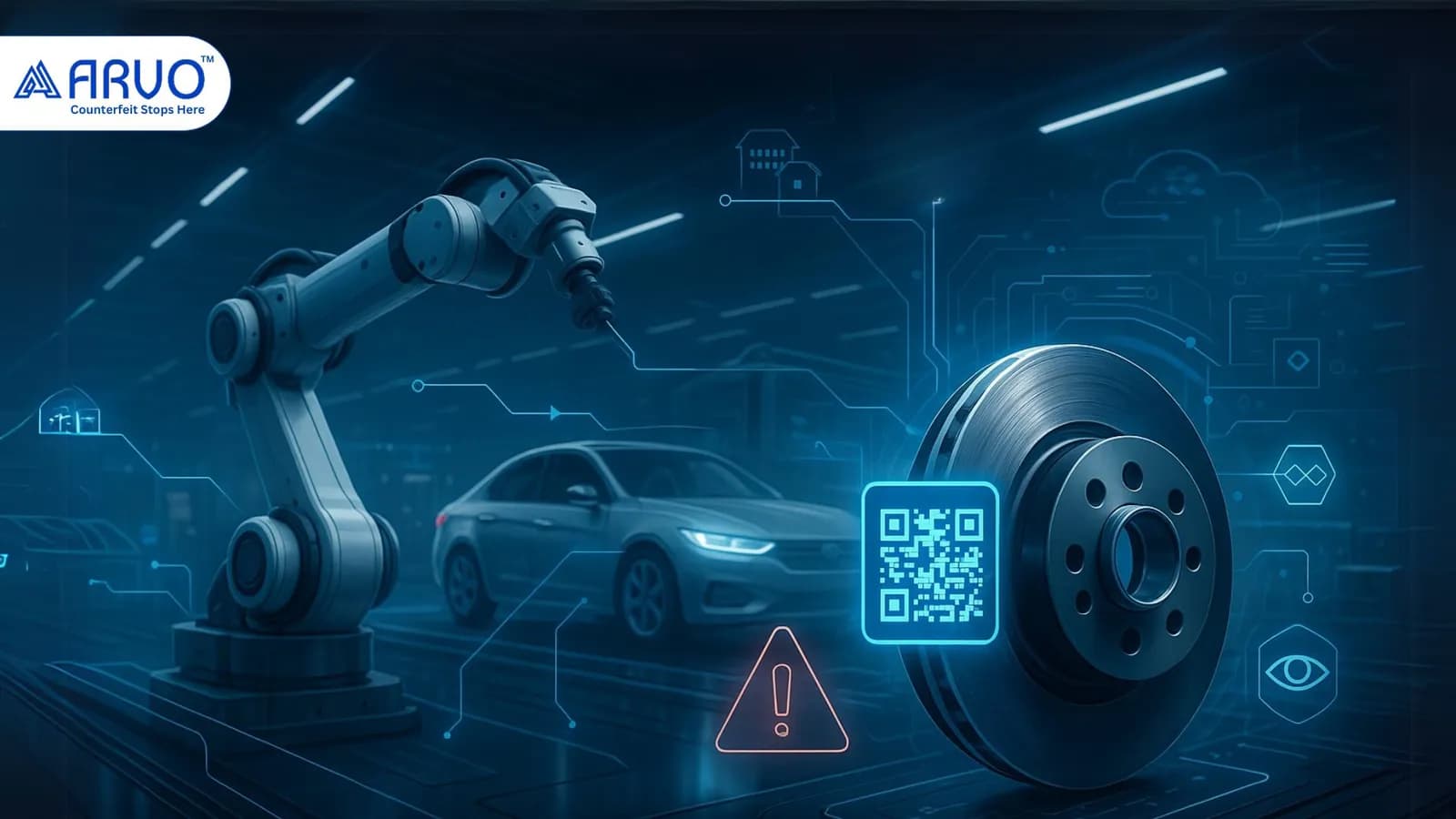
The Role of Digital Technology in Securing the Automotive Value Chain
Technology is transforming automotive brand protection. Traditional methods like holograms and stickers are no longer enough. Today, successful anti-counterfeiting depends on digital traceability, real-time verification, and centralized visibility.
- Cloud-based dashboards: Give brands real-time insight into counterfeit hotspots and consumer scan behavior.
- Geo-fenced authentication: Alerts companies if a part is scanned in an unexpected or unauthorized region.
- Digital product passports: Store full lifecycle information of parts, enhancing visibility across the automotive value chain.
With these technologies, brands can prevent counterfeit insertion, ensure compliance, and protect both their margins and their reputation.
How ARVO Secures the Automotive Value Chain from Counterfeiting
ARVO delivers a comprehensive suite of solutions designed to protect automotive brands across the entire automotive value chain. From manufacturing to aftermarket, ARVO ensures product authenticity, data transparency, and customer trust.
Digital Product Passports
ARVO creates comprehensive Digital Product Passports for each unit, assigning a unique digital identity stored securely on the blockchain. These passports capture all critical product data from manufacturing specs to supply chain milestones and present it in a tamper-proof, transparent format. Consumers and partners can instantly access a product’s full history, enabling informed decisions and increased brand trust.
Anti-Counterfeiting Solutions
To ensure that products maintain their authenticity throughout the supply chain, ARVO offers a robust set of anti-counterfeiting technologies, including:
- Copy-proof NOVA codes that cannot be replicated
These technologies protect products against unauthorized replication and help ensure every unit in circulation is genuine.
End-to-End Traceability
ARVO leverages blockchain technology to deliver transparent, immutable traceability across the entire product lifecycle. From raw materials to manufacturing, distribution, and the end consumer, each transaction is recorded in real time, providing full visibility and accountability at every stage of the automotive value chain.
Conclusion
As counterfeiting continues to challenge the integrity of the automotive value chain, top brands are shifting from reactive responses to proactive, technology-driven protection strategies. It’s no longer enough to secure individual products — the entire lifecycle must be transparent, traceable, and tamper-proof.
ARVO provides the tools to do just that.
By combining Digital Product Passports, advanced anti-counterfeiting technologies, and blockchain-powered traceability, ARVO empowers automotive manufacturers to secure every stage of their value chain — from raw material sourcing to final consumer engagement.
With ARVO, brands gain more than just protection. They gain data-backed visibility, customer confidence, and a competitive edge in a market that demands transparency and trust.
Ready to protect your products and reinforce trust across the automotive value chain?
Want to see how we fight counterfeiting in real time?
Follow our journey on LinkedIn: Visit ARVO’s LinkedIn Page
Questions answered in this article
- What are the most counterfeited parts in the automotive industry?
- Brake pads, air filters, spark plugs and bearings are among the most commonly counterfeited, because they are replaced often and look simple to copy.
- How can customers verify that an automotive part is genuine?
- Scan the code or serial number on the product through the brand's official app or verification portal. Secure packaging and tamper-evident labels are further signs.
- Why is product serialization important for automotive parts?
- It allows unit-level tracking, which helps companies detect fake products, run targeted recalls and manage inventory.
- What makes ARVO's approach to automotive brand protection different?
- ARVO combines copy-proof codes, blockchain records and AI into one layered system that cannot be replicated, works in real time and scales.