From Factory to Consumer: Building End-to-End Transparency with Smart Supply Chains
Smart supply chain transparency explained: how IoT, digital twins, blockchain and AI combine for provenance, real-time condition data and predictive resilience.
By Abhijeet Kumar, ARVOPublished Updated 5 min read
In short
Smart supply chain transparency combines three technologies: IoT sensors and digital twins that capture live location and condition data, a blockchain ledger that records each inspection, custody change and sign-off so no party can rewrite it, and AI that analyses the data to spot anomalies and predict disruption, tracing a product from raw material to sale.
- Tracing a product from raw material to sale is still often manual and fragmented, which creates regulatory, forgery and brand risk.
- IoT sensors feed location, temperature, humidity and shock data into a digital twin of the supply chain.
- A blockchain ledger stores each inspection, custody change and compliance sign-off so the record cannot be changed later.
- In a cold chain, a temperature breach can trigger an automatic alert to every stakeholder and start the claim process.
- AI turns the data into prediction, for example rerouting a shipment when a hub is likely to hold up a critical part.
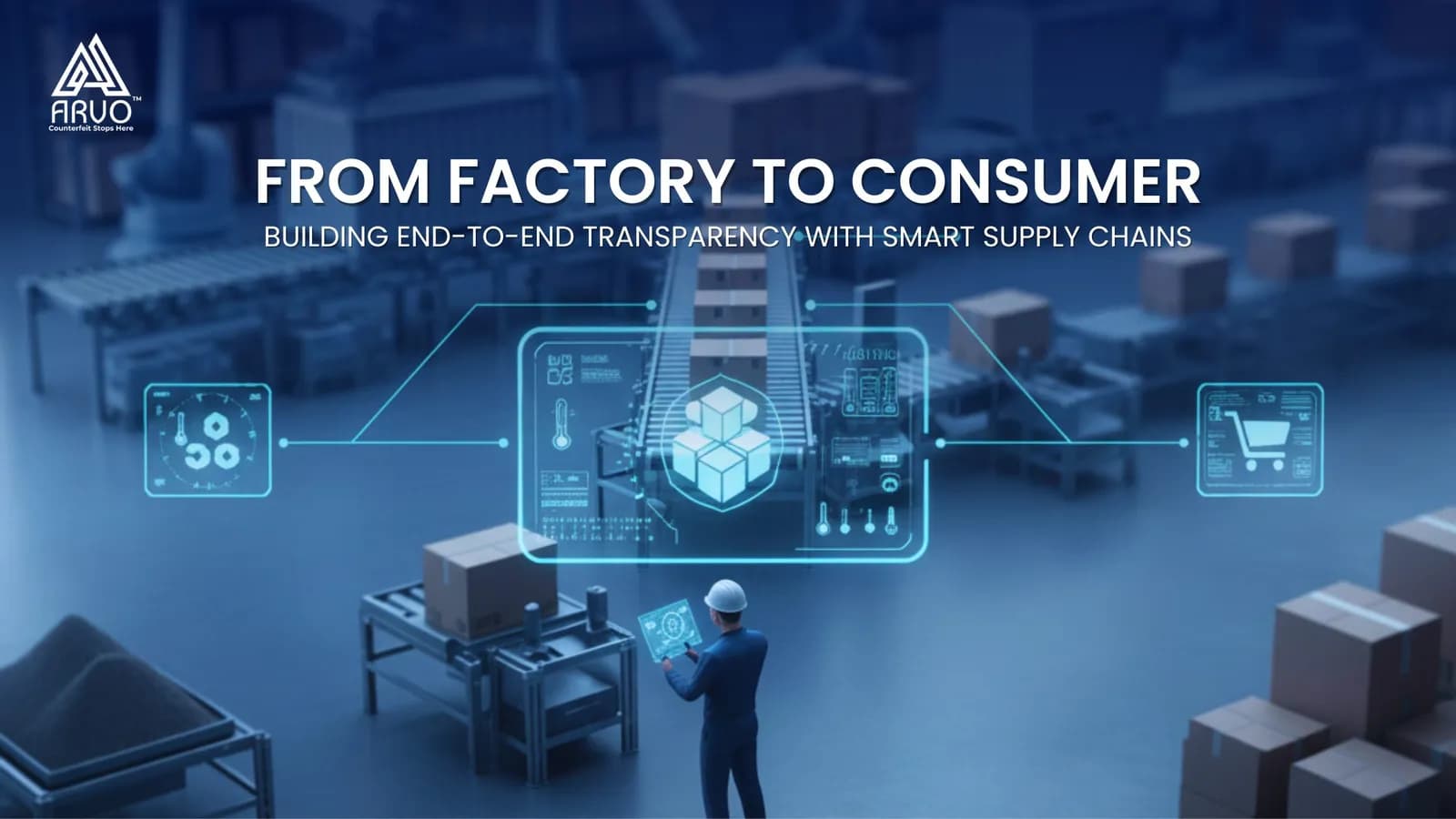
The industrial supply chain is one of the final great black boxes in the world of business in the era of instant information. The process of tracing a product, i.e., the source of the raw material to the end point of sale, is usually a manual, fragmented, and weak process. Such obscurity not only infuriates the end-user but also poses serious risks, such as regulatory non-conformance, material forgery, operational ineffectiveness, and high brand exposure. To enable businesses to develop resiliency and achieve new dimensions of enterprise value, the conventional supply chain needs to be substituted by a smart, interconnected ecosystem: the Smart Supply Chain Transparency. This is the secret of having real end-to-end transparency.
The Technological Foundation: A Stack for Disruption
Creating a transparent supply chain is not a one-software implementation, but the strategic combination of disruptive technologies that gather, validate, and process data in real-time.
1. Internet of Things (IoT) & Digital Twins: The digital nervous system is IoT sensors. They are embedded in machines, containers, and even high-value parts and gather continuous telemetry at location, temperature, humidity, and shock. This information is fed into a Digital Twin, a virtual model of the physical supply chain, which allows physical assets to be checked and confirmed at all times.
2. Blockchain & Immutable Ledgers: To address the problem of trust between fragmented partners (suppliers, logistics, distributors), Blockchain offers a common, decentralized, and immutable ledger. Each transaction, such as a part inspection, a custody change, a compliance sign-off, etc., is stored as a cryptographically verifiable transaction. This is so that the information that narrates the story of the product is correct and cannot be retroactively modified by any party.
3. Artificial Intelligence (AI) & Machine Learning (ML): The amount of real-time information from millions of IoT points is useless without analysis. AI/ML algorithms work on this influx of information to detect anomalies, forecast bottlenecks, and automate more complicated decision-making. This makes visibility predictive intelligence.
The Pillars of End-to-End Transparency
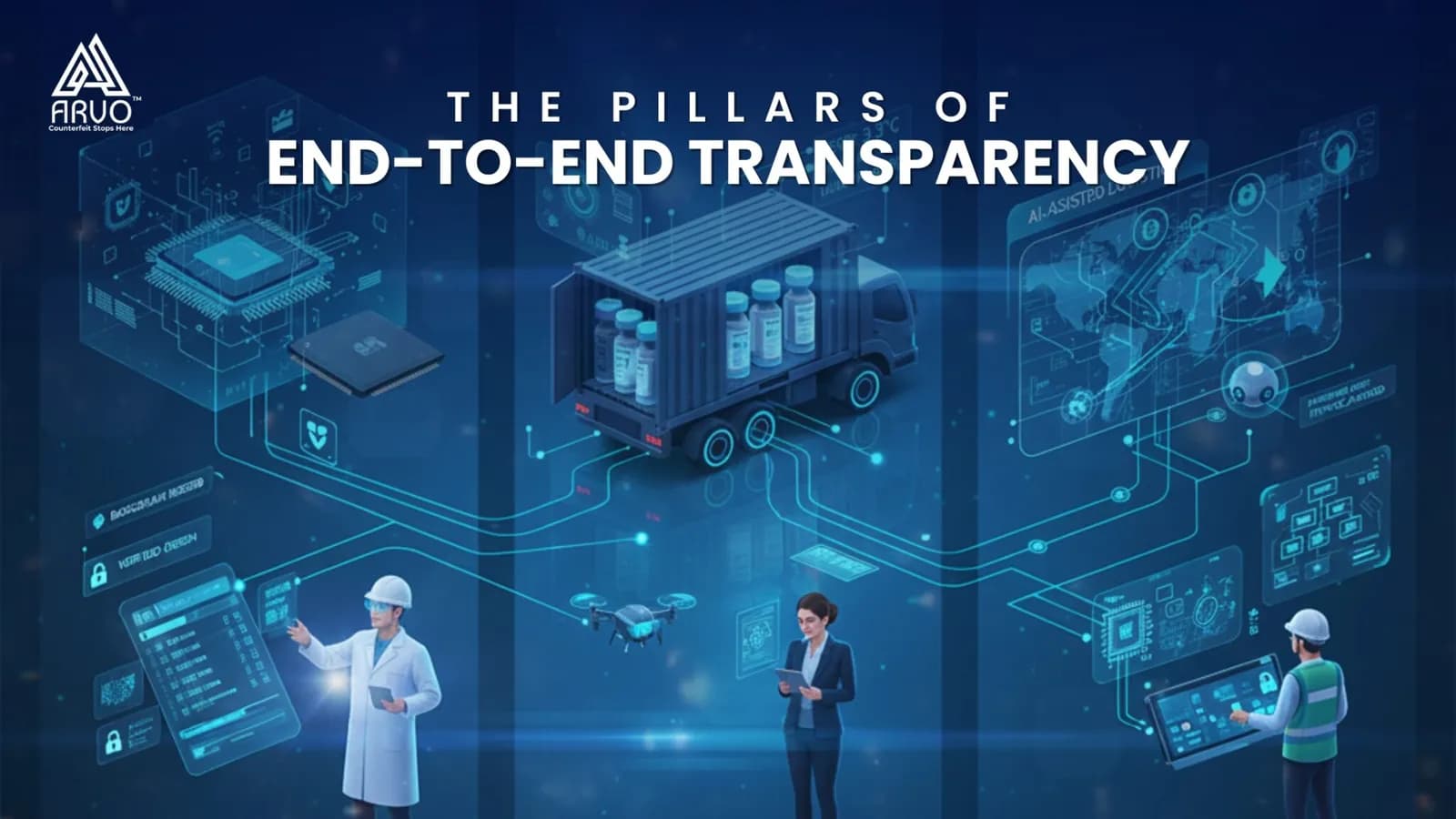
A combination of these technologies forms three potent pillars that characterize a transparent, smart supply chain:
Indisputable Provenance and Traceability.
In the case of such industries as pharmaceuticals, high-end electronics, and luxury goods, the source and originality of components are the most important. Venture Case: Take the case of the semiconductor industry. Smart supply chains monitor the provenance of each component wafer, including its origin and quality certifications. In case of a fake batch of special chemicals entering the system, the blockchain record will flag the invalid entry before it is included in a final product. This is the highest degree of traceability that can be used as a final defense against fraud and is essential to regulatory compliance (e.g., FDA or industry-specific standards).
Conditional Visibility, Real-Time.
Transparency should be aimed and reactive, giving information on the state of affairs, not only where. This is essential in the management of assets where the value is dictated by the environmental factors.
Venture Case Study: A single batch of sensitive vaccines or cell therapies can be destroyed by a temperature deviation of a few degrees in the Biotech Cold Chain. The IoT sensors monitor the temperature of the shipment and in case the temperature surpasses a predetermined threshold, the system automatically initiates a smart contract on the blockchain with the help of AI. This sends instant notification to all stakeholders, authenticates the product as being compromised, and initiates the claim process- all without human intervention. This changes the visibility of a mere location update to an actual risk mitigation tool.
Anticipatory Operational Resilience.
A completely open supply chain feeds information into an analytical engine that goes beyond mere tracking to prediction and self-correction in real-time.
Venture Case: Logistics and distribution networks are constantly disrupted. AI uses past data and real-time feeds of port congestion, traffic, and weather patterns. When the system identifies a high likelihood of a critical component being held at a major hub, it will automatically recalculate the optimal route, book alternative air freight capacity, and revise the estimated time of arrival (ETA) of all downstream manufacturing partners. This active risk hedging is a major latency minimizer and a predictable output, which is a definite ROI in operational efficiency.
Conclusion: The Mandate for the Modern Enterprise
Visibility will characterize the future of international business. Transparency has ceased to be a luxury; it has become a requirement in the management of complex risk and building trust in a fractured global economy. Through the adoption of the smart infrastructure of the smart supply chain, firms are not only meeting the needs of consumers and regulators; they are also empowering their operations.
By investing in such technologies, such as Blockchain to provide integrity, IoT to provide real-time data, and AI to provide predictive intelligence, enterprises can turn their black box into a glass box. The strategic action will guarantee the high-level risk management, open the exponential operational efficiencies, and eventually create the resilient, high-value businesses that will prevail in the next decades.
Questions answered in this article
- What is the biggest challenge in introducing a smart supply chain?
- Integrating systems and getting partners to agree. Smart supply chains need constant data exchange between the ERP, WMS and TMS systems used by suppliers, manufacturers and logistics teams, so those systems must be linked and partners must trust each other with sensitive data.
- Is blockchain alone enough for supply chain transparency?
- No. Blockchain stores information securely and shows it has not been changed, but IoT sensors are needed to capture live data and AI to analyse it and make predictions. Transparency comes from all three together.
- How does a smart supply chain help with regulatory compliance?
- It builds an immutable record automatically. Checks such as quality and temperature are recorded on the blockchain, so audits can run in real time and less time and money go on paperwork.
- Where does the return on a smart supply chain come from?
- Mainly from three places: lower risk through fewer recalls, counterfeits and fines; operational savings from lower inventory costs, less spoilage and better routes; and revenue growth from customer confidence and premium prices for verified, sustainable products.
Sources
- Biotech Cold Chain, United Biotech