Industrial Equipment Manufacture: Stopping Revenue Leakage with Digital Product Passports.
Revenue leakage in manufacturing comes from counterfeits, grey market diversion and weak traceability. See how a Digital Product Passport helps close the gaps.
By Abhijeet Kumar, ARVOPublished Updated 3 min read
In short
Industrial equipment makers lose revenue through counterfeits, products diverted into unauthorised markets, weak or outdated authentication and poor traceability. A Digital Product Passport gives every piece of equipment a unique, verifiable digital identity that proves it is genuine and tells its story, so anyone in the supply chain can check it and hidden leaks become visible.
- Revenue leakage goes beyond counterfeits: it includes grey market diversion, warranty abuse, untracked assets and gaps in service visibility.
- Counterfeiting is the production and sale of unauthorised copies of genuine equipment or parts, often made with substandard materials.
- A Digital Product Passport gives each unit a verifiable identity that anyone in the supply chain can check instantly.
- Waiting carries risk: falling behind new regulations, losing trust to counterfeits and losing margin to leaks you cannot track.
- The fixes are stronger authentication, better traceability, regulatory compliance and using product data for margin insight.
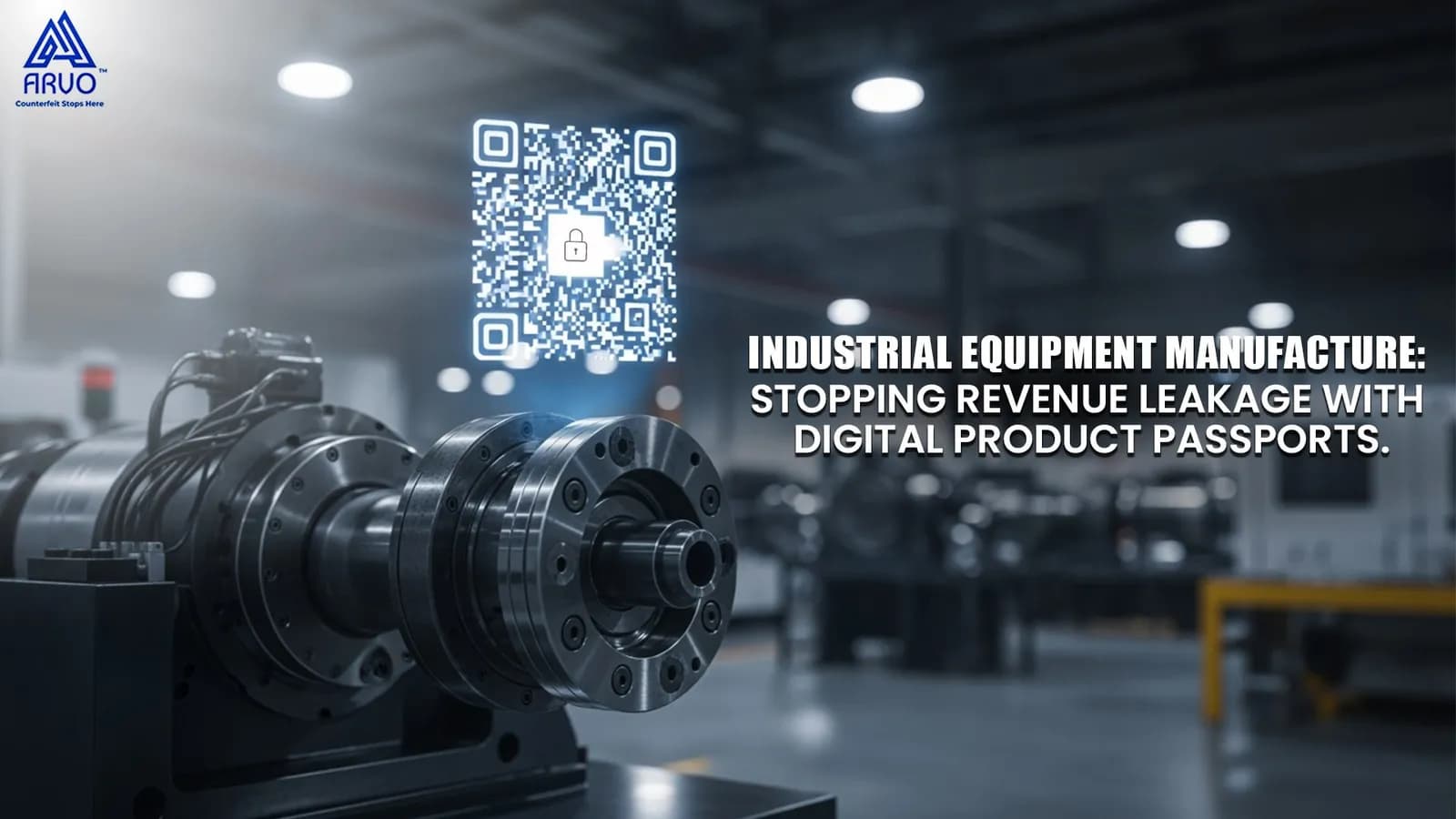
Revenue Leakage in Manufacturing is one of the most critical, yet least visible, challenges facing industrial equipment companies today. If you operate in this sector, you already understand how hard it is to protect margins. You work relentlessly to control costs, build customer trust, and remain compliant with regulations. Yet a silent threat continues to slip through the cracks: revenue leakage.
It emerges quietly through untracked assets, unauthorized parts, warranty abuse, gray-market activity, and gaps in service visibility. Individually, these losses may appear insignificant; collectively, they erode profitability, distort forecasts, and undermine long-term growth. Unlike overt cost overruns, revenue leakage often remains hidden in complex, global operations, making it both difficult to detect and expensive to ignore.
What is Counterfeiting?
In simple words, Counterfeiting is the production and sale of unauthorized copies of genuine equipment or parts. These copies are often made with substandard materials, sold at lower prices, and disguised as authentic.
Counterfeiting usually gets the spotlight- fake parts, low- quality copies, shady sellers. However, the truth is that leakage extends beyond counterfeits. It’s about genuine products being sold where they should not, missing visibility in your supply chain, and product gaps in authentication. These small leaks add up to big leaks and big losses over time. And the main question is : HOW CAN WE STOP IT? That’s where the Digital Product Passport comes in.
The Hidden Cost of Revenue Leakage.
Beyond counterfeit goods, revenue also slips away because:
- Products are diverted into unauthorized markets.
- There is no clear sign for **traceability in manufacturing.**
- Authentication is weak or outdated.
- Compliance requirements are growing, but harder to meet.
For equipment manufacturers, it’s not just about lost sales. Leakage erodes margin quietly and steadily, leaving brands vulnerable in competitive markets.
How does the Digital Product Passport change the game?

Imagine if every single piece of equipment you sold carried a digital identity card: a passport that proves it’s genuine, tells its full story, and can be instantly verified by anyone in the supply chain. That’s exactly what Digital Product Passport does.
In short, DPPs close the loopholes that allow counterfeiting and leakage to thrive.
Why Waiting is Risky?
Some manufacturers see the Digital Product Passport as “something for the future”. But the risk of waiting can be a concern due to the following reasons.
- Non-Compliance: Falling behind with new regulations
- Eroded trust: counterfeits or unauthorized sales are damaging credibility.
- Margin Loss: Profits bleeding away through leakage you can’t even track sometimes.
On the other side, taking action early means:
- Protecting revenue today.
- Exploring new opportunities such as resale markets and recycling incentives.
- Winning trust and loyalty.
Protecting Margin Starts Here: Every percentage point of margin matters in industrial equipment. Revenue leakage may seem invisible at first, but left unchecked, it can drain millions from your bottom line.
HOW CAN WE AVOID REVENUE LEAKAGE

- Strengthen product authentication
- Improve traceability in manufacturing.
- Ensure regulatory compliance
- Leverage data for margin insights.
Conclusion
For industrial equipment manufacturers, revenue leakage isn’t always loud or obvious. It creeps in quietly through counterfeit goods, unauthorized sales, and missing visibility. But with Digital Product Passport, you can shine a light on those dark corners of your supply chain.
This isn’t just about compliance, it is also about securing your margins, strengthening trust, and building a business that is ready for the future.
Questions answered in this article
- What is counterfeiting in industrial equipment?
- It is the making or selling of unauthorised copies of genuine equipment or parts, often with substandard materials and passed off as authentic. Beyond lost revenue, it creates safety and reliability risks.
- How do Digital Product Passports prevent counterfeiting?
- They give every product a unique, verifiable identity. That makes it much harder for fake products to enter the supply chain unnoticed.
- Why does traceability matter for revenue leakage?
- Without product traceability it is almost impossible to catch diversion or unauthorised sales. Tracking every movement gives early warning signs.
- Why should equipment manufacturers adopt a DPP now rather than later?
- Waiting risks falling behind new regulations, losing trust to counterfeits and unauthorised sales, and margin that drains away untracked. Acting early protects revenue today and opens options such as resale markets and recycling incentives.
Sources
- Gray Market, Investopedia