What Is Product Authentication? A Guide for Brand Owners
What product authentication is, why it matters, how it works, the main technologies and their limits, how consumers verify products and how brands choose.
By ARVO teamPublished Updated 11 min read
In short
Product authentication is the process of confirming that a product is genuine: made by the brand owner, not copied and not tampered with. Brands add a hard-to-copy feature to each product, such as a secure code, pattern, chip or tamper label, and give customers, retailers and inspectors a reliable way to check it.
- Product authentication confirms both authenticity (the rightful maker) and integrity (the product has not been altered or opened).
- The OECD and EUIPO estimate counterfeit goods accounted for USD 467 billion in global trade in 2021.
- A unique serial number alone does not prove a product is genuine, because an ordinary printed code can be copied.
- Each technology trades off security, cost and ease of checking, so brands usually layer more than one.
- ISO 22383:2020 advises choosing authentication elements after a counterfeiting risk assessment, not before.
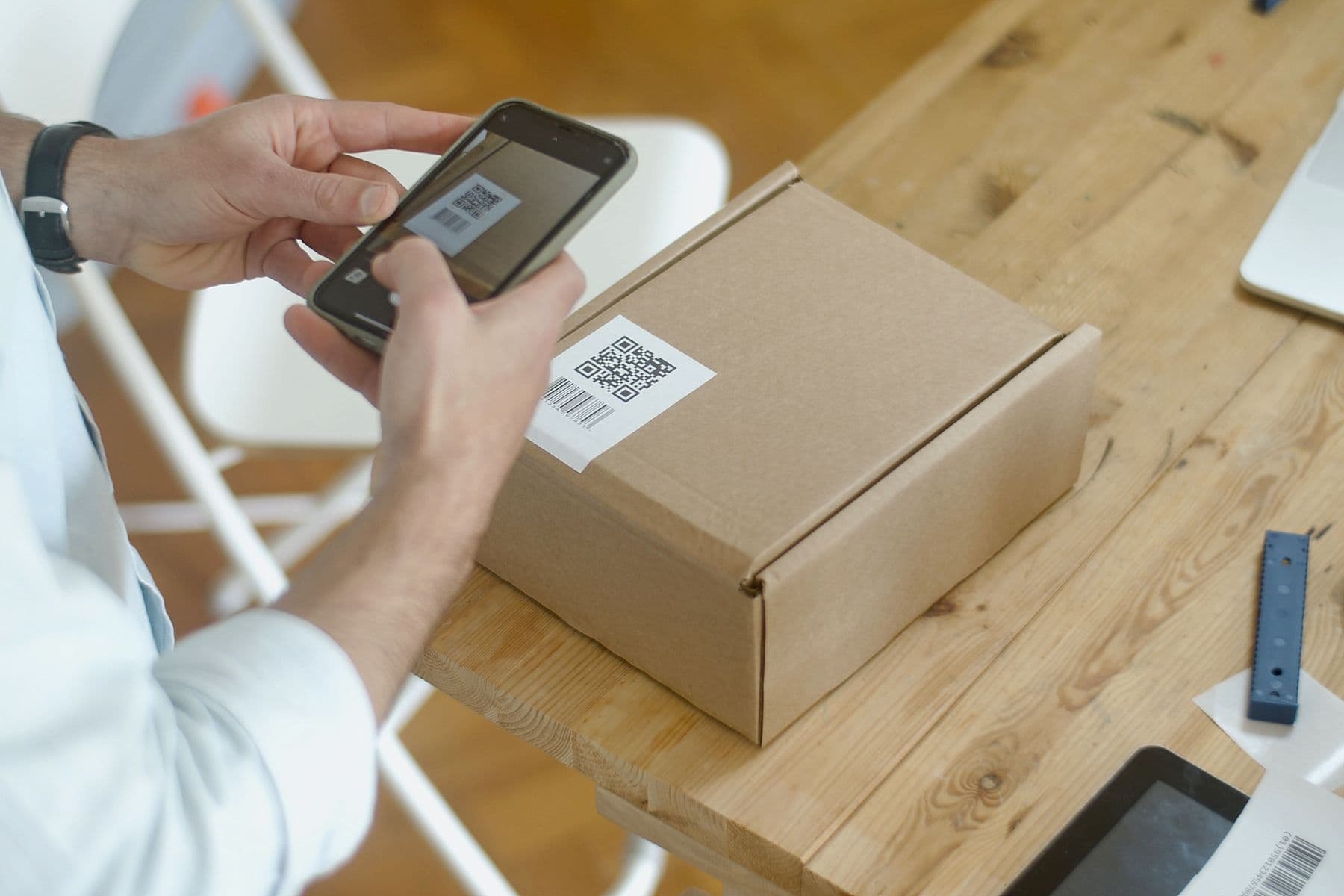
Product authentication is the process of confirming that a product is genuine: that it was made by the brand owner, has not been copied and has not been tampered with since it left the factory. It works by giving each product something a counterfeiter cannot easily reproduce, and a reliable way to check it.
This guide explains what product authentication is, why it matters, how it works, the main technologies brands use and their limits, how consumers verify a product, and how to choose an approach. It is written for brand owners, quality teams and brand-protection managers.
What is product authentication?
Product authentication is the set of features and checks that let someone tell a genuine product from a fake, at any point between the factory and the customer. It answers one question: is this item really what it claims to be?
The international standard for the field is ISO 22383:2020, which replaced ISO 12931:2012. It gives guidelines for authentication solutions that aim to establish a material good's authenticity and integrity throughout its life cycle. That wording covers two ideas:
- Authenticity: the product comes from the rightful maker.
- Integrity: the product, its contents and its packaging have not been altered, refilled or opened.
An authentication solution has three parts. There is an authentication element on the product or pack, such as a hologram, a code or a chip. There is a check, done by a person's eyes, a phone, a dedicated reader or a laboratory. And there is a decision, often backed by a reference such as a database of genuine items, that says genuine or not.
Product authentication is related to, but different from, two other terms you will meet:
- Serialisation gives each unit a unique number. It is a building block, but a unique number alone does not prove a unit is genuine, because the number can be copied.
- Traceability records where a product has been. It answers "where has this been?", while authentication answers "is this real?". The two work best together, as explained below.
Why is product authentication important?
Because counterfeits are common, they reach ordinary shoppers through mainstream channels, and some of them are dangerous. Authentication protects customers, revenue and the brand's reputation, and it gives the brand evidence to act on.
The scale is large. The OECD and EUIPO estimate that counterfeit goods accounted for USD 467 billion in global trade in 2021, the latest year with available data, according to their 2025 report Mapping Global Trade in Fakes. The same report found that clothing, footwear and leather goods made up 62% of seized counterfeit goods, that hazardous fakes such as automotive parts, medicines, cosmetics, toys and food were increasingly prevalent, and that around 65% of seizures involved small parcels and mail.
India's picture is similar. The State of Counterfeiting in India 2025 report by the Authentication Solution Providers' Association (ASPA) and CRISIL, reported by The Week in March 2026, surveyed 1,639 consumers across nine cities:
| Finding | Figure | Source |
|---|---|---|
| Indians who encountered fake products in the past year | Around 35% | ASPA and CRISIL, reported by The Week (March 2026) |
| Urban consumers who have bought a counterfeit at least once | Almost nine in ten | ASPA and CRISIL, reported by The Week (March 2026) |
| Share of counterfeit purchases made on online aggregator platforms | 53% | ASPA and CRISIL, reported by The Week (March 2026) |
| Respondents who encountered counterfeit automotive parts | Nearly 22% | ASPA and CRISIL, reported by The Week (March 2026) |
| Consumers who encountered counterfeit FMCG products in the past year | Around 27% | ASPA and CRISIL, reported by The Week (March 2026) |
For a brand, the cost goes beyond lost sales. A fake that fails, harms someone or simply disappoints is blamed on the genuine product. Customer complaints become hard to investigate, because no one can say whether the item was real. And without a reliable check, retailers, distributors and enforcement officers cannot act quickly when fakes appear.
How does product authentication work?
A brand adds a feature to each product that is hard to copy, and gives the people who need to check it a way to do so. When someone checks, the feature is compared with what a genuine item should show, and the result is recorded.
In practice, most programmes follow the same five steps:
- Apply. The authentication element is added during production or packing: printed, embedded, attached or built into the pack.
- Register. Where items are individually identified, each unit is recorded in a database as genuine.
- Distribute. The product moves through distributors, retailers and online sellers to the customer.
- Check. A customer, retailer, inspector or customs officer examines the feature, by eye, with a phone or with a reader.
- Decide and record. The check returns a result. In connected systems, each check is also logged, so the brand can see where and when products are scanned and spot patterns such as the same code appearing in two cities.
Authentication features are often grouped by who can check them:
- Overt features can be checked by anyone without tools, such as a hologram or colour-shifting ink.
- Covert features are hidden and need a tool or a trained eye, such as an ultraviolet ink or a hidden pattern.
- Forensic features need laboratory analysis, such as chemical or DNA taggants.
Many brands layer them: an overt feature for consumers, a covert one for inspectors and a forensic one for legal cases.
What are the main product authentication technologies?
The main families are optical features and security inks, serialised codes, copy-detection and cryptographic patterns, invisible watermarks, RFID and NFC tags, tamper-evident and tamper-proof labels, and AI image analysis. Each has a different balance of security, cost and ease of checking.
The EUIPO's Anti-Counterfeiting and Anti-Piracy Technology Guide, first published in 2021, groups the market into electronic identification and tracking devices, markers on products or packaging, and chemical, physical, mechanical and digital content recognition tools. The sections below explain the families brands meet most often.
Holograms and security inks
Holograms and other optically variable devices change appearance as the viewing angle changes. Security inks include colour-shifting, thermochromic and ultraviolet inks. They are familiar, quick to check and work without any device. Their weakness is that most buyers do not know what the genuine feature should look like, so a convincing imitation often passes a casual glance.
Serialised codes
A serialised code gives every unit its own identifier, printed as a barcode, a Data Matrix or a QR code. Scanning it looks up the serial number in the brand's database. This is cheap, works with any smartphone and supports traceability. The limit is that an ordinary printed code can be photographed and reprinted, and a copy scans exactly like the original. Systems can flag a serial number that is scanned too often or in two places, but that only works after the copy has been checked.
Copy-detection patterns and cryptographic patterns
A copy-detection pattern (CDP) is a small, high-density digital image printed on the product or pack. The idea, described by Justin Picard in a 2004 SPIE paper, relies on an "information loss principle": every time an image is printed or scanned, some detail is lost. A genuine print carries the original detail; a copy made by scanning and reprinting it loses more, and a detector can measure the difference.
Some vendors describe related techniques as cryptographic patterns or Cryptographic Data Patterns: printed patterns generated from secret keys, so that only the key holder can produce a valid one and a verifier can check it. These techniques can be checked with a smartphone in many implementations. Their limits are print quality, which has to be controlled on the line, and capture conditions such as light and focus.
Invisible watermarking
Digital watermarking hides machine-readable data in a product's printed artwork, invisible to the eye but readable by a camera and the right software. It can cover the whole pack, which makes it hard to remove, and it can support both authentication and identification. It depends on the reading software, so consumers usually need a specific app.
RFID and NFC tags
RFID and NFC tags are small chips with antennas. Secure versions can use cryptography so that each tap produces a response a cloned chip cannot reproduce. NFC can be read by many smartphones; longer-range RFID needs dedicated readers. Tags cost more per unit than printing, need to be built into the product or label, and can be affected by metal and liquids.
Tamper-evident and tamper-proof labels
Tamper-evident labels show that a pack has been opened, for example by leaving a "void" pattern or tearing apart when removed. Tamper-proof labels are designed so they cannot be removed and reused intact. These features protect integrity: they show whether the genuine product inside is still untouched. They do not, on their own, prove the label itself is genuine, so they are often combined with a code or pattern.
AI image analysis
AI image analysis uses a model trained on images of genuine items to judge whether a captured image matches. It can be applied to a printed code, to packaging or to the product itself. Done well, it can catch differences too small for the eye. Its accuracy depends on the training data, the image quality and how the model is validated, so ask any supplier how accuracy was measured.
How do the technologies compare?
| Technology | Who can check | Strengths | Limits |
|---|---|---|---|
| Holograms and security inks | Anyone, by eye; some inks need a UV light | Familiar, no device needed, quick | Imitations can pass a casual check; most buyers do not know the genuine look |
| Serialised codes | Anyone with a phone | Low cost, unique per unit, supports traceability | Printed codes can be copied; duplicates are found only after scanning |
| Copy-detection and cryptographic patterns | Phone or reader with the right software | Designed so copies lose detail and fail | Needs controlled print quality and good capture conditions |
| Invisible watermarking | Phone or reader with the right software | Invisible, can cover the whole pack | Usually needs a specific app |
| RFID and NFC | NFC phones or RFID readers | Secure chips resist cloning; contactless | Higher unit cost; must be built in; metal and liquids can interfere |
| Tamper-evident and tamper-proof labels | Anyone, by eye or by scan | Shows whether a pack was opened or interfered with | On their own, do not prove the label is genuine |
| AI image analysis | Phone or camera with the right software | Can detect very small differences | Accuracy depends on training data, image quality and validation |
| Forensic taggants | Laboratory | Very hard to copy; strong evidence | Slow, costly, not for consumers |
How can consumers verify a product?
The most reliable way is to use the check the brand provides, usually by scanning a code on the pack with the phone camera, and to look closely at the result. Physical checks and buying from authorised sellers add further protection.
Practical steps:
- Scan the brand's code. Use the phone camera and confirm the result page belongs to the brand's own website or app. A fake pack can carry a code that opens a fake page, so check the web address.
- Watch for warnings. Some systems say when a code has already been checked many times or in another place. Treat that as a red flag.
- Check the seal. Look for broken, lifted or reapplied seals and labels.
- Compare with what you know. Spelling, print quality, batch numbers and expiry dates that do not match are common giveaways.
- Buy from authorised sellers, and report suspected fakes to the brand so it can act.
Our FAQ answers common questions about scanning and checking a product.
How should a brand choose a product authentication solution?
Start from the risk, not the technology. ISO 22383:2020 says organisations should choose authentication elements after a counterfeiting risk assessment, and then judge solutions against performance criteria.
Questions to work through:
- What is the threat? Who copies your product, how sophisticated are they, and where do fakes appear: online marketplaces, local shops, spare-part dealers or export markets?
- Who has to check? A feature only consumers will see must work with a phone and no training. One for inspectors can be covert. One for court cases can be forensic.
- What does the product allow? Pack size, material, surface, print process and line speed limit what you can apply.
- How strong is the protection? Ask how the solution stops a copy, not just how it identifies an original. Ask for measured accuracy, including how often a genuine item is wrongly rejected.
- What does it cost at your volume? Include the element, line changes, software and running costs.
- What data do you get back? Scan locations and times show where fakes and diverted stock surface.
- Can it serve other duties? A unit-level code can also carry traceability, recall and product passport data.
- What will you do with a result? Plan the response: who reviews alerts, how complaints are handled and how evidence reaches enforcement.
Layering usually beats a single feature. A pack can combine an overt feature for consumers, a copy-resistant code for scanning and a tamper feature for integrity. For more on building a programme, see our anti-counterfeiting solution page.
Where does traceability fit in?
Authentication tells you whether a product is genuine; traceability tells you where it has been. Together they show not only that a fake exists, but where it entered the market and which genuine stock went where.
When each unit carries a unique, hard-to-copy identity, every scan adds to its record: produced here, shipped to this distributor, sold in this region, checked by a customer in this city. That record helps a brand spot diversion into unauthorised markets, narrow a recall to the affected units and give each product a history that partners can rely on. Our traceability solution page explains how unit-level records are built.
How ARVO approaches product authentication
ARVO combines a copy-proof code with traceability. NOVA is a copy-proof smart code read by any phone camera; a Vision AI model is trained to detect even a minor variation in the code, so copies fail verification, with about 99% verification accuracy. Spectre is a tamper-proof traceability label whose hidden pattern is revealed on scan, and each scan records the location. Vision Trace records each unit on the production line with a Vision AI model, and AIC holds scans, journeys and analytics, with records secured on a blockchain so the journey can't be rewritten.
To discuss your product and its risks, talk to our team.
Questions answered in this article
- What is the difference between product authentication and traceability?
- Authentication answers whether a product is genuine. Traceability answers where it has been. When each unit carries a unique, hard-to-copy identity, the same scans can do both: confirm the item is real and add to its record of where it was made, shipped and sold.
- Is a QR code enough to authenticate a product?
- An ordinary printed QR code identifies a product but does not prove it is genuine, because it can be photographed and reprinted and the copy scans like the original. Copy-resistant codes, patterns or other features are needed to tell a copy from the real one.
- What is a copy-detection pattern?
- A small, high-density printed image designed to lose detail when it is scanned and reprinted. A detector measures how much detail a printed pattern carries to decide whether it is an original print or a copy. The idea was described by Justin Picard in a 2004 SPIE paper.
- What is the difference between tamper-evident and tamper-proof labels?
- A tamper-evident label shows that a pack has been opened, for example by leaving a void pattern. A tamper-proof label is designed so it cannot be removed and reused intact. Both protect integrity, and both work best combined with a feature that proves the label itself is genuine.
- Which standard covers product authentication?
- ISO 22383:2020, which replaced ISO 12931:2012. It gives guidelines for performance criteria and an evaluation method for authentication solutions for material goods, to be applied after a counterfeiting risk assessment.
Sources
- Global trade in fake goods reached USD 467 billion, posing risks to consumer safety and compromising intellectual property, OECD
- 35 pc Indians encountered fake products in 1 year; online platforms account for 53 pc purchases: Report, The Week (reporting the ASPA and CRISIL State of Counterfeiting in India 2025 report)
- ISO 22383:2020, Guidelines for the selection and performance evaluation of authentication solutions for material goods, International Organization for Standardization
- About the Anti-counterfeiting and anti-piracy technology guide (ACAPT Guide), European Union Intellectual Property Office
- Digital authentication with copy-detection patterns, Justin Picard, Proceedings of SPIE 5310 (2004)