Counterfeit-Free Pharma: Faster Recalls, Safer Patients, Stronger Brand Trust
How serialization, anti-counterfeit packaging, Vision AI and blockchain work together for counterfeit-free pharma, faster targeted recalls and safer patients.
By Abhijeet Kumar, ARVOPublished Updated 3 min read
In short
Counterfeit-free pharma rests on layers. Serialization gives every saleable unit its own identity, anti-counterfeit packaging with digital proof lets pharmacists, distributors and patients verify a pack in real time, Vision AI catches missing serials and misprints on the line, and blockchain keeps a tamper-proof movement history, so recalls can target only affected products.
- Serialization gives every saleable unit a unique identity, and the US DSCSA and EU FMD both require it.
- Serialized, consolidated data lets companies isolate and remove affected products without stopping the whole supply chain.
- Tamper-evident seals, forensic inks and secure codes, linked to digital proof of authenticity, let pharmacists, distributors and patients verify packs.
- Vision AI on packaging lines catches missing serials, misprints and tampering before they widen a recall.
- Blockchain gives regulators and producers one tamper-proof record of product movement, which speeds up recall investigations.
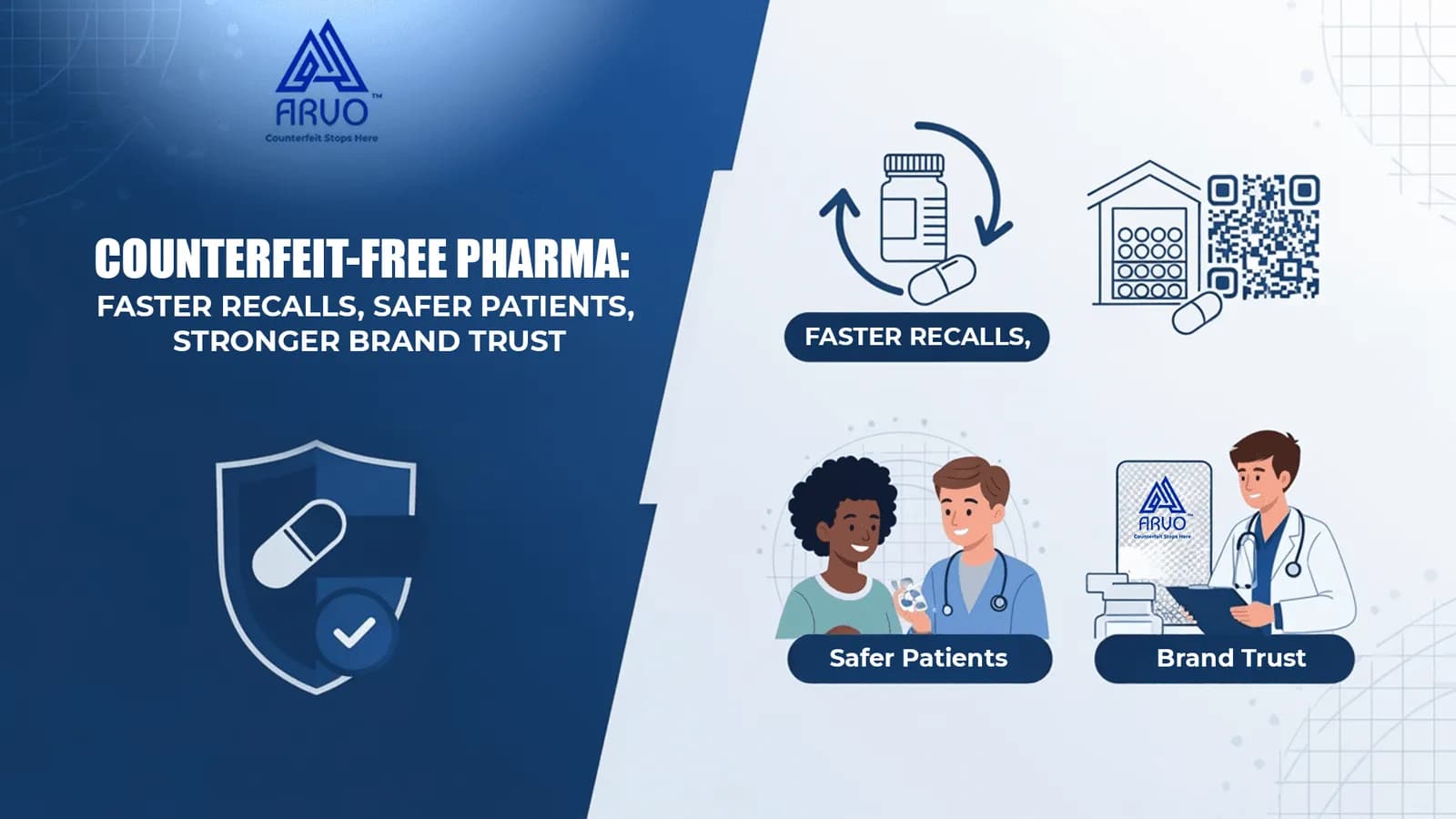
Ever heard of counterfeit-free pharma? Well, to be precise, the pharmaceutical product integrity is both a regulatory requirement and one for protecting the patient and brand reputation from harm. A large proportion of medicines sold are substandard or counterfeit, according to the WHO and these are potentially lethal. Through the development of systems that verify authenticity, safety, and traceability, the pharmaceutical industry can bolster patient trust, reduce risks, and ensure that the healthcare environment is a safer place for all. Digital technologies like serialization pharma, anti-counterfeiting technologies, and blockchain pharma are transforming recalls by companies and how they protect patients.
The Rising Need for Efficient Pharma
Pharma recalls have soared in the past decade and now reach tens of thousands per year. All recalls carry risks of injury to patients, disruption of business operations, and harm to reputation. Speed and precision are critical now.
Serialized and real-time data consolidation enabled centralized recall management enables businesses to isolate and remove contaminated products promptly without stopping the whole supply chain.
Serialization Pharma: The Foundation of Traceability
Serialization assigns every salable unit a distinct identification so that supply chains would attain end-to-end visibility. The U.S. DSCSA and EU FMD regulations have enforced serialization as one such compliance element. Besides regulation, serialization allows for prompt authentication and selective recalls, protecting both patients and brands.
Anti-Counterfeiting Solutions in Pharmaceutical Packaging
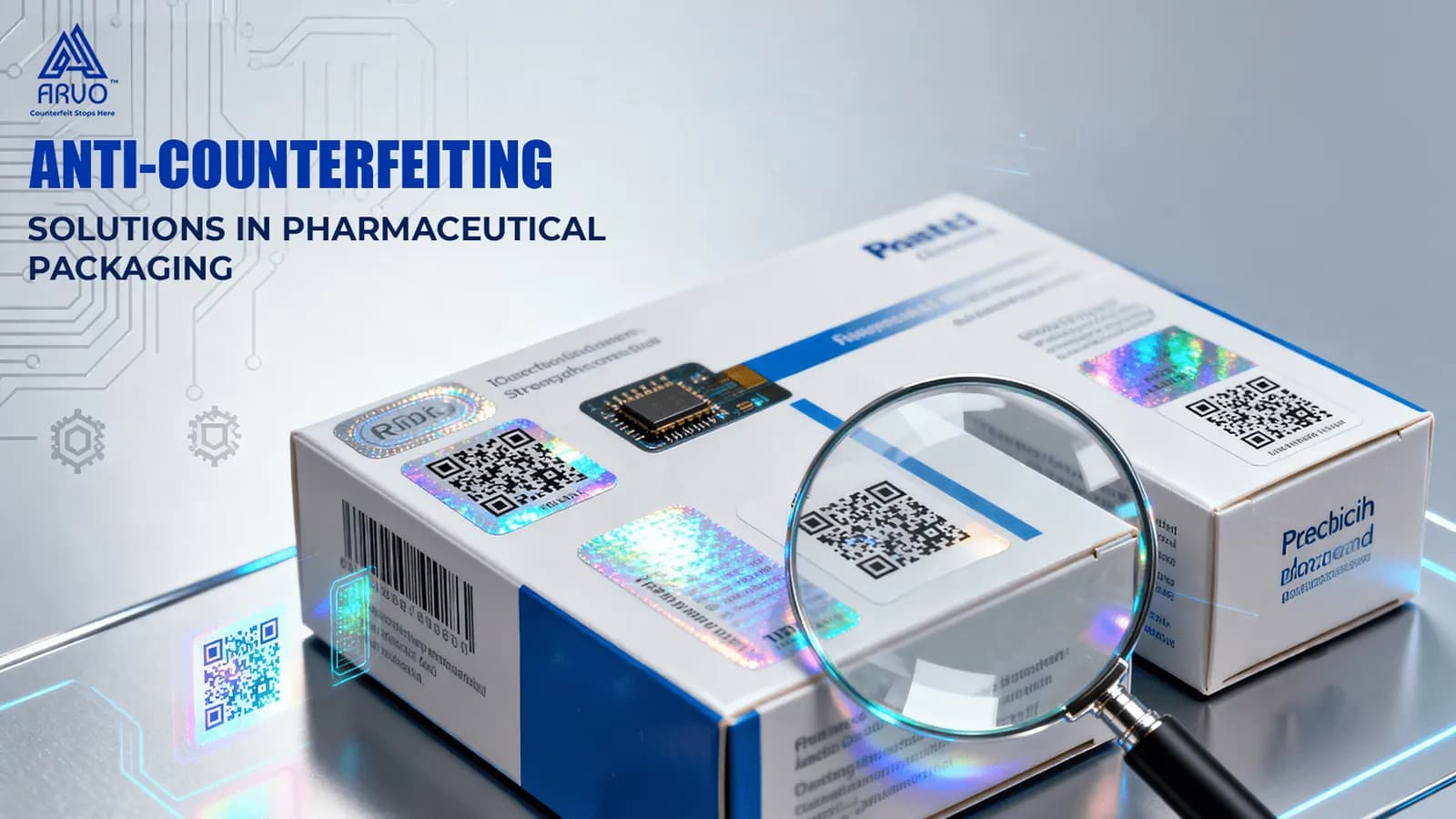
Counterfeit drugs remain a global issue, especially in poorly regulated markets. Modern technology in the form of tamper-evident seals, forensic inks, and sealed QR/DPP codes is essential in combating it. When coupled with digital proof-of-authenticity technology, it’s possible for pharmacists, distributors, and even patients, to verify product authenticity in real-time.
Vision AI for Automated Recall and Quality Precision
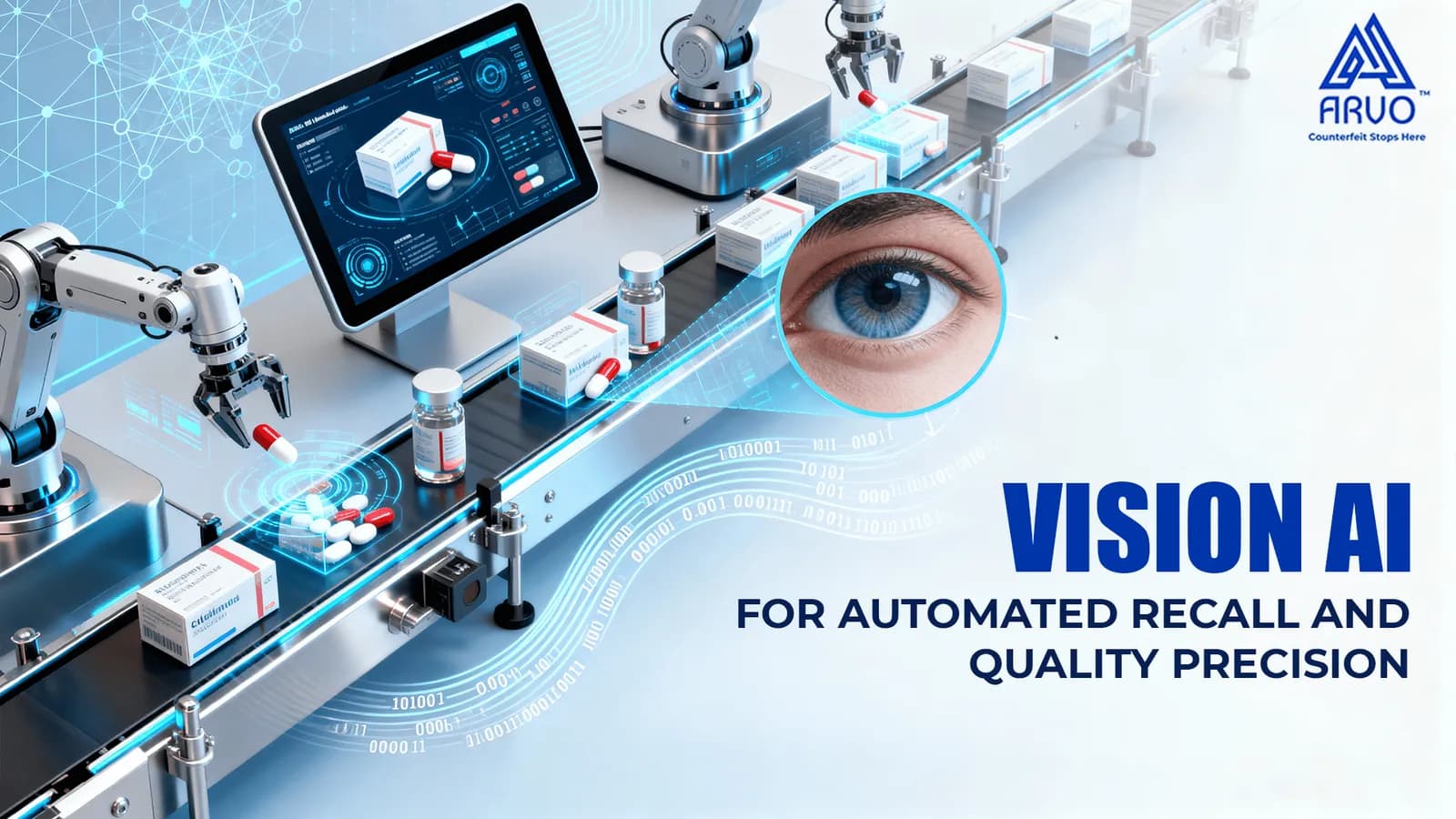
Errors in human labeling, serialization, or packaging can extend recalls or enable defective products to remain in circulation. Vision AI scans packaging lines for missing serials, misprints, or tampering to maintain quality consistency and reduce risks of recall expansion.
Blockchain Technology in Pharmaceuticals
Blockchain offers histories that are proof against tampering for all product movement through the supply chain. They enable regulators and producers to share one version of reality, with greater openness, faster investigation, and wider compliance in the event of recalls.
Creating a Counterfeit-Free Pharma World
An inviolate world of pharma needs multiple layers of protection: serialization, anti-counterfeiting packaging, Vision AI, and blockchain. In combination, these technologies yield:
- Faster, more accurate recalls
- Enhanced patient safety measures
- End-to-end visibility throughout the supply chain
- Greater confidence in brand and compliance
Conclusion: The pharma sector is no longer comfortable addressing recalls and counterfeiting as a reactive problem. Through the right combination of technologies, recalls are transformed into proactive cost-saving endeavors that protect patients and uphold brand equity.
Questions answered in this article
- Why are pharma recalls increasing, and how can they be handled better?
- Labelling errors, contamination and packaging defects drive many recalls, which hurt patient safety and brand trust as well as the supply chain. With serialization and real-time data, companies can find defective batches, quarantine them and recall only what is affected.
- How does anti-counterfeiting packaging protect patients?
- Tamper-indicating seals, forensic inks and secure codes on the pack let pharmacists, distributors and patients verify a product instantly. That keeps counterfeit medicine off the shelves.
- What role does blockchain play in pharma traceability?
- It keeps a history of each product's journey that cannot be quietly changed, lets manufacturers and regulators share information securely and speeds up investigations during a recall. It works alongside serialization and packaging defences.
- How does Vision AI help with pharma recalls?
- Vision AI scans packaging lines for missing serials, misprints and tampering. Catching these errors early keeps defective products out of circulation and stops a recall from growing.
Sources
- U.S. DSCSA, U.S. Food and Drug Administration