Pharma Serialization vs. Non-Cloneable Identity: What’s the Difference?
Pharma serialization tracks every unit of a drug; non-cloneable identity proves the unit itself cannot be copied. Here is how they differ and why both matter.
By Abhijeet Kumar, ARVOPublished Updated 4 min read
In short
Pharma serialization gives every sellable drug unit a code, usually a GTIN, serial number, batch and expiry, so it can be tracked through the supply chain, but the code can still be copied. Non-cloneable identity adds a physical or cryptographic feature that cannot be duplicated, proving the unit itself is authentic. The two work together.
- Serialization assigns each sellable drug unit a unique code and is mandated by rules such as the US DSCSA and the EU FMD.
- Serialization gives visibility, but a printed or digital serial code can still be copied, counterfeited or changed.
- Non-cloneable identity relies on physical or cryptographic properties, such as physical unclonable functions, that cannot be duplicated.
- Any attempt to tamper with a product carrying a non-cloneable identity breaks that identity.
- NCI does not replace serialization; it adds an authentication layer on top of existing regulatory requirements.
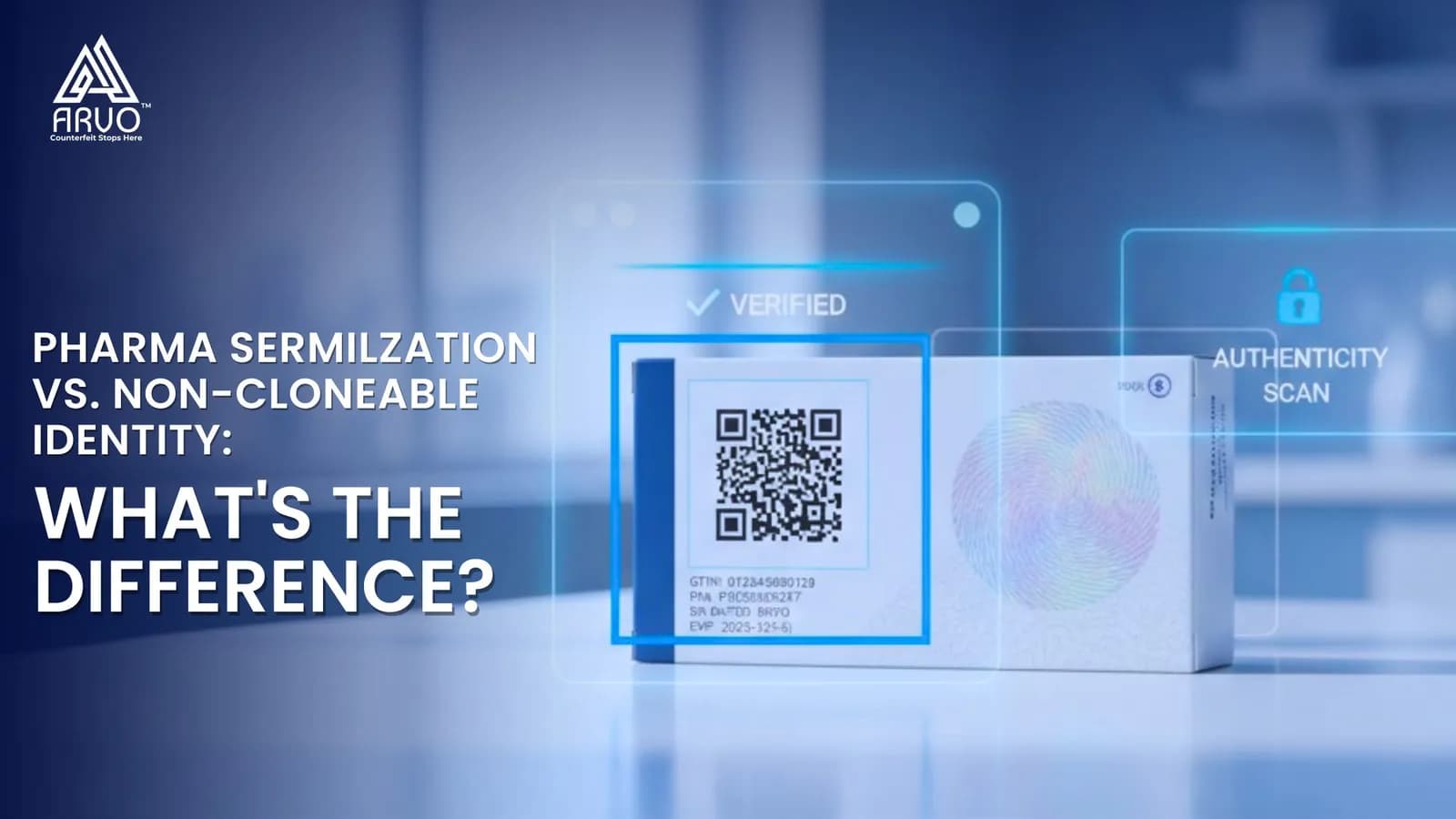
The pharmaceutical business is evolving rapidly, particularly due to the desire of regulators to find more powerful means of preventing counterfeit drugs. Pharma serialization and non-cloneable identity (NCI) are two concepts that receive much attention. They are not the same, although both attempt to establish trust, make it easy to follow a product, and ensure patient safety. It is essential to know how they are different to people who operate supply chains, regulators, and innovators who are creating the future of health care and Web3.
What Is Pharma Serialization?
Pharma serialization refers to assigning a serial number to every sellable unit of a drug. The number is then followed as the product passes through the factory, through the wholesaler, distributor, pharmacy, and into the patient.
The major characteristics of Serialization.
- Unique Serial Codes- typically a combination of product ID (GTIN), a serial number, batch number, and expiry date.
- Regulatory Compliance – mandated by regulations such as the U.S. DSCSA, the EU FMD, and other regulations worldwide.
- Supply Chain Visibility – assists in identifying whether a product has been diverted, repackaged, or tampered with.
- Track-and-Trace – allows any person to verify the authenticity of a product at numerous checkpoints and prevent the entry of fakes to the market.
The Limitation
Serialization is primarily based on digital or printed codes. Although every code is distinct, it may still be:
- Copied,
- counterfeited, or
- changed.
Serialization provides you with visibility, but does not prevent the cloning of the code.
What Is Non-Cloneable Identity (NCI)?
NCI goes a step further. It employs a physical or cryptographic property that cannot be copied, even by advanced counterfeiters. It is a product identity that is embedded in the product, and it cannot be duplicated, just like a fingerprint.
Key Technologies Behind NCI
- Physical Unclonable Functions (PUFs) – the material is random, and this makes it unique and impossible to duplicate.
- Web3 Cryptography – matches the physical identity with blockchain proof to ensure that the record cannot be altered.
- Hardware Anchors – chips or small markers that bind the product to a secure mathematical identity.
What Makes NCI Different?
- Impossible to Clone – not only is it unique, it cannot be duplicated by design.
- Zero Trust Checking – anyone can verify whether a product is genuine without the need to have a central system.
- Tamper-Proof- any attempt to modify the product will alter the identity as well.
NCI does not only aim at tracking the numbers, but also at making sure that the product itself is authentic.
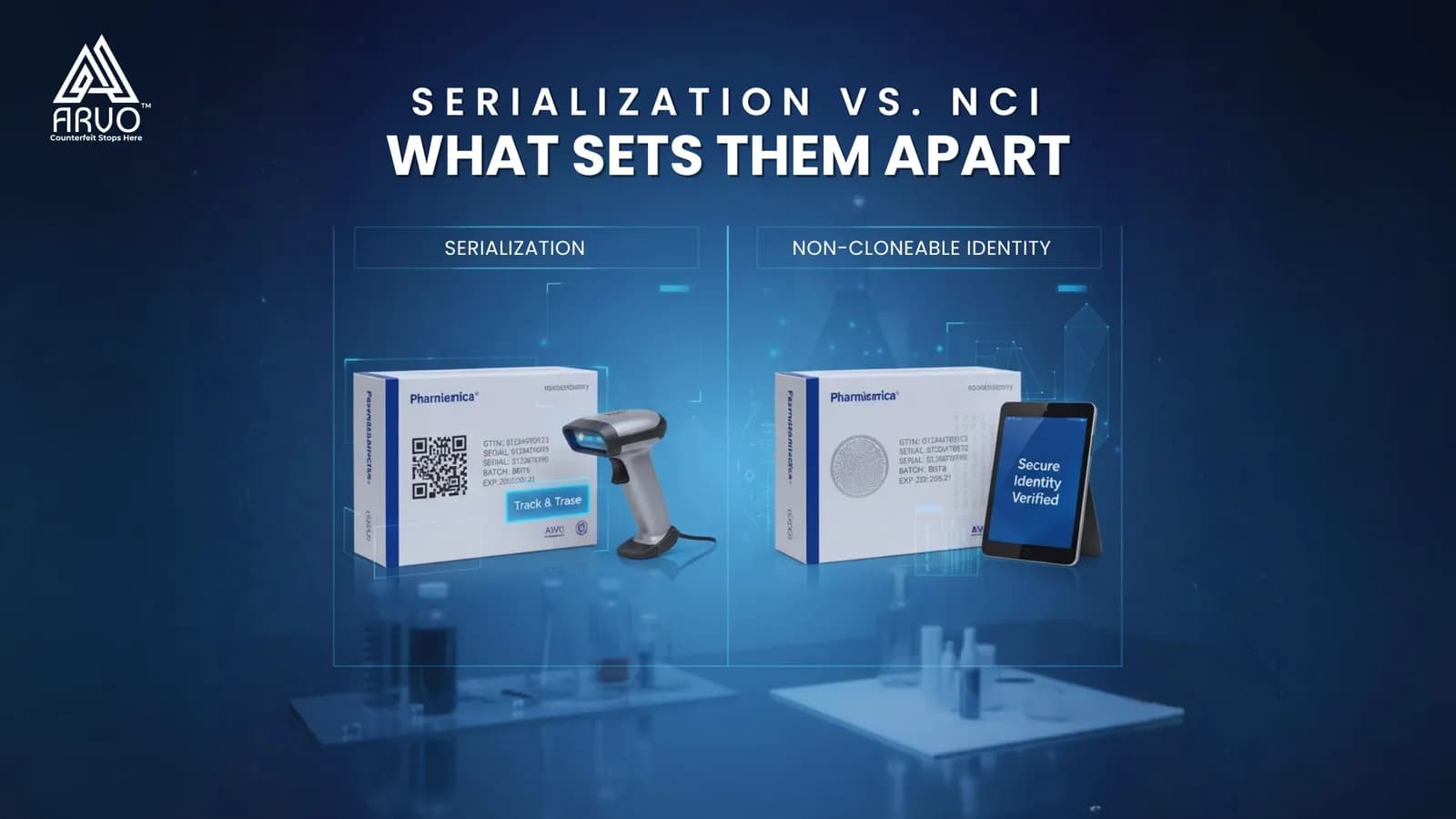
Serialization vs. NCI: A Side-by-Side Comparison
| Aspect | Pharma Serialization | Non-Cloneable Identity (NCI) |
|---|---|---|
| Purpose | Track and trace units | Prove a product cannot be counterfeited |
| Uniqueness | Assigned, can be copied | Intrinsic, cannot be cloned |
| Technology | Barcodes, QR codes, databases | PUFs, crypto proofs, Web3 verification |
| Security Level | Moderate | Very high |
| Regulatory Role | Mandated in many countries | Emerging and complementary |
| Vulnerability | Code replication or tampering | Identity breaks if tampered with |
| Verification | Requires system lookup | Direct physical–digital validation |
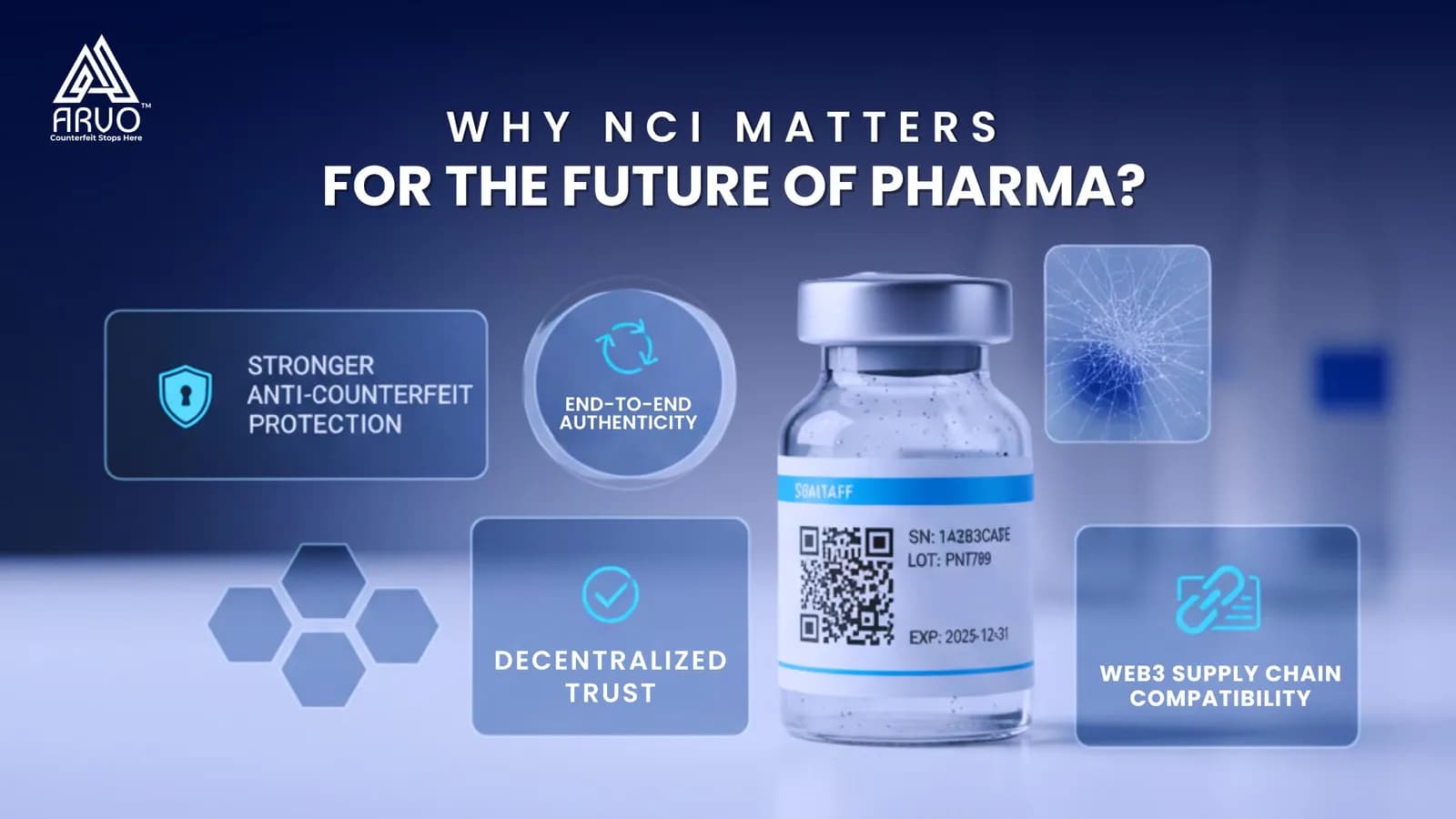
Why NCI Matters for the Future of Pharma
The industry requires more than printed serial numbers as counterfeiters become more advanced. NCI offers:
- Better protection against counterfeits – it is expensive and technically unfeasible to copy.
- End-to-end authenticity – a product can be checked by patients and pharmacists immediately.
- Decentralized trust – reduced dependence on central databases, which are manipulable.
- Web3 supply chain compatibility – enables permanent audit trails, tokenization, and digital twins.
NCI is not an alternative to serialization; rather, it complements it, providing compliance and the highest quality protection against counterfeits.
Conclusion
Both serialization and non-cloneable identity are supposed to secure the drug supply chain and ensure patient safety. They simply adopt alternative approaches. Serialization is used to track the product, whereas NCI is used to ensure the product is original and has not been tampered with. With the industry shifting to Web3 transparency and next-generation checks, a combination of the two will result in a safer, smarter, and more reliable global pharma system.
Questions answered in this article
- Is pharma serialization enough to stop counterfeit drugs?
- No. Serialization improves traceability, but the codes can still be copied or altered. Counterfeiters can duplicate barcodes and packaging, so serialization alone is not fully secure.
- How is non-cloneable identity different from barcodes and QR codes?
- Printed codes can be reproduced. A non-cloneable identity is built into the product with physical or cryptographic characteristics that cannot be replicated, so even a perfect copy of the packaging cannot copy the identity.
- Does non-cloneable identity replace serialization?
- Not yet. NCI adds an extra authentication layer over the serialization that regulators already require. Used together, they give both compliance and strong protection against counterfeits.
- Can pharmacists and patients verify a product with non-cloneable identity?
- Yes. NCI-based systems let anyone check a product instantly with digital tools, without relying on a central database, so authenticity checks are faster at every level of the supply chain.
Sources
- Drug Supply Chain Security Act (DSCSA), U.S. Food and Drug Administration