Pharma Traceability 2.0: How Non-Cloneable QR Codes Ensure End-to-End Drug Authentication
Non-cloneable QR codes for pharma link each serial number to a physical pattern that cannot be copied, so drugs can be authenticated from factory to patient.
By Abhijeet Kumar, ARVOPublished Updated 5 min read
In short
Pharma Traceability 2.0 moves from tracking a serial number to authenticating the pack itself. Standard serialized codes can be scanned, reprinted and pasted on fakes. A non-cloneable QR code links the serial number to a random microscopic physical pattern stored in a secure database, so a copied code fails the check anywhere from factory to patient.
- Regulations such as DSCSA in the U.S. and the EU FMD require a unique serial number on each saleable unit, usually in a DataMatrix or standard QR code.
- A standard code can be scanned, reprinted and stuck on a fake, which then looks authentic until a duplicate scan is caught later.
- Non-cloneable QR codes usually rely on a Physical Unclonable Function: a random microscopic pattern that cannot be reproduced, even with the same printing process.
- At each scan the app reads the physical pattern and compares it with the stored fingerprint for that serial number, so a mismatch flags a fake at once.
- Distributors, pharmacies and patients can all verify the same pack, which turns traceability into end-to-end authentication.
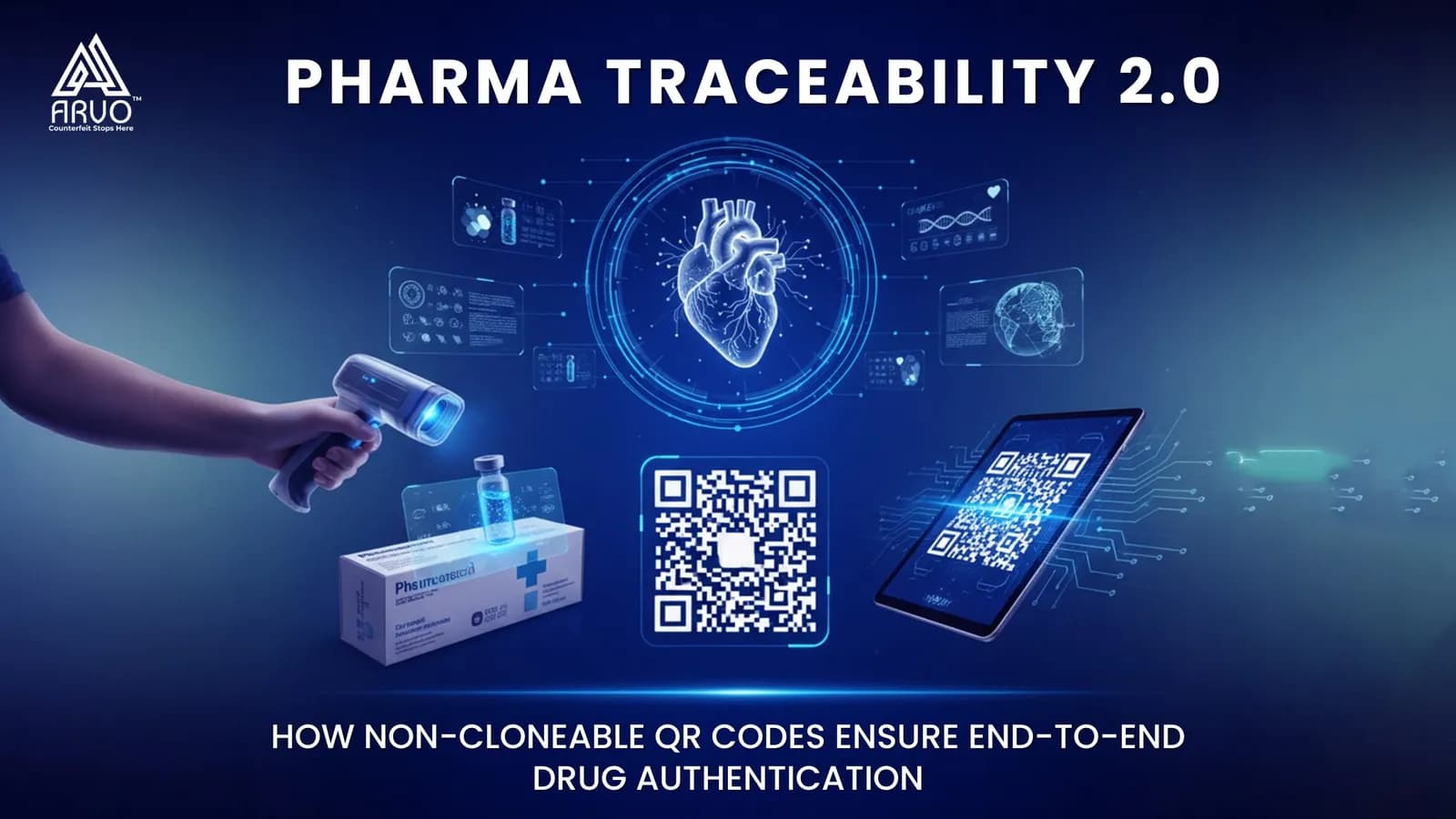
The pharmaceutical supply chain is a lifeline, but it’s also under constant attack. Counterfeit drugs, which can be ineffective, contaminated, or even lethal, are a global crisis. The industry’s solution has long been traceability, but the rise of sophisticated counterfeiters means simple serialization isn’t enough anymore.
Welcome to Pharma Traceability 2.0, where the focus shifts from merely tracking a product to instantly and reliably authenticating it. The key technology powering this seismic shift? Non-Cloneable QR Codes.
The Dilemma: Why Conventional Traceability is Ineffective
Serialization has been required by regulatory agencies such as the FDA (DSCSA in the U.S.) and the EU (FMD) over the years. This is by attaching a distinct serial number, usually in a DataMatrix or a standard QR code, to each saleable unit.
It is a huge advancement in this system that offers a digital pedigree of every product. Nonetheless, it has a serious weakness:
- Cloneability of Codes: A typical QR code is merely information printed on paper or packaging. An advanced counterfeiter will find it easy to scan the code of a real product, reprint another copy of the code, and paste it on his fake product. When the counterfeit code is scanned, it is connected to the data of the legitimate product, so it will seem authentic until a duplicate scan is detected much later down the line (which may be too late).
- Requirement of Overt vs. Covert Security: Traditional techniques usually depend on overt characteristics, such as holograms, or covert characteristics, such as special inks. A non-cloneable technology provides a means of combining the availability of a digital scan with a physical, non-tamperable anchor.
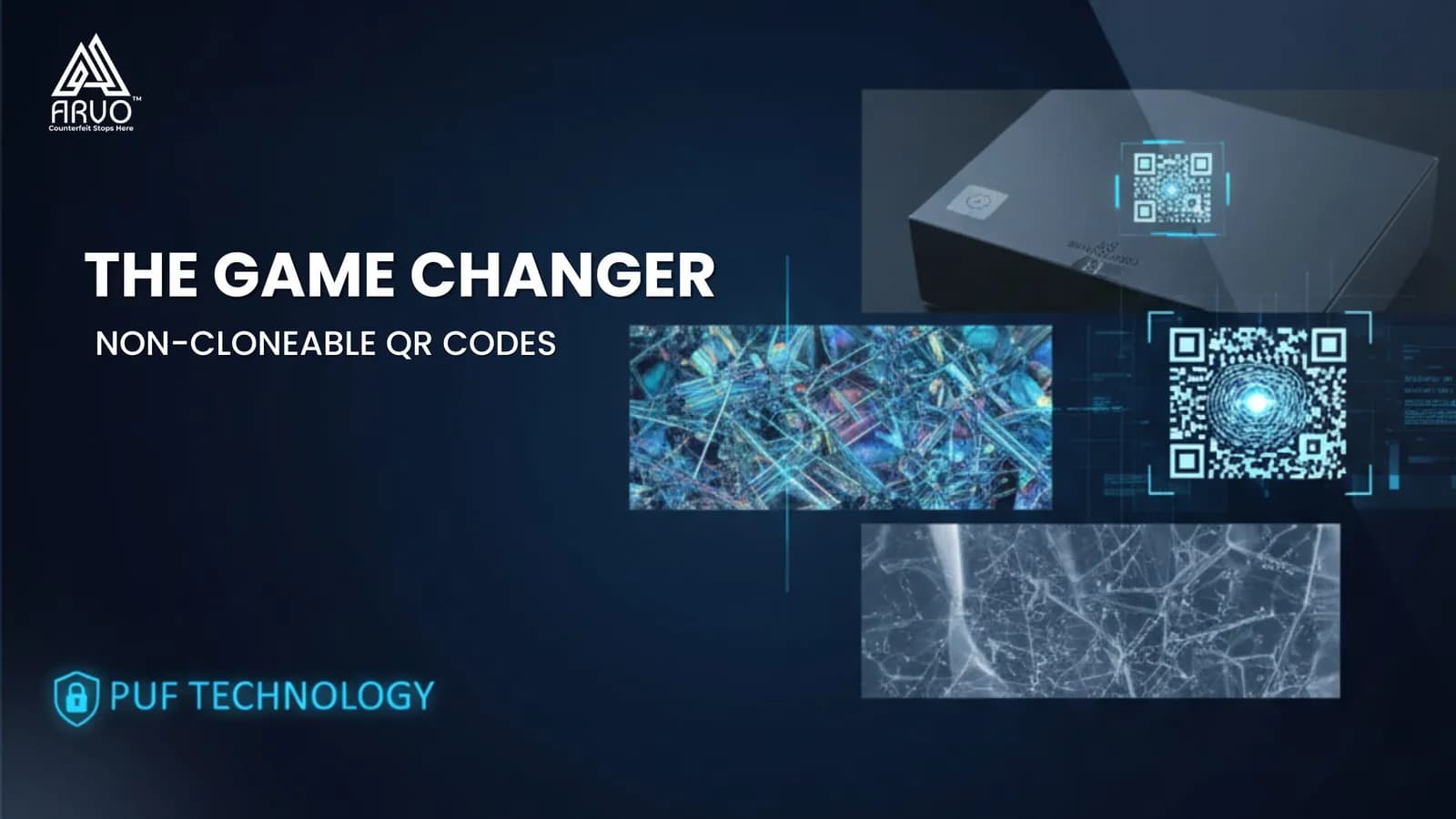
The Game Changer: Non-Cloneable QR Codes
Secure QR Codes are the development of product authentication in the form of Non-Cloneable QR Codes (NCQRCs). They preserve the ease of use of a basic scan and incorporate a strong, nearly unbreakable security measure.
Why then are they non-cloneable? The technology is generally founded on the principle of a Physical Unclonable Function (PUF).
How PUFs Work for Packaging
Unique Physical Fingerprint: A special substance, usually a security label, is put on the package. Random, microscopic patterns, such as a structure of 3D particles or a textured substrate, are added to this material naturally in the manufacturing process.
Digital Enrollment: This is a special, random physical pattern that is scanned by an image scanner and digitized. This electronic fingerprint is mathematically linked with the coded data (GTIN, batch number, etc.) and stored in a secure cloud database.
The Impossibility of Duplication: The physical pattern is a product of natural, random chaos on the micro-level; even with the identical printing process or materials, it is practically impossible to duplicate the microscopic pattern, thus, it is unclonable. The code will not be replicated in the physical structure by photocopying. When an NCQRC is scanned with a secure mobile application, the app does not simply read the digital information; it reads the physical pattern with the help of the camera and compares it to the stored digital fingerprint. When the physical fingerprint does not match the one in the record of that serial number, the product is immediately identified as a fake.
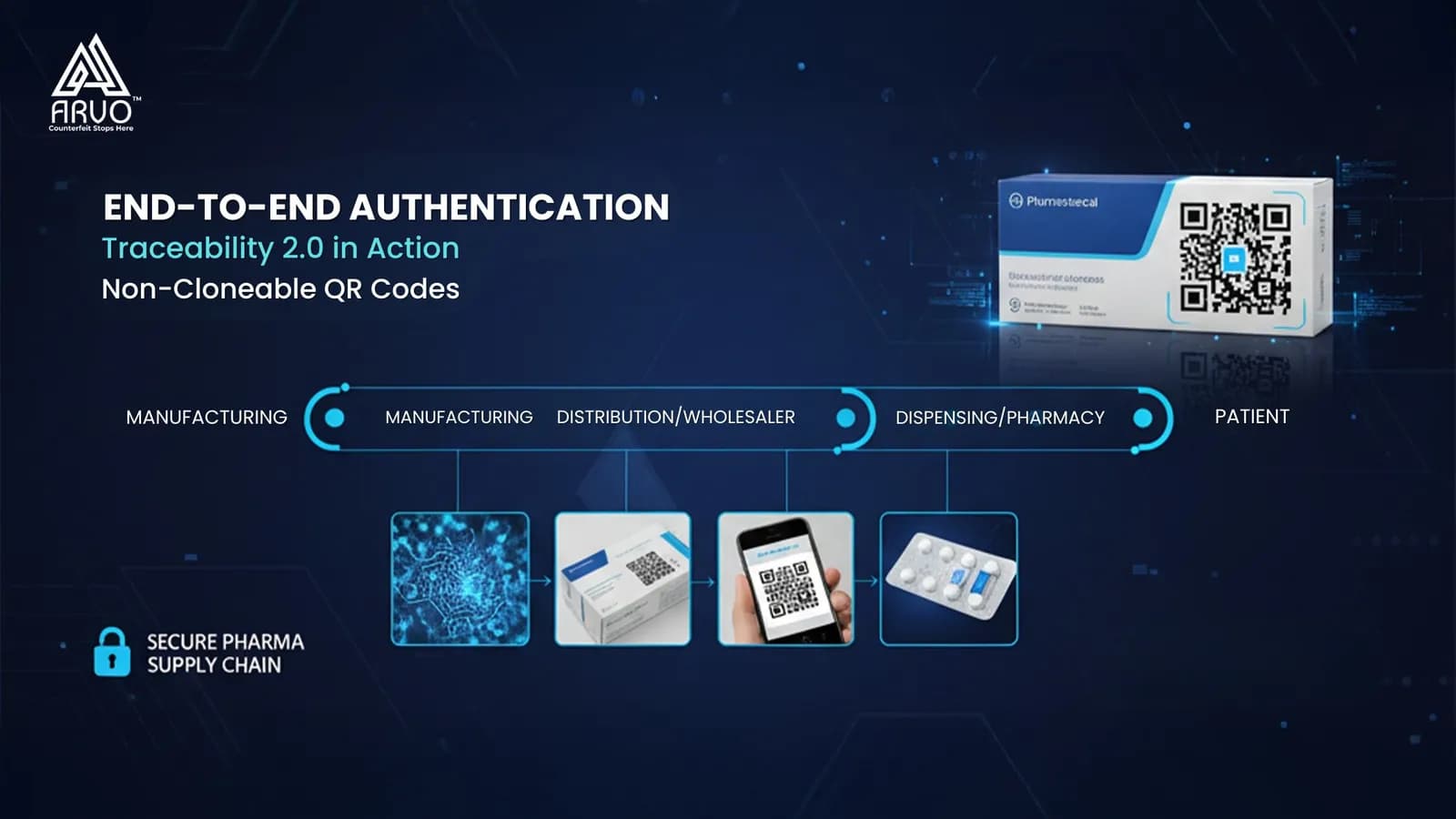
End-to-End Authentication: Traceability 2.0 in Action
Non-Cloneable QR Codes provide a dynamic, verifiable security layer that elevates pharma traceability to the next level: End-to-End Drug Authentication.
| Stage in Supply Chain | Traceability 1.0 (Standard Code) | Traceability 2.0 (Non-Cloneable Code) |
|---|---|---|
| Manufacturing | Prints serialized code; susceptible to external counterfeiting. | Prints a unique physical security feature; digital twin stored in database. |
| Distribution/Wholesaler | Scans code to log location; risks handling a look-alike copy. | Scans code, app verifies unique physical fingerprint in real-time. |
| Dispensing/Pharmacy | Verifies serial number against a database; limited check on physical code integrity. | Instantaneous, definitive authentication of the packaging itself at the point of dispensing. |
| Patient | Relies on the integrity of the pharmacy. | Empowered to scan and verify the drug’s authenticity before use, building trust. |
By linking the digital identity (the serial number) to a non-replicable physical asset (the code’s underlying unique pattern), the pharmaceutical industry creates a powerful shield. This ensures that the code being scanned is the original, unique code, helping ensure that the medicine inside is authentic throughout its entire journey—from the factory to the patient’s hand.
The Future is Secure
As global supply chains grow more complex and regulatory pressure (like the U.S.’s 2023 DSCSA deadline for unit-level traceability) increases, the adoption of advanced authentication technologies is no longer optional—it’s essential. Non-Cloneable QR Codes represent the gold standard for Pharma Traceability 2.0, offering an accessible, affordable, and, most importantly, unclonable path to a safer, counterfeit-free drug supply.
Questions answered in this article
- What is the main weakness of standard drug serialization?
- Standard QR codes and serial numbers are easy to copy. A counterfeiter can scan a code from a real pack, print a copy and put it on a fake, which passes as genuine until a duplicate scan is detected, often too late.
- How do non-cloneable QR codes stop copying?
- They link the serial number to a unique physical fingerprint on the packaging: a random, microscopic pattern that cannot be duplicated. When the code is scanned, the app checks the data and confirms the physical pattern matches the one stored for that serial number; if it does not, the pack is flagged as fake.
- What is the benefit of Pharma Traceability 2.0?
- It moves beyond tracking where a drug is to proving it is authentic in real time. Every partner, from distributor to pharmacy to patient, can scan the pack and verify it before it is dispensed or used.