Counterfeit Medication 101: Understanding the Global Threat to Patients and Brands
Counterfeit medication explained: how fakes enter global pharma supply chains, the harm to patients and brands, and how traceability and secure codes help.
By Abhijeet Kumar, ARVOPublished Updated 5 min read
In short
Counterfeit medication is fake or substandard medicine that may contain the wrong amount of active ingredient, none at all, or toxic fillers. The WHO estimates that about 1 in 10 medical products in low- and middle-income countries is substandard or falsified. It harms patients, fuels drug resistance and costs pharma brands revenue and trust.
- The WHO estimates that roughly 1 in 10 medical products in low- and middle-income countries is falsified or substandard.
- Counterfeiters exploit long global supply chains by inserting fakes at weak distribution points, reusing genuine packaging and diluting active ingredients.
- Fake medicines can cause severe reactions or failed treatment, and incomplete doses contribute to drug resistance.
- For pharma brands, counterfeits mean brand erosion, lost revenue and regulatory or legal exposure.
- Blockchain records, digital product passports and copy-proof codes let pharmacies and patients check a medicine's authenticity.
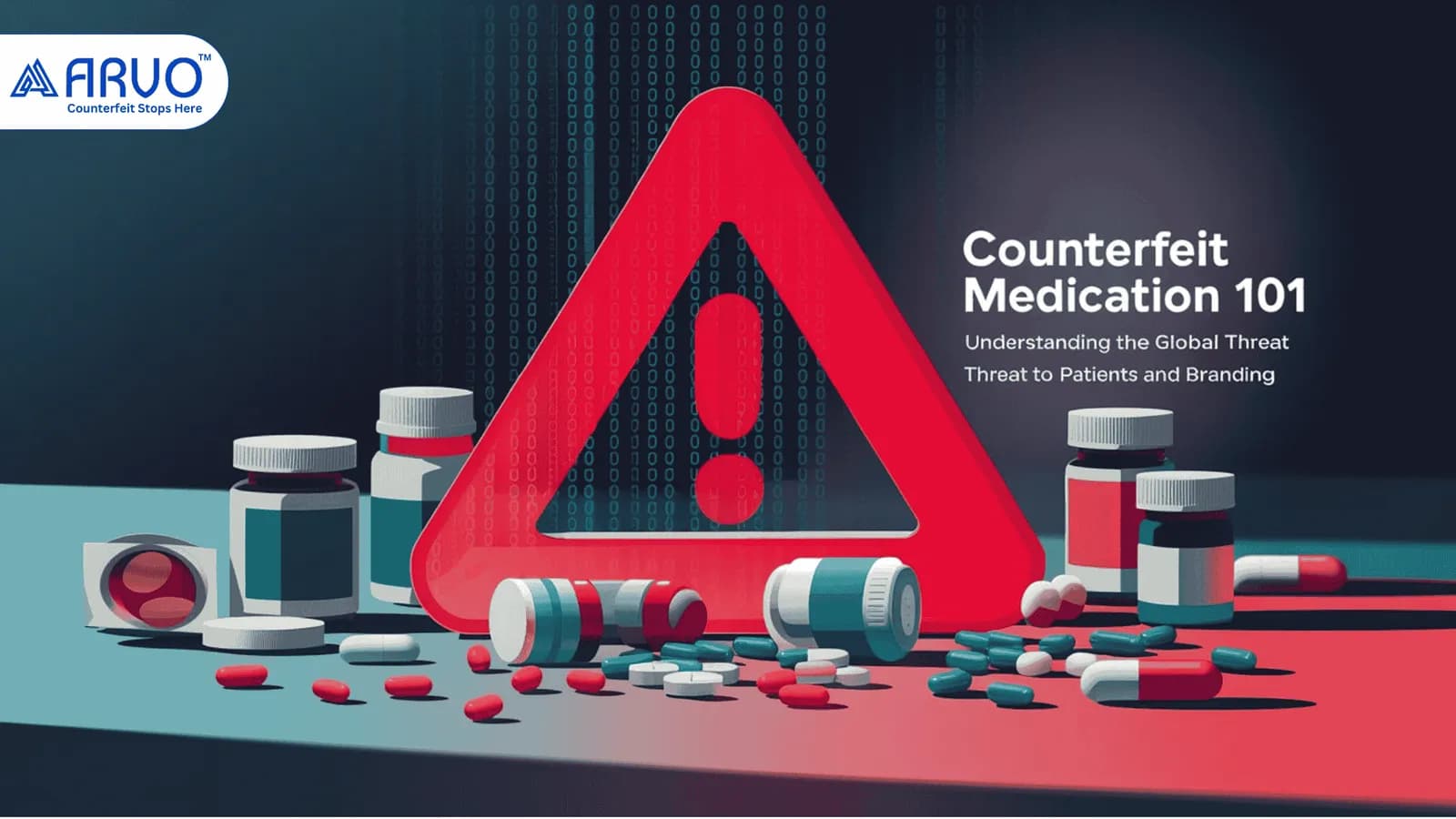
Imagine taking a pill prescribed by your doctor, expecting relief only to discover it’s a counterfeit, laced with toxic fillers, or missing its active ingredients. This isn’t just a rare incident; it’s a billion-dollar crisis affecting millions of unsuspecting patients worldwide. Counterfeit medications are flooding the global market, endangering lives, eroding trust in healthcare, and costing pharmaceutical companies billions.
In an era defined by innovation and rapid communication, it might be surprising to learn that counterfeit medication remains one of the most pressing threats to global public health and the pharmaceutical industry. This alarming issue not only endangers patient lives but also undermines the trust consumers place in reputable pharma brands.
The Scope of the Counterfeit Medication Crisis
The World Health Organization (WHO) estimates that in low- and middle-income countries, approximately 1 in 10 medical products is falsified or substandard. These staggering figures make it clear that fake drugs are not isolated incidents but rather a widespread, systemic problem.
A Global Value Chain Challenge
Modern pharmaceutical value chains stretch across continents, involving multiple suppliers, distributors, and regulators. Counterfeiters exploit this complexity by:
- Introducing fake drugs at distribution points where oversight may be weaker.
- Mislabeling products or reusing legitimate packaging for counterfeit goods.
- Altering or diluting active ingredients to cut costs and increase profits.
This interconnected system means that even a single breach in security can have a ripple effect, putting countless consumers at risk.
How Counterfeit Medication Impacts Consumer Safety
- Direct Health Dangers: Counterfeit medication often contains incorrect or insufficient active ingredients, toxic fillers, or contaminants. Patients may unknowingly ingest harmful substances or fail to receive the therapy they need—potentially leading to severe adverse reactions, prolonged illness, or even death.
- Loss of Trust in Healthcare Systems: Public confidence in the healthcare sector depends on safe, effective treatments. When consumers encounter fake drugs, even once, they may question the reliability of legitimate medications, healthcare providers, and the broader pharmaceutical industry.
- Exacerbated Drug Resistance: Substandard medications contribute to the rise of drug-resistant strains of pathogens. Incomplete doses of active ingredients or improper formulations can enable diseases to adapt, making it harder for legitimate treatments to work effectively in the future.
Financial Repercussions for Pharma Companies
Counterfeit medication doesn’t just pose a health risk; it also inflicts substantial economic damage on legitimate businesses:
- Brand Erosion: A single public incident involving counterfeit drugs can taint a company’s reputation for years to come. Loyal customers may switch brands out of fear, and prospective patients will be hesitant to trust a label linked to fake or harmful products.
- Revenue Losses: Counterfeit products siphon off billions of dollars that would otherwise go to licensed manufacturers. When customers unwittingly purchase fake versions of patented medications, legitimate companies lose critical income that could have funded further research and development.
- Legal and Regulatory Complications: Pharmaceutical companies can face regulatory scrutiny or lawsuits if fake products are discovered within their supply chains. Time spent on investigations, product recalls, and compliance checks pulls resources away from innovation and growth.
1. Strengthening Regulations and Enforcement
Regulatory bodies such as the FDA, EMA, and local authorities worldwide impose stringent guidelines for drug approval, manufacturing, and distribution. However, these regulations are only effective if they are consistently enforced.
- Stricter penalties for offenders can deter would-be counterfeiters.
- Improved coordination among international law enforcement helps track cross-border criminal activities.
2. Leveraging Technology and Traceability
Emerging technologies offer a proactive defense against counterfeit medication:
- Blockchain: A decentralized ledger that records every step of the supply chain in an immutable format, making it nearly impossible for counterfeit products to slip through undetected.
- Digital Product Passports: These digital records store key information—such as manufacturing date, location, and batch number—ensuring full transparency for each product.
- Secure Tags and QR Codes: Copy-proof labels and scannable codes enable pharmacies and consumers to instantly verify the authenticity of a medication.
3. Educating Stakeholders
Consumer and professional awareness form the backbone of any anti-counterfeiting strategy:
- Healthcare Providers: Pharmacists and doctors should receive ongoing training to identify suspicious product packaging or distribution channels.
- Patients: Encouraging patients to purchase medications from reputable sources, check packaging details, and report anything unusual can be a game-changer in early detection.
- Supply Chain Partners: Regular communication among manufacturers, distributors, and regulators fosters collective vigilance against counterfeit attempts.
Conclusion
Counterfeit medication represents a formidable global challenge, transcending borders and impacting the health of millions. While regulatory efforts and law enforcement play critical roles, technological solutions like blockchain, digital product passports, and copy-proof tags are revolutionizing the fight against fake drugs. By combining robust strategies with consumer education, the pharmaceutical industry can not only protect patient welfare but also safeguard vital brand reputation and revenue.
To learn more about traceability and copy-proof codes, contact ARVO.
Questions answered in this article
- Why is counterfeit medication so common despite strict regulations?
- Many counterfeiters operate where enforcement is weak or exploit global distribution networks with inconsistent oversight, which makes it hard to catch every fake product.
- How does blockchain help pharma companies fight counterfeit drugs?
- Blockchain keeps an unalterable record of each product's journey. That makes it easier to pinpoint where a counterfeit entered the supply chain and gives every stakeholder the same transparent record.
- What should patients do if they suspect counterfeit medication?
- Stop using the medicine straight away, tell a healthcare professional and, where possible, alert the regulator or the manufacturer.
- How do copy-proof tags differ from holographic seals?
- Copy-proof tags use encryption and a scannable code, so each one can be verified instantly and is very hard to replicate. That gives more security than traditional holographic seals.
Sources
- U.S. Food and Drug Administration, U.S. FDA
- European Medicines Agency, EMA