Why Counterfeit Tires Are So Dangerous: The Safety Hazards You Can’t Ignore
Counterfeit tires lose grip, wear early and can blow out at speed. Learn the safety hazards, how to spot a fake tire, and how manufacturers can stop them.
By Abhijeet Kumar, ARVOPublished Updated 5 min read
In short
Counterfeit tires are made with cheap compounds, inconsistent construction and no validated testing. They lose grip earlier, lengthen stopping distances in the rain, wear unevenly and often skip internal reinforcements, which raises the risk of blowouts at speed. Buyers should use authorised dealers and check markings; manufacturers should give every tire a unique, scannable ID.
- Counterfeit tires use inferior compounds that slide earlier and lengthen stopping distances in the wet.
- Fakes often leave out internal reinforcements, raising the risk of a sudden blowout under load or at highway speed.
- NHTSA notes about 11,000 tire-related crashes a year in the US, so tire failure leaves little safety margin.
- Buyers can reduce risk by using authorised dealers, checking markings and date codes, and distrusting deep discounts.
- Manufacturers can stop clones by serialising every tire, making scans routine at each handover and tying warranty to a valid scan history.
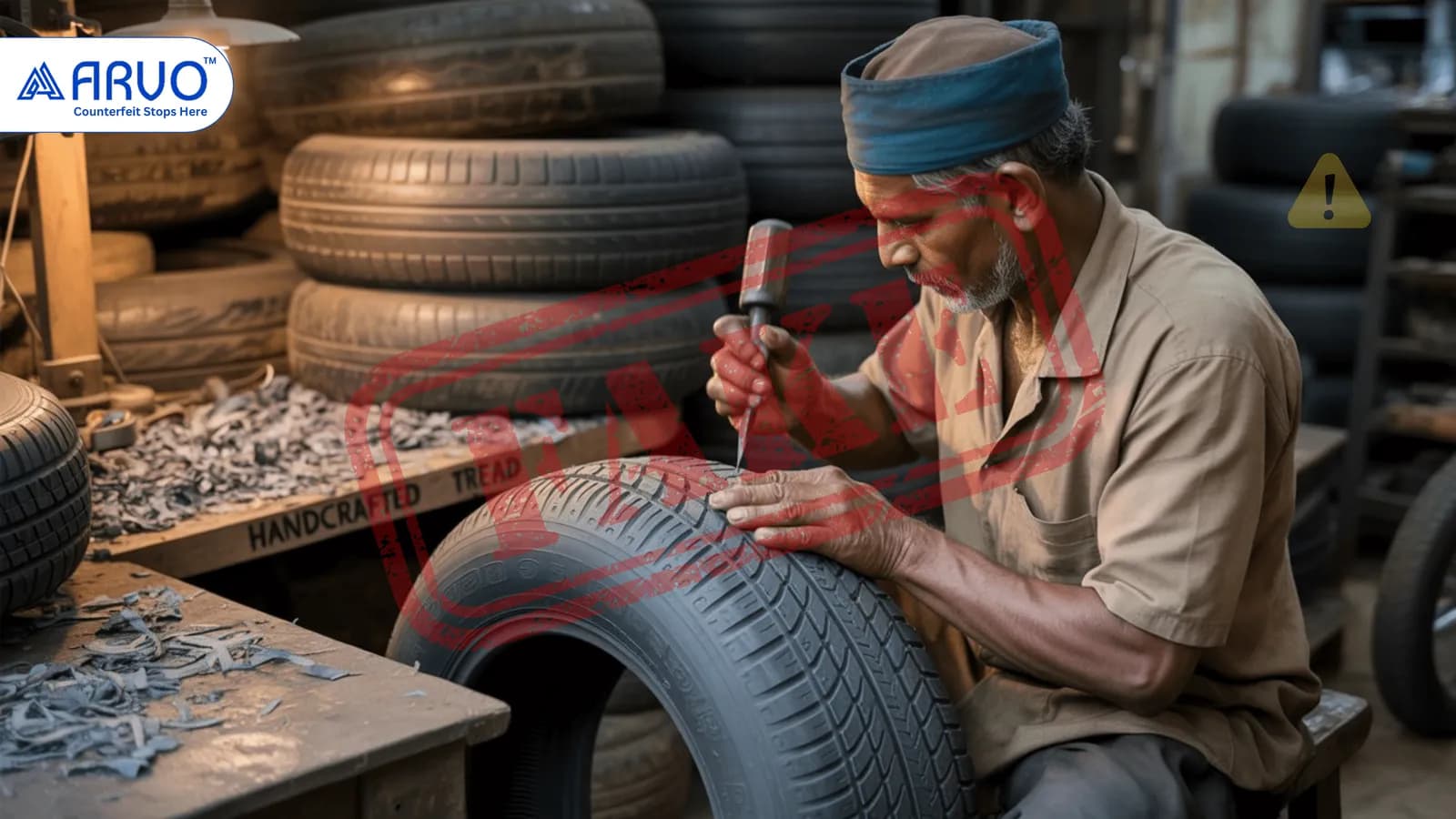
Counterfeit tires aren’t just cheap knock-offs; they’re a direct threat to safety and brand reputation. Built with inferior compounds, inconsistent construction, and no validated testing, fakes are prone to rapid heat build-up, tread separation, and unpredictable grip, especially at speed, under load, and in the wet. For manufacturers, that translates into liability exposure, warranty noise, channel erosion, and long-term brand damage.
Poor Traction and Grip
Real tires are tested for wet, dry, and cornering grip to keep you in control. Counterfeits use cheap compounds that slide earlier and lengthen the stopping distance in the rain. One unexpected skid can turn a close call into a crash.
Shorter Lifespan
Authentic tires are designed to wear evenly and handle heat over time. Fakes develop hot spots, irregular wear, and weak bonding that force early replacements. You end up paying more while trusting them less.
Increased Risk of Blowouts
Counterfeits often skip key reinforcements inside the tire. Under load or at highway speed, that can mean a sudden burst and instant loss of control. Blowouts turn routine trips into emergencies in seconds.
Missing Safety Features
Genuine tires manage heat and support sidewalls during hard braking and pothole hits. Fakes strip out these protections to save money. When you need performance most, they come up short.
Global Statistics and Market Impact (with sources)
- Safety stakes (U.S.): 646 people died in tire-related crashes in 2023, and NHTSA notes about 11,000 tire-related crashes each year. Not every case involves counterfeits, but the safety margin is thin when tires fail.
- Counterfeit auto parts: Industry sources estimate >$3 billion/year in counterfeit parts entering the U.S. market for A2C2 member brands. This includes critical safety items and harms consumer trust.
- EU enforcement trend: 152 million fake items worth ~€3.4 billion were detained in 2023 across the EU. Stronger enforcement shows the scale and urgency of the problem.
Counterfeiting in the Automotive Industry
Fakes hit key safety parts like tyres, brake pads, airbags, and batteries. They’re pushed online and through unauthorised sellers, where low prices hide real risks. This erodes trust in genuine brands and exposes drivers to preventable failures.
How to Avoid Buying Counterfeit Tires
- Buy from authorized dealers. Stick to approved partners and verified online stores. If a seller can’t prove they are authorized, don’t proceed.
- Check markings and certifications. Confirm logo, size, load/speed index, DOT/TIN (where used), E-mark, plant, and date code. If the codes look wrong or mismatched across a set, walk away.
- Inspect the build quality. Genuine tires have uniform tread and clean sidewalls. Blurry text, misspellings, uneven textures, or flimsy sidewalls are red flags.
- Be cautious of low prices. Deep discounts often signal risk. If the price looks too good to be true, assume it is and verify before you buy.
Simple Ways Manufacturers Can Stop Counterfeits
- Tighten your channel. Sell only through authorized partners and audit them often. Remove sellers who don’t follow the rules.
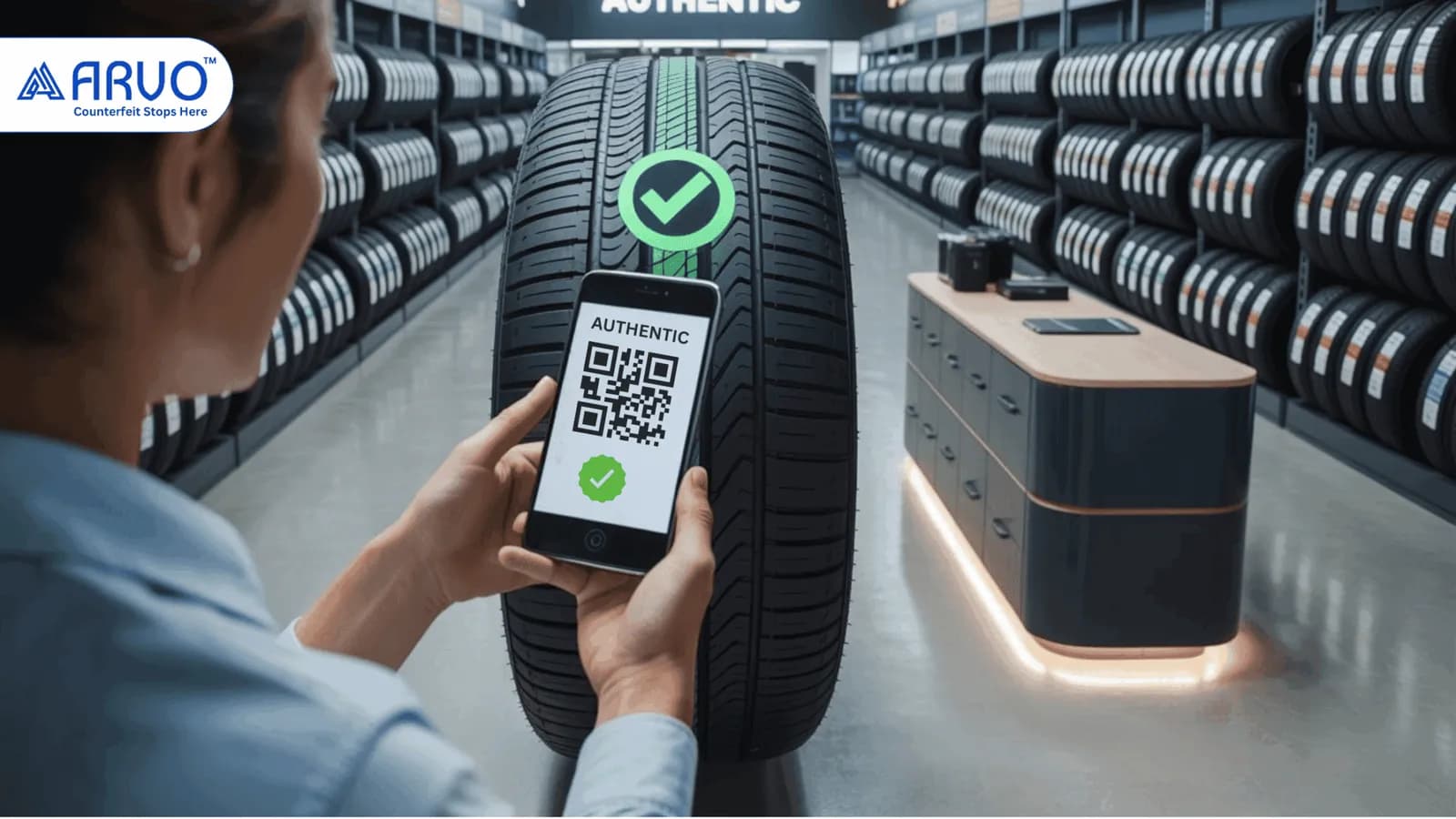
- Give every tire a unique ID. Serialize at the item level (QR/NFC/RFID) and bind IDs to batch and mold data. Make scan-in/scan-out mandatory.
- Make scanning a routine. “If it doesn’t scan, it doesn’t ship, or receive.” Simple gates catch clones and ghost inventory.
- Watch marketplaces. Sweep listings regularly, run test buys, and keep a takedown playbook. Share known-bad sellers with your network.
- Train the field. Teach a 60-second check: codes, tread, sidewall, and a quick scan. Tie the warranty to a valid serial history.
How ARVO Can Help You
- Real-time counterfeit detection: Every scan is checked the moment it happens across the plant, warehouse, dealer, and roadside. Duplicate, copied, or out-of-place codes trigger instant alerts so you can quarantine stock and act fast.
- Complete supply-chain visibility: Track each tire from the curing press to fitment on a live map and timeline. See dwell time, route changes, and leakage points to fix problems before they grow.
- Digital Product Authentication: Secure, scannable digital IDs allow instant verification of legitimacy. Our multi-layered authentication combines overt and covert security features that enable verification by anyone in the supply chain, from distributors to fitters to drivers.
- Compliance made simple: Keep ECE, DOT, and BIS/QCO documents tied to each tire’s unique ID. Generate regulator-ready reports, speed inspections and recalls, and smooth cross-border moves.
Seeing grey-market leakage or suspicious returns? Book a session with ARVO to pilot real-time detection, full-chain visibility, and Digital Product Passports.
Conclusion
Counterfeit tires put people at risk and drain value from genuine brands. The fix is simple: buy and sell through trusted channels, verify markings, and use item-level IDs with routine scans. Add ARVO’s traceability and authentication on top, and you’ll stop fakes before they reach the road.
Questions answered in this article
- How can I tell if a tire is counterfeit?
- Check the DOT/TIN and E-mark, the plant and date codes, and the load and speed indices against the size on the sidewall. Look for clean moulding and uniform tread; blurry text, misspellings, uneven textures or flimsy sidewalls are red flags, as is a missing or unverifiable scan history.
- Why are counterfeit tires dangerous?
- They are built with cheap compounds and often skip key reinforcements and heat-management features. That means poorer grip, longer stopping distances in the rain, hot spots and uneven wear, and a higher risk of sudden blowouts under load or at speed.
- Can technology verify tire authenticity?
- Yes. A durable unique ID on each tire, such as a QR code, NFC or RFID tag, combined with cryptographic verification and covert markers, lets anyone in the network check a tire with a simple scan.
- What are the consequences of using counterfeit tires?
- They can void warranties, expose fleets to fines and compliance breaches, and increase liability in incidents where tire condition is a factor.
- How can tire manufacturers stop counterfeits?
- Sell only through audited, authorised partners, give every tire a unique ID tied to batch and mould data, make scan-in and scan-out routine, sweep marketplaces with test buys and takedowns, and train the field to run a quick check of codes, tread and sidewall.
Sources
- EU seizes record 152 million fake items worth 3.4 billion EUR in 2023, European Commission, Taxation and Customs Union
- Tires, National Highway Traffic Safety Administration
- Automotive Anti-Counterfeiting Council (A2C2), A2C2