Inside the Fake Factory: Why the Indian Automotive Industry Is Vulnerable to Counterfeits
Counterfeits in the Indian automotive industry: why price, fragmented aftermarkets and copied packaging let fake parts spread, and how brands can fight back.
By Abhijeet Kumar, ARVOPublished Updated 5 min read
In short
India's automotive aftermarket is vulnerable because buyers are price-sensitive, distribution runs through unauthorised garages and grey-market importers, few people can verify a part, and online sellers face little oversight. Fake factories now copy packaging, holograms, QR codes and invoices too. ACMA says nearly 30% of spare parts sold in the Indian aftermarket are fake.
- According to ACMA, nearly 30% of spare parts sold in the Indian aftermarket are fake, led by brake pads, suspension parts and filters.
- Price-sensitive buyers, a fragmented aftermarket, few verification tools and lightly checked online sellers make India a hotbed for fakes.
- Fake factories reverse-engineer parts, mass-produce them with weaker materials and forge the packaging, barcodes and QR codes.
- When a fake part fails, the original brand takes the blame, the lost sales and the liability.
- A cryptographically unique code on each part, blockchain-backed journey records and scan analytics let mechanics and buyers check parts and show brands where fakes appear.
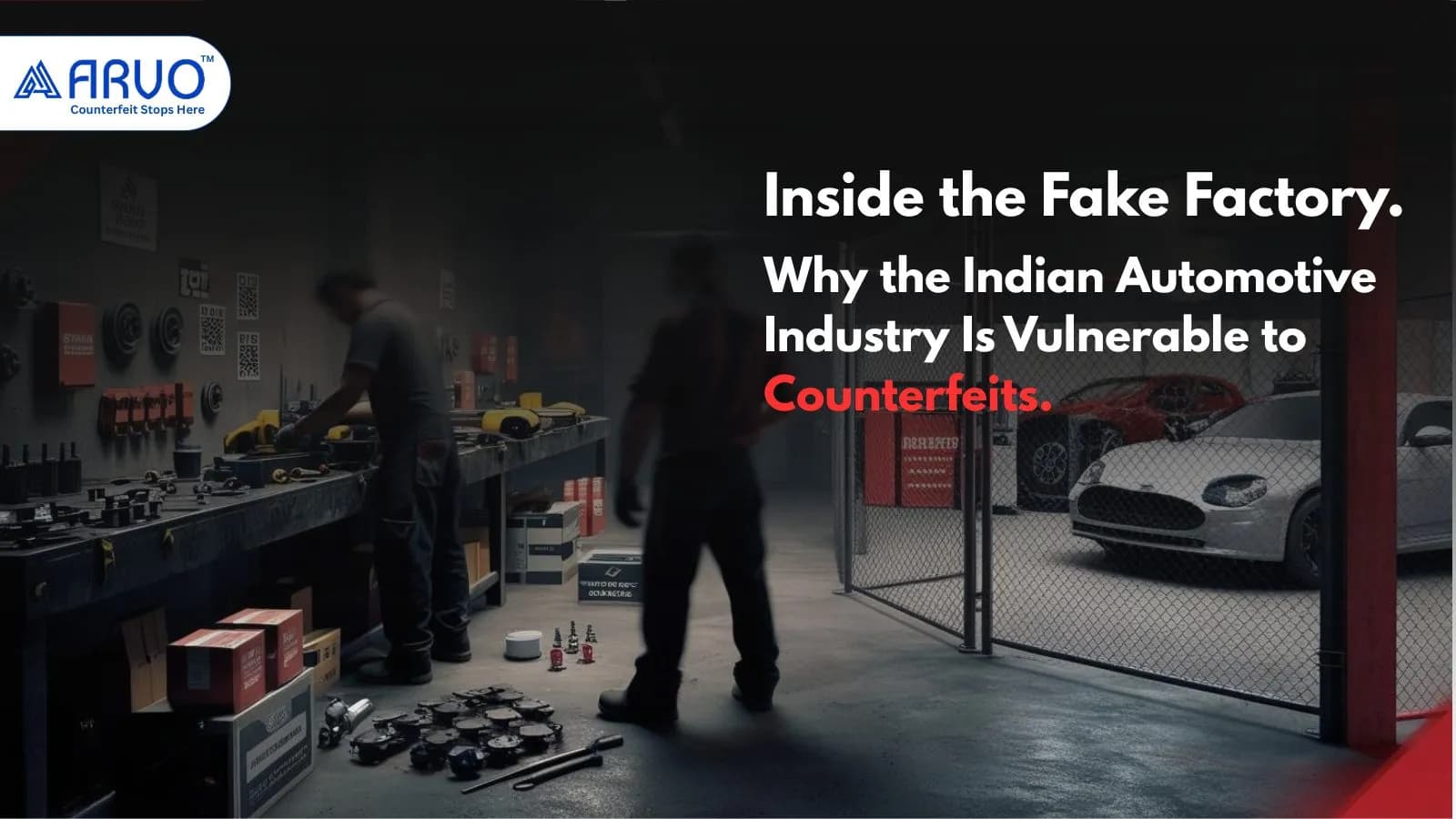
Counterfeits in Indian Automotive Industry represent a growing systemic risk beneath the sector’s impressive expansion. India’s automotive industry is thriving, driven by record vehicle sales, rapid electrification, and a strong manufacturing backbone. Yet behind this momentum lies a less visible threat that is costing lives, eroding brand trust, and draining billions in revenue: counterfeit automotive parts.
From fake brake pads and oil filters to cloned QR codes and forged warranty documents, counterfeiters are no longer just copying physical components, they are replicating the entire experience of authenticity. This sophistication makes detection harder, amplifies safety risks for drivers, and places OEMs and suppliers in constant jeopardy of recalls, liability, and reputational damage. In a market defined by scale and speed, combating counterfeits has become not just a quality issue, but a strategic imperative for the Indian automotive ecosystem.
This blog explores the inner workings of the fake parts industry, explains why the Indian automotive industry is vulnerable to counterfeits, and outlines what brands can do to fight back using next-gen authentication and traceability solutions.
A Silent Crisis in the Automotive Industry
India is now the third-largest car market in the world. With over 30 million vehicles added to the road annually and a rapidly growing aftermarket ecosystem, demand for automotive components has never been higher.
Unfortunately, so has the production of counterfeit automotive parts.
According to ACMA (Automotive Component Manufacturers Association), nearly 30% of spare parts sold in the Indian aftermarket are fake, with safety-critical components like brake pads, suspension parts, and filters topping the list.
These parts:
- Often look indistinguishable from genuine ones
- They are made using low-grade materials
- Can cause severe mechanical failures or fatal accidents
Why the Indian Automotive Industry Is Vulnerable to Counterfeits
India’s scale and complexity make it a hotbed for counterfeiting. Let’s break down the core reasons:
1. Price-Sensitive Consumer Behavior
With millions of budget-conscious vehicle owners across tier-2 and tier-3 cities, there is a strong demand for cheaper replacement parts, even at the risk of quality compromise. This creates fertile ground for counterfeiters.
2. Fragmented Aftermarket Ecosystem
India’s massive aftermarket, including unauthorized garages, roadside mechanics, and grey-market importers, is poorly regulated. This makes it easy for fake parts to flow into the market undetected.
3. Limited Awareness and Verification Tools
End-users rarely know how to authenticate parts. Many rely on trust in their local mechanic or packaging appearance, both of which can be deceiving.
4. Digital Counterfeiting of Packaging
Fake factories now replicate not just the product, but:
- OEM logos and typography
- QR codes, holograms, and security seals
- Even invoices and compliance stickers
5. E-commerce Without Oversight
Online marketplaces have made buying parts easier, but also riskier. Sellers with little or no verification can list counterfeit products that reach customers without scrutiny.
How Counterfeiters Replicate Automotive Parts and Packaging
Today’s fake factories are highly sophisticated and well-resourced. Here’s how they operate:
Step 1: Reverse Engineering or IP Theft
Counterfeiters begin by obtaining real components, via samples, discarded stock, or stolen CAD files. These are scanned or measured and recreated using lower-cost processes.
Step 2: Mass Manufacturing with Substandard Inputs
The focus is on cutting costs, not performance. Fake parts often:
- Use weaker alloys or recycled plastics
- Lack of safety tolerances
- Degrade faster under load or heat
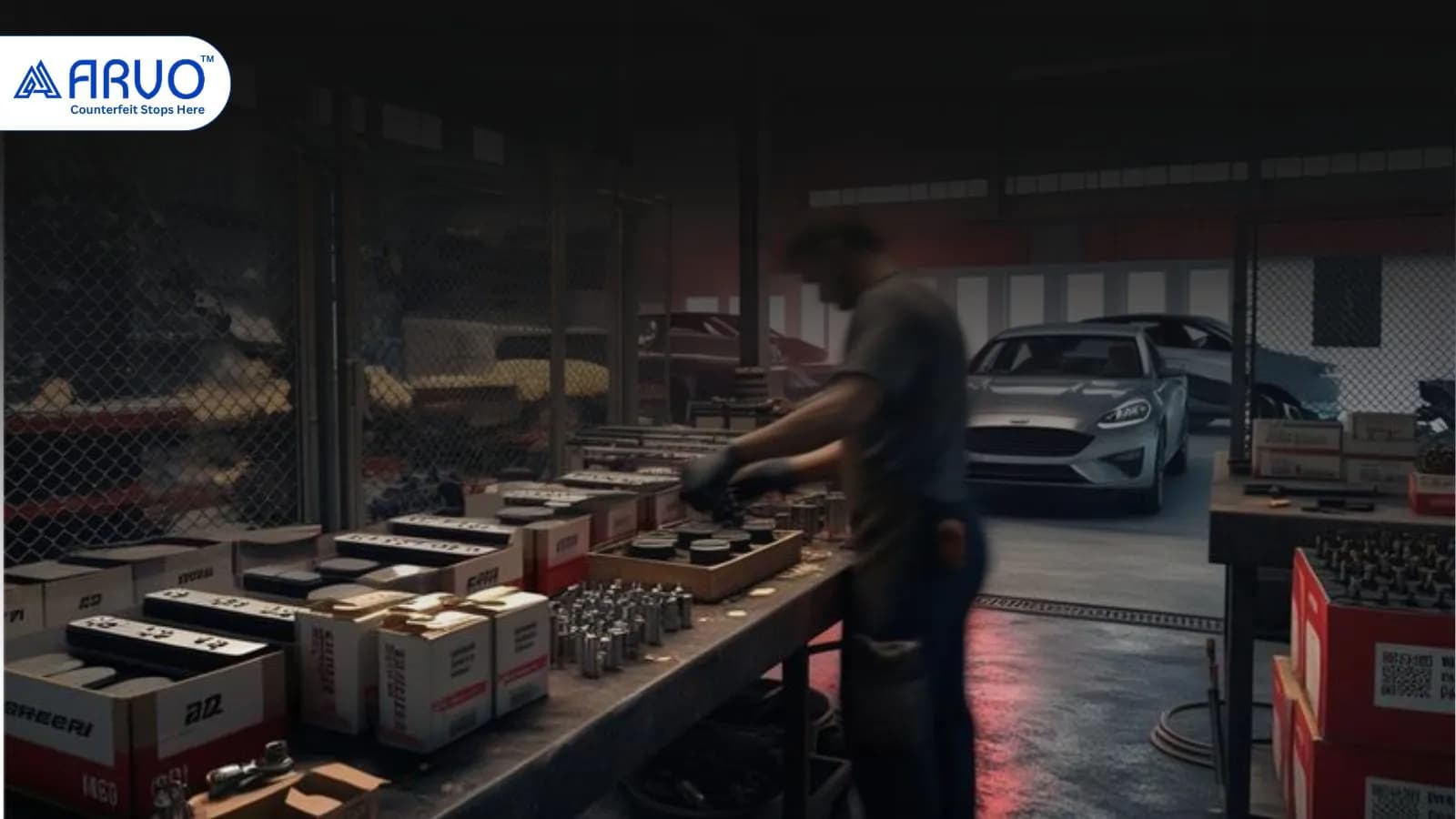
Step 3: High-Fidelity Packaging Forgery
What seals the illusion is the packaging. These fakes include:
- Lookalike boxes
- Realistic barcodes and batch numbers
- QR codes that either lead nowhere or mimic genuine systems
Even trained staff in authorized service centers can get fooled.
The Hidden Cost to the Automotive Industry
Counterfeiting isn’t just a consumer problem, it’s a brand and industry problem. Here’s how it impacts OEMs and component suppliers:
- Reputation Damage: When a fake part fails, it’s the original brand that gets blamed.
- Lost Revenue: Counterfeits undercut legitimate sales, often at scale.
- Regulatory Liability: Brands are being held more accountable for fake products found in their supply chain.
- Reduced Customer Loyalty: Safety issues and performance failures turn customers away, permanently.
How ARVO Helps Automotive Brands Fight Counterfeiting
At ARVO, we believe that every product should be verifiable, traceable, and tamper-proof. That’s why we’ve built a platform tailored to the unique needs of the automotive industry, especially in complex markets like India.
Here’s how ARVO tackles the problem:
Non-Clonable QR Codes
Each part is tagged with a cryptographically unique, non-replicable QR code. These are:
- Copy-proof: a code reproduced by printing tricks or copying fails verification
- Verified instantly via mobile
Blockchain-Backed Traceability
Every part’s journey: From the manufacturing line to the mechanic’s table – is logged immutably. Brands get:
- End-to-end visibility
- Tamper-proof authenticity logs
- Real-time product journey details
Verification by Anyone, Anywhere
Using ARVO’s web or mobile scanner, mechanics, retailers, and consumers can:
- Instantly check authenticity
- View origin, batch, and supply chain history
- Report suspected counterfeits
Analytics to Detect Counterfeit Hotspots
ARVO’s dashboard gives brands insight into:
- Where counterfeit scans are happening
- Which geographies or product lines are most affected
- Real-time scan performance by region and SKU
Conclusion:
The counterfeit crisis in India’s automotive industry is no longer a hidden issue, it’s a growing, sophisticated threat that demands urgent action. Traditional labels and visual checks can’t keep up with modern forgers who replicate not just the parts, but the entire illusion of authenticity.
To stay ahead, brands need more than surface-level solutions. They need traceability that’s tamper-proof, copy-proof authentication, and insights that are actionable.
ARVO is helping automotive brands lead this change.
By combining non-clonable QR codes, blockchain-based tracking, and intelligent scan analytics, ARVO doesn’t just protect products; it protects trust, reputation, and lives on the road.
The Indian automotive boom can continue, but only if it’s built on genuine parts and verified authenticity.
The fake factory is evolving. Is your brand prepared to outsmart it?
Questions answered in this article
- Why does the Indian automotive industry have such a big counterfeit problem?
- A price-sensitive market, fragmented distribution and limited regulation combine to make India a counterfeiting hotspot. Demand for cheap replacement parts keeps a grey market thriving.
- Are counterfeit auto parts really dangerous?
- Yes. Substandard brake pads, airbags or filters can cause severe mechanical failures and accidents. They are a safety risk, not just a cost risk.
- Can ARVO's system detect cloned QR codes?
- Yes. ARVO's codes are cryptographically unique and built so they cannot be reproduced by printing or copying. The system flags any mismatch or duplicate scan automatically.
- How is ARVO different from standard packaging security?
- It goes beyond packaging. ARVO combines secure authentication, blockchain-backed traceability and scan analytics, so a brand can follow each part from the manufacturing line to the mechanic and see where suspect scans happen.