From Barcode to Blockchain: The Future of Digital Traceability in Healthcare
How digital traceability in healthcare moved from barcodes to serialisation and blockchain, and how Vision AI and smart packaging help stop fake medicines.
By Abhijeet Kumar, ARVOPublished Updated 5 min read
In short
Digital traceability in healthcare moved from barcodes, which are easy to copy and hold no live data, to serialisation, which gives each saleable unit a serial number under rules such as DSCSA and the EU FMD. Blockchain adds a shared ledger that cannot be altered, so manufacturers, distributors, hospitals and regulators see the same record.
- Barcodes can be copied, give no real-time data and do not cover every stage of a product's life cycle.
- Serialisation gives every saleable unit a serial number, enabling targeted recalls under the US DSCSA and the EU Falsified Medicines Directive.
- A blockchain ledger gives every party the same time-stamped record, so the units affected by a recall can be found quickly.
- Vision AI on packaging lines catches defects, missing serial numbers and tampering before products reach the market.
- Smart packaging lets pharmacists, doctors and patients check a product with a smartphone.
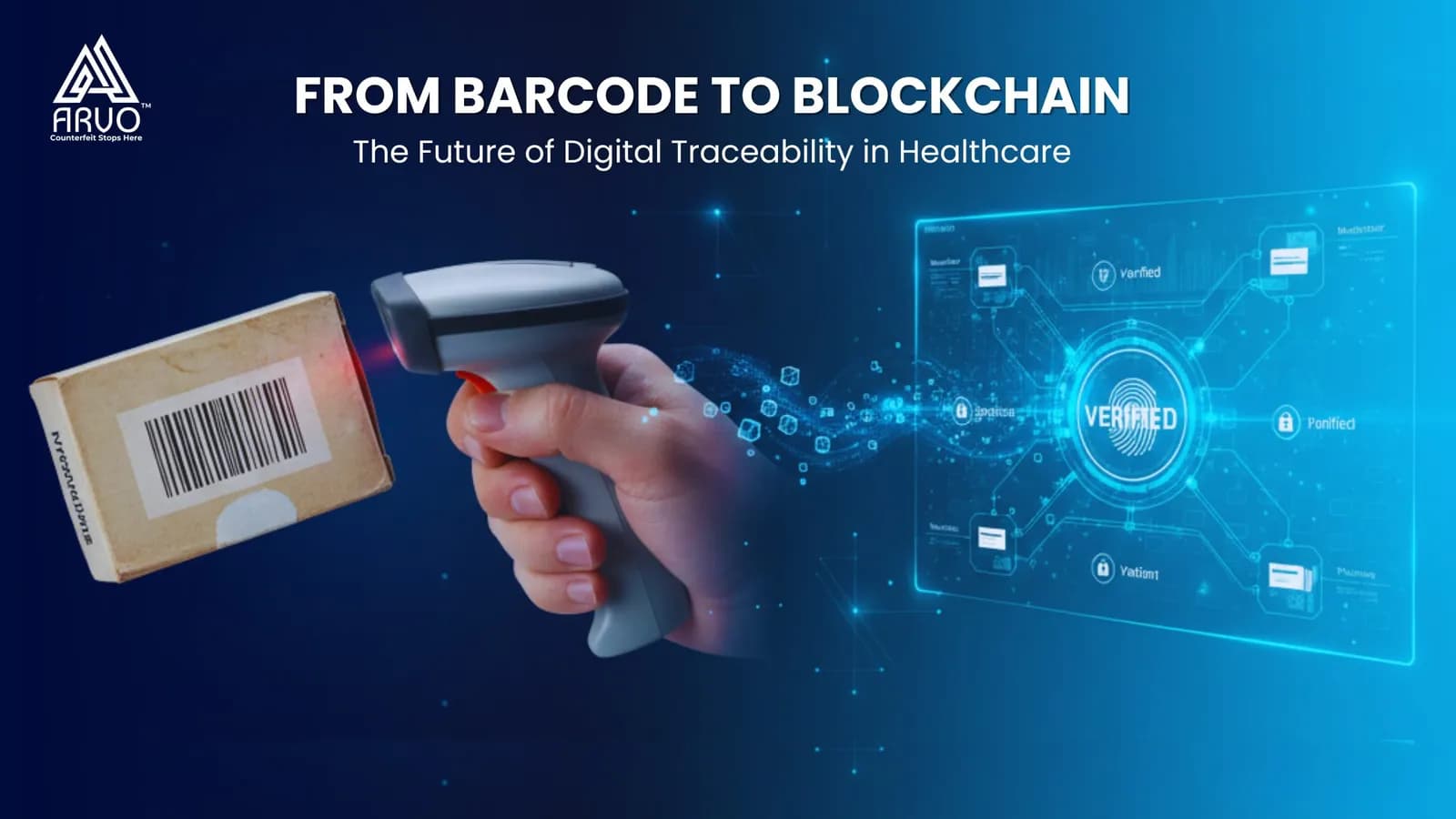
We rely on the healthcare supply chain to survive. However, without digital traceability it faces a huge issue: trust. Hundreds of thousands of individuals lose their lives every year because of bad or counterfeit medicines. These counterfeit drugs pass through the simple scrutiny of the existing system. The barcode has served as the sole guard for many years, and it is a fixed label that, once broken, will leave no evidence of the actual product. But what is the result of a false label? Product safety is failing seriously, and the industry needs to seek a solid and tested solution. It is the narrative of how healthcare is shifting beyond mere scanning to the use of Digital Traceability in Healthcare using Blockchain, not merely as a buzzword, but as a critical defense against fraud and harmful errors.
Traceability in Healthcare Evolution
Traceability in healthcare began with simple line barcodes, which are flat codes that label drugs, devices, and equipment. They served simple tracking purposes, but barcodes had their disadvantages: they were replicable, they did not provide real-time information, and they did not provide all the stages of the product life cycle.
Next was the serialization – assigning a serial number to every saleable product. This modification enhanced compliance and enabled specific recalls, fraud detection, and enhanced regulation in regulations such as the U.S. Drug Supply Chain Security Act (DSCSA) and the EU Falsified Medicines Directive (FMD).
However, even serialization could not be relied upon as global supply chains became more complex. Fraudsters discovered new methods of deceiving the system, and healthcare required a more robust, intelligent, and hack-resistant layer of online trust.
Digital Traceability: More Than Compliance
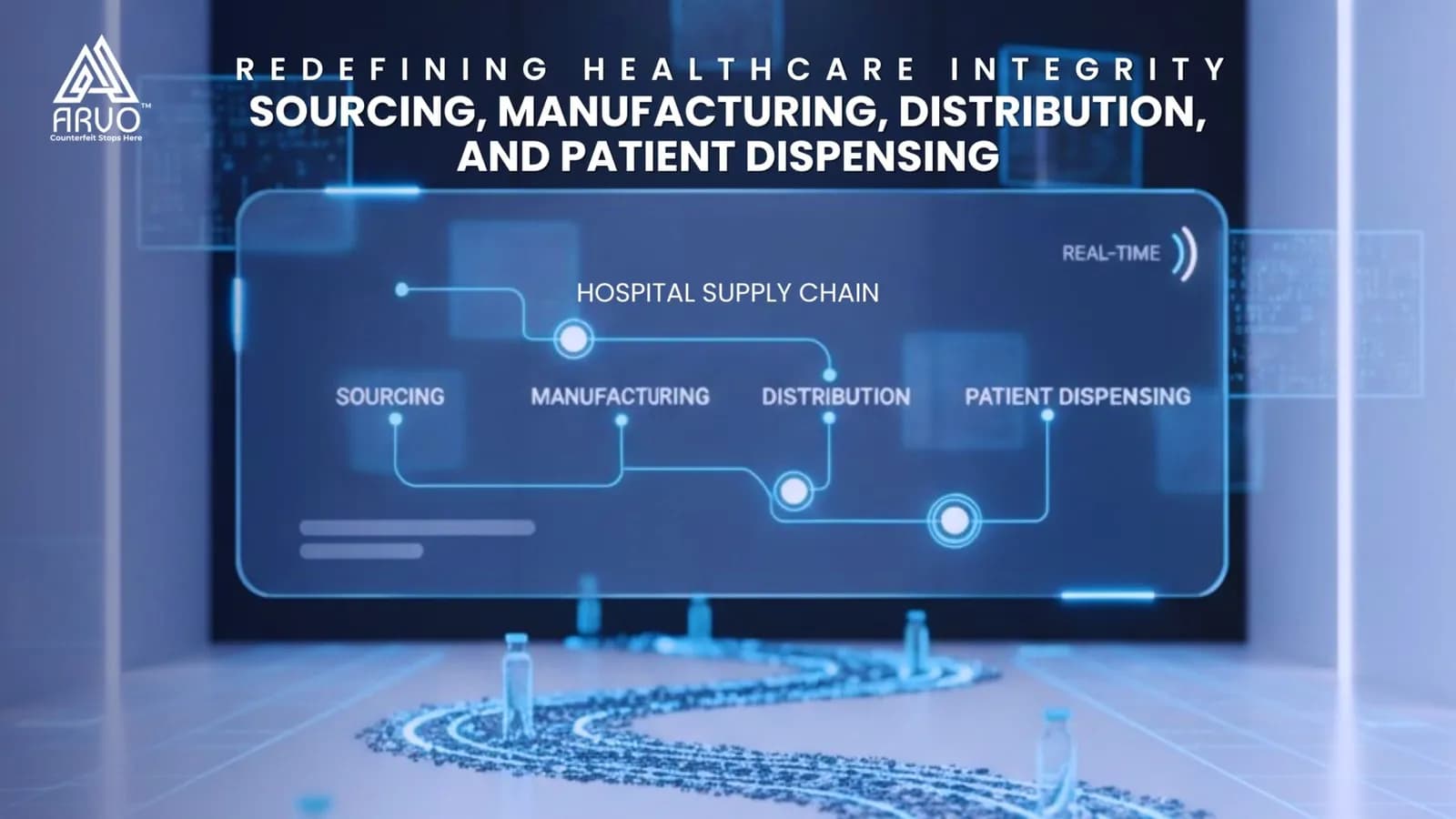
Digital traceability unites all the data of all the steps, from sourcing raw materials to the hand-off to the patient, into a digital trail of the path of a product in real-time.
In the case of healthcare organizations, it implies:
- Shorter recalls because the products are found.
- Safer patient care with verified authenticity.
- Simpler regulatory reporting.
- Connected systems with more efficient operations.
In contrast to traditional paper or barcode tracking, digital traceability provides continuous monitoring and records that cannot be altered, and thus, at any given moment, each product can give an account of its entire story.
The Future of Healthcare Integrity Blockchain
Blockchain is the castle in case serialization provides the base. A blockchain-based supply chain provides a common ledger that is impossible to alter, and everyone in the supply chain, including manufacturers, distributors, hospitals, and regulators, shares the same truth.
All transactions, including production and prescription, are securely recorded and time-stamped. In case a batch is recalled, contaminated, or fake, the stakeholders can easily identify the affected units and take immediate action.
The transparency of blockchain alters responsibility. It eliminates data silos, reduces fraud, and makes every individual who goes through a product leave a verified digital trace.
The Vision AI and Smart Packaging
Whereas blockchain ensures the safety of data, the physical world is safe through Vision AI and smart packaging.
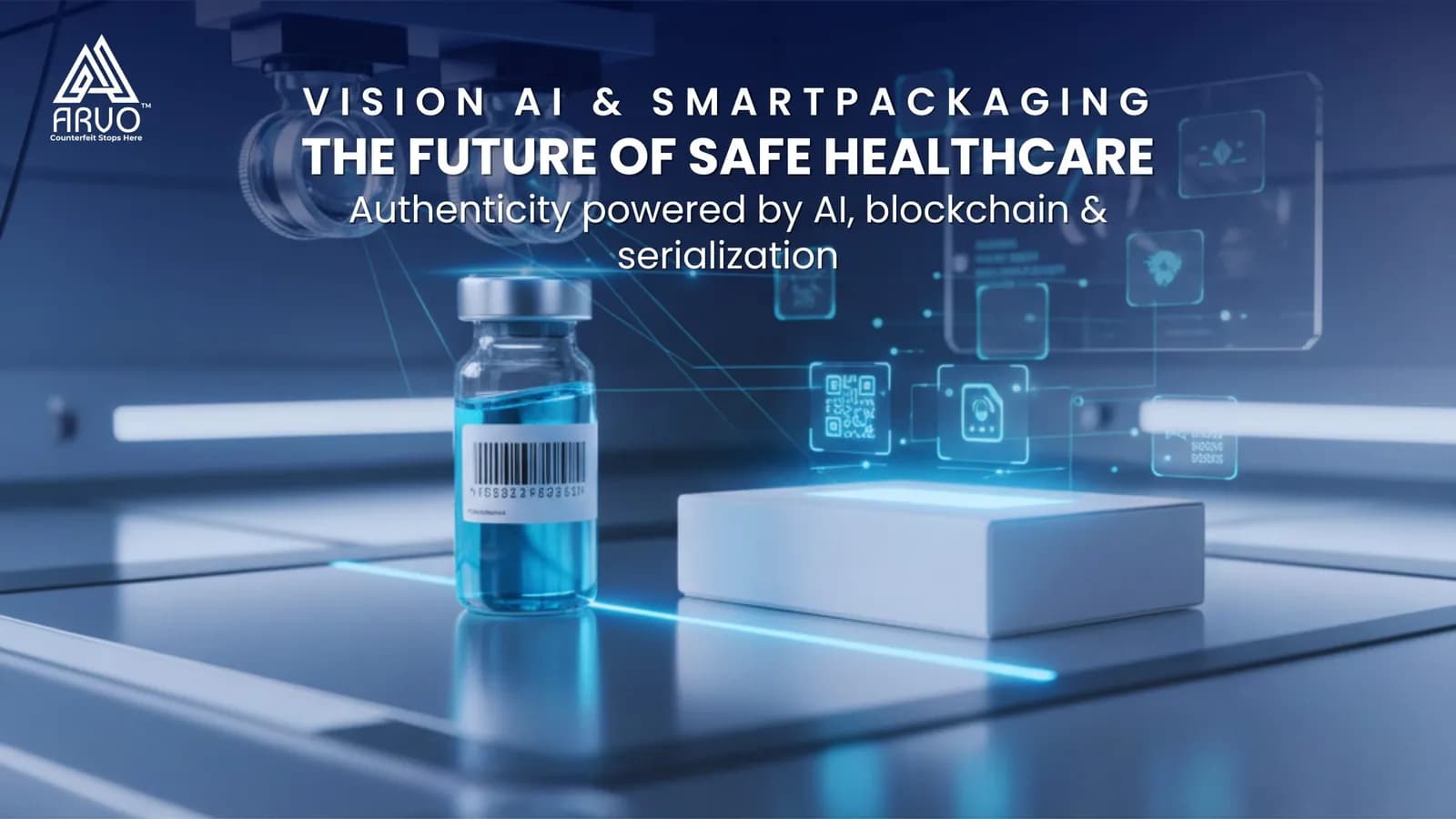
The AI-driven inspection systems monitor packaging lines and detect defects, missing serial numbers, or tampering in real-time, before products reach the market.
Smart packaging, such as QR codes, NFC tags, or digital product passports (DPPs), allows pharmacists, doctors, and even patients to verify the authenticity of a product in real-time with a smartphone.
Collectively, these new tools bridge the divide between the physical and digital worlds, ensuring the complete safety of products throughout the healthcare network.
The way ARVO Is Driving the Future of Traceability
ARVO is at the forefront of this transformation, with serialization, Vision AI, blockchain, and smart packaging all linked together into a single reliable system.
Conclusion
The transition from barcode to blockchain is a significant healthcare traceability milestone. Blockchain and AI turn a printed code into the beginning of complete transparency.
With digital trust as the new standard of care, the future will be for those who will be able to verify, track, and protect each product with accuracy.
Talk to ARVO about traceability and glimpse the future of digital traceability where transparency is the life-saving factor, and trust is the supply chain powerhouse.
Questions answered in this article
- Why are barcodes no longer enough for healthcare traceability?
- Barcodes hold static, limited information and are easy to copy. They lack the real-time connection and tamper resistance that healthcare supply chains now need.
- How does blockchain help pharmaceutical and medical supply chains?
- Blockchain keeps a decentralised log of every step that cannot be altered. Every party sees the same record, which speeds up the response to a recall or an inspection.
- What does Vision AI do for product safety?
- On the production line, Vision AI systems spot defects, misprints and missing serial numbers. That cuts human error and makes sure the packaging is correct before the product reaches the market.
- How can pharmacists or patients check if a medicine is authentic?
- Smart packaging such as QR codes, NFC tags or digital product passports lets pharmacists, doctors and patients verify a product in real time with a smartphone.
Sources
- Drug Supply Chain Security Act (DSCSA), U.S. Food and Drug Administration
- Falsified medicines, European Commission