From Factory to Customer: Full Supply Chain Visibility for High-Value Manufacturing
What full supply chain visibility means for high-value manufacturing: where each shipment is, its condition and custody, the technologies and the benefits.
By Abhijeet Kumar, ARVOPublished Updated 6 min read
In short
Full supply chain visibility means knowing in real time where a high-value product is, what condition it is in and who has custody of it. It rests on location tracking with GPS and geofencing, IoT sensors for temperature, humidity, shock, tilt and light, and one platform that joins that data with ERP, WMS and TMS records.
- A tracking number and an ETA are not visibility: high-value goods need location, condition and custody data for the whole journey.
- Geofencing around factories, warehouses and customer sites sends automatic alerts for arrivals, departures and unexpected routes.
- IoT sensors watch temperature, humidity, shock, tilt and light exposure, which shows rough handling or a container opened early.
- Combining sensor data with ERP, WMS and TMS records gives one trusted view of the supply chain.
- A fixed record of location and condition forms a chain of custody that supports regulations such as pharmaceutical GDP and insurance claims.
Full Supply Chain Visibility is no longer optional. Consider a multi-million-dollar gas turbine, a batch of life-saving biopharmaceuticals, or a tailor-made aerospace component. The production was flawless, every specification met, every quality test passed. Yet the moment it leaves your factory gates, it disappears into a black box. You are left with little more than a standard tracking number and hope, unable to determine its precise location, condition, or even whether it has arrived for up to 15 days.
This is not a hypothetical risk; it is the daily reality for high-value manufacturers. The journey from factory to customer is laden with financial, reputational, and operational exposure precisely because we lack visibility into what is happening to the product in transit. Knowing that a package is “on the way” is insufficient. We must understand its status, safety, and expected time of arrival.
This paper explains why full supply chain visibility is no longer a luxury, outlines the technologies that make it possible, and provides a practical guide for transforming your supply chain from a black box into a transparent, data-rich operation.
What is Full Supply Chain Visibility?
Visibility is a word that is frequently used in logistics discussions, but in high-value manufacturing, it is much more than tracking a shipment or checking an ETA.
Full supply chain visibility is concerned with knowing all the moments of a product’s life cycle, where it is, how it is performing, and what is happening to it. It transforms complicated world supply chains into real-time, data-driven narratives you can actually track.
There are three main pillars of true visibility:
Location Awareness (Where is it?) GPS tracking, geofencing, and route deviation notifications will show you precisely the location of your assets and whether they are heading in the right direction.
Condition Monitoring (How is it?) IoT sensors constantly measure temperature, humidity, shock, tilt, and light exposure- making sure that all products are in safe conditions during the delivery.
Status & Custody (What is happening to it?) Computer records confirm the name of the person who received the product, the time it was cleared by customs, and that the container was opened. All the events in the journey are recorded, time-stamped, and authenticated.
Analogy: Imagine it is the difference between receiving a postcard from a traveler and having a live video call with them throughout their trip.
Why Visibility is CRITICAL for High-Value Manufacturing
- Better security and theft deterrence: Valuable items are the best targets of theft. Quick security measures can be taken by real-time notifications of route alterations or container openings, and you can avoid loss.
- Strict quality control: In products such as medicine and chips, even a slight increase in temperature may spoil the product. Sensors enable producers to ensure that products remain in ideal conditions throughout the production process.
- Improved operations: Goodbye to shipment losses. Visibility prevents delays in production and waiting time by customers through early detection of problems.
- Customer service: Customers who purchase high-quality and expensive products want to be assured of quality delivery. Detailed tracking in real-time creates trust and retains customers.
Strong chain of custody and compliance: Regulated companies should be transparent by law. Complete visibility generates an unchangeable digital trail that satisfies the regulations and demonstrates that all the steps are right.
The Full Visibility: More Than a Dot on a Map
High-value goods cannot be tracked by a carrier using standard tracking. Full visibility is not just a simple location update, but a living digital representation of your physical supply chain. It provides you with practical information, not historical information.
The modern visibility is based on three critical pillars:
1. Location Intelligence: This is not just simple GPS points, but real-time tracking with high accuracy, which is sometimes in a few meters. Geofencing allows you to create virtual fences around important locations such as a factory, a warehouse, a customer location, and receive automatic notifications of arrivals, departures, or unforeseen routes.
2. Condition Monitoring: IoT sensors cannot be ignored in this case. These miniature gadgets are placed on shipments or packages and continuously scan the most important environmental and handling factors:
– Temperature and Humidity: Requirement of medicines, chemicals, and sensitive electronics to prevent damage.
– Shock and Vibration: This is significant in sensitive equipment, scientific equipment, and precision components to detect rough handling.
– Tilt and Orientation: Notifies you in case of the tipping or inversion of goods that are not supposed to be tipped.
– Light Exposure: Displays whether a container has been opened prematurely or not, enhancing security.
3. Data Integration: When all this different data is combined, the real power is achieved. One platform, or control tower, combines sensor information with your ERP, WMS, and TMS information. This provides a single trusted source of reality and a complete real-time perspective of the entire supply chain.
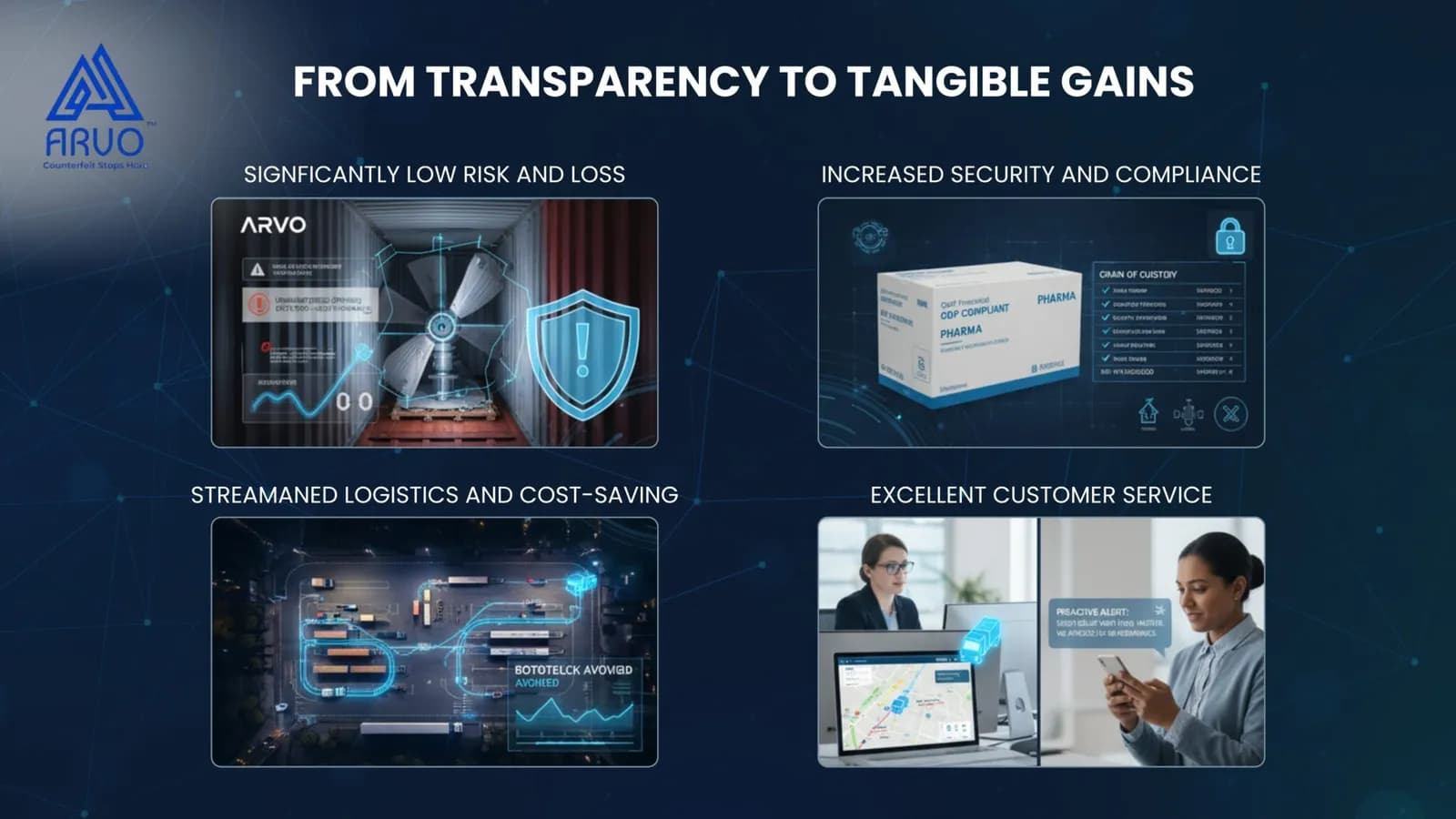
The payback of Seeing Everything: Tangible Benefits of a Transparent Supply Chain.
It is not only the reduction of risk that is involved in investing in end-to-end visibility in high-value manufacturing; it opens actual operational and financial benefits that will keep you competitive.
Significantly low Risk and Loss You can monitor assets in real time and intervene before they are stolen or damaged. The route change or unauthorized openings alert notices allow you to react swiftly and get back on track.
Increased Security and Compliance A fixed history of place and state forms a strong chain of custody. This is necessary in the regulations, such as the GDP of pharmaceuticals, and provides uncontrovertible evidence in a case or insurance claim.
Streamlined Logistics and Cost-Saving Live data reveals inefficiencies. Eliminate bottlenecks, reduce time wasted at transfer points, and enhance routes. Even predictive analysis can assist in avoiding costly delays before they happen.
Excellent Customer Service Stop correcting the situation when it occurs and inform customers about the possible delays before they realize. Give accurate, dynamic ETAs that generate trust and satisfaction.
Data‑Driven Decision Making Each delivery is a piece of data. You may learn about the past trends in transit times, temperature spikes, or handling incidents. Apply these lessons to better package, select more favorable carriers, negotiate more favorable freight terms, and continue to optimize your supply-chain operations.
Conclusion: Stop Shipping Blind
Full supply chain visibility is no longer a luxury to high-value manufacturers, but a strategic necessity. It safeguards revenue, reduces risk, and fosters brand trust. Each delivery is a fact-based narrative of trust. In cases where the cost of a lost or damaged shipment may exceed the cost of the implementation of a complete visibility solution, the real question is: Could you afford not to do it?
Questions answered in this article
- What technologies are needed for full supply chain visibility?
- RFID tags, GPS trackers, IoT sensors and data integration tools. Integrated with ERP, WMS and TMS, they give real-time information on the location, condition and custody of goods in one place.
- How does supply chain visibility improve security for high-value products?
- Geofencing, real-time alerts and condition checks show at once when a product leaves its planned route, is opened without permission or meets changed conditions. That lets the manufacturer act before damage, theft or tampering happens.
- Is full visibility only for aerospace and pharmaceuticals?
- No. Those industries carry high risk, but any business making valuable, sensitive or regulated goods, such as electronics or medical equipment, can use real-time visibility to stay compliant, run more efficiently and reassure customers.
- What are the first steps to end-to-end supply chain visibility?
- List your most important assets and delivery routes, fit them with IoT sensors that report position and condition, and feed that data into a central visibility platform or control tower. Then use analytics to improve the process, reduce risk and anticipate issues.
Sources
- What is ERP?, SAP