How to Identify Counterfeit Bearings: Protecting Your Machinery from Hidden Dangers
How to identify counterfeit bearings: check packaging and markings, verify the seller, test finish and noise, and scan authentication codes before fitting.
By Abhijeet Kumar, ARVOPublished Updated 4 min read
In short
To identify counterfeit bearings, check that the packaging is sealed with clear, consistent branding, inspect the engraved markings for spelling errors or uneven fonts, buy only from authorised dealers, test for a smooth finish, exact dimensions and quiet rotation, and scan any authentication code on the bearing through the manufacturer's official platform.
- Counterfeit bearings copy the look of genuine ones but use substandard materials, so they fail early and can damage machinery and injure operators.
- Genuine packaging is sealed, clearly labelled and uniform in design; faded prints are a warning sign.
- Engraved brand names and serial numbers should be clear and consistent; misspellings, misalignment and mixed fonts are red flags.
- Buy from authorised dealers or the manufacturer's recommended distributors and avoid sellers with unclear sourcing.
- A scannable authentication code on each bearing lets buyers check it through the manufacturer's official platform.
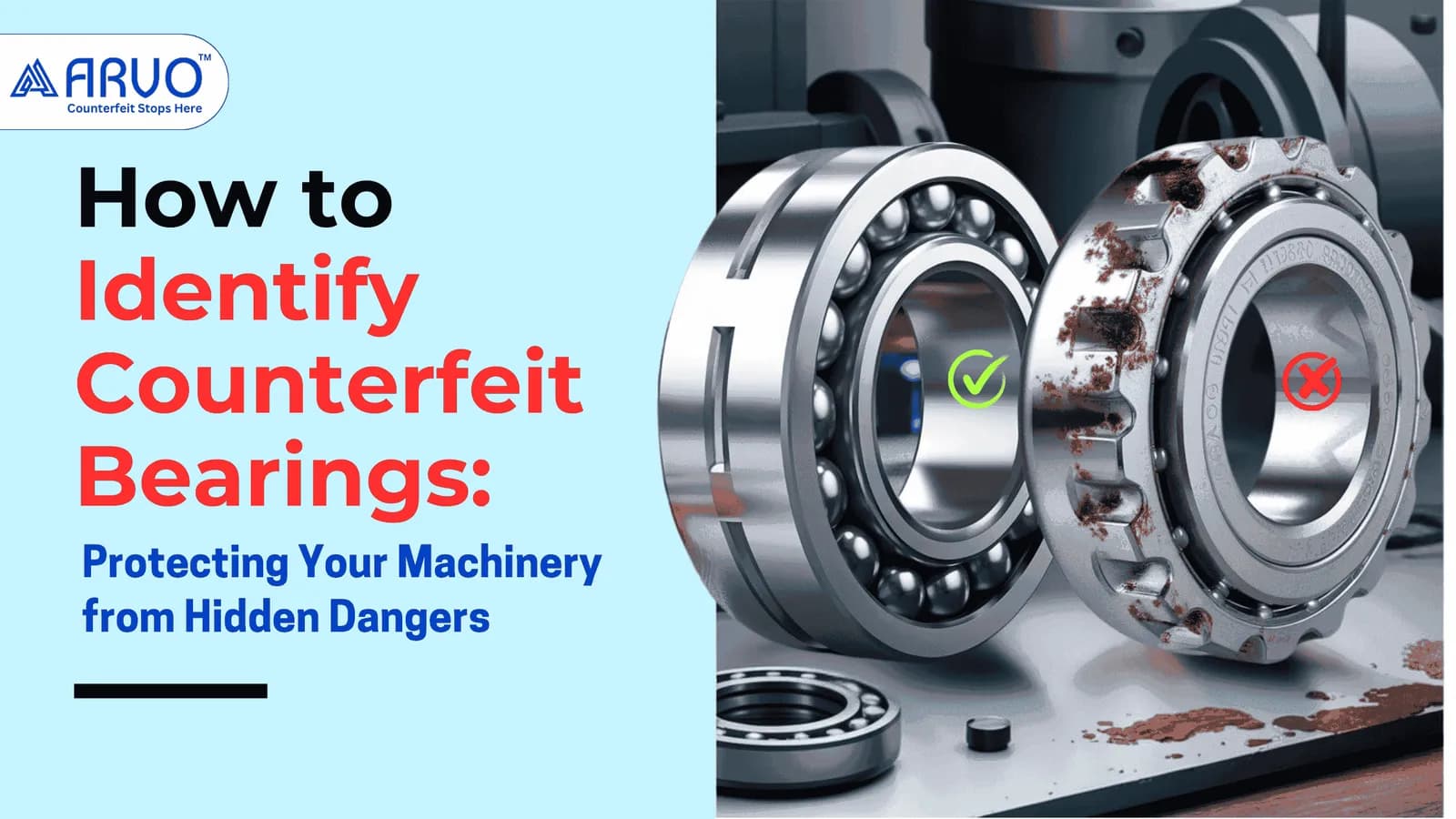
Counterfeit bearings pose a silent but significant threat to machinery across industries. Inferior quality, disguised as reputable brands, can lead to equipment damage, safety risks, and financial losses. Knowing how to identify counterfeit machine parts can save your machinery and operations from disastrous outcomes.
The Growing Problem of Counterfeit Bearings
The global market for counterfeit products continues to expand, and bearings are no exception. These fraudulent components often mimic the appearance of the original ones, making them hard to spot without expert knowledge. Yet, their performance falls drastically short, jeopardizing equipment integrity.
Counterfeit bearings are often manufactured with substandard materials and insufficient quality control, leading to premature failure. This failure can have cascading effects, including downtime, increased maintenance costs, and, in severe cases, complete machinery breakdown.
Why Counterfeit Bearings Are Dangerous
- Reduced Durability: Fake bearings are not made to withstand the same operational stress as genuine ones.
- Inconsistent Performance: Poor-quality materials compromise their efficiency.
- Safety Hazards: A counterfeit bearing’s failure can result in accidents, putting operators at risk.
- Financial Implications: Repair costs, production downtime, and potential lawsuits from safety incidents add up.
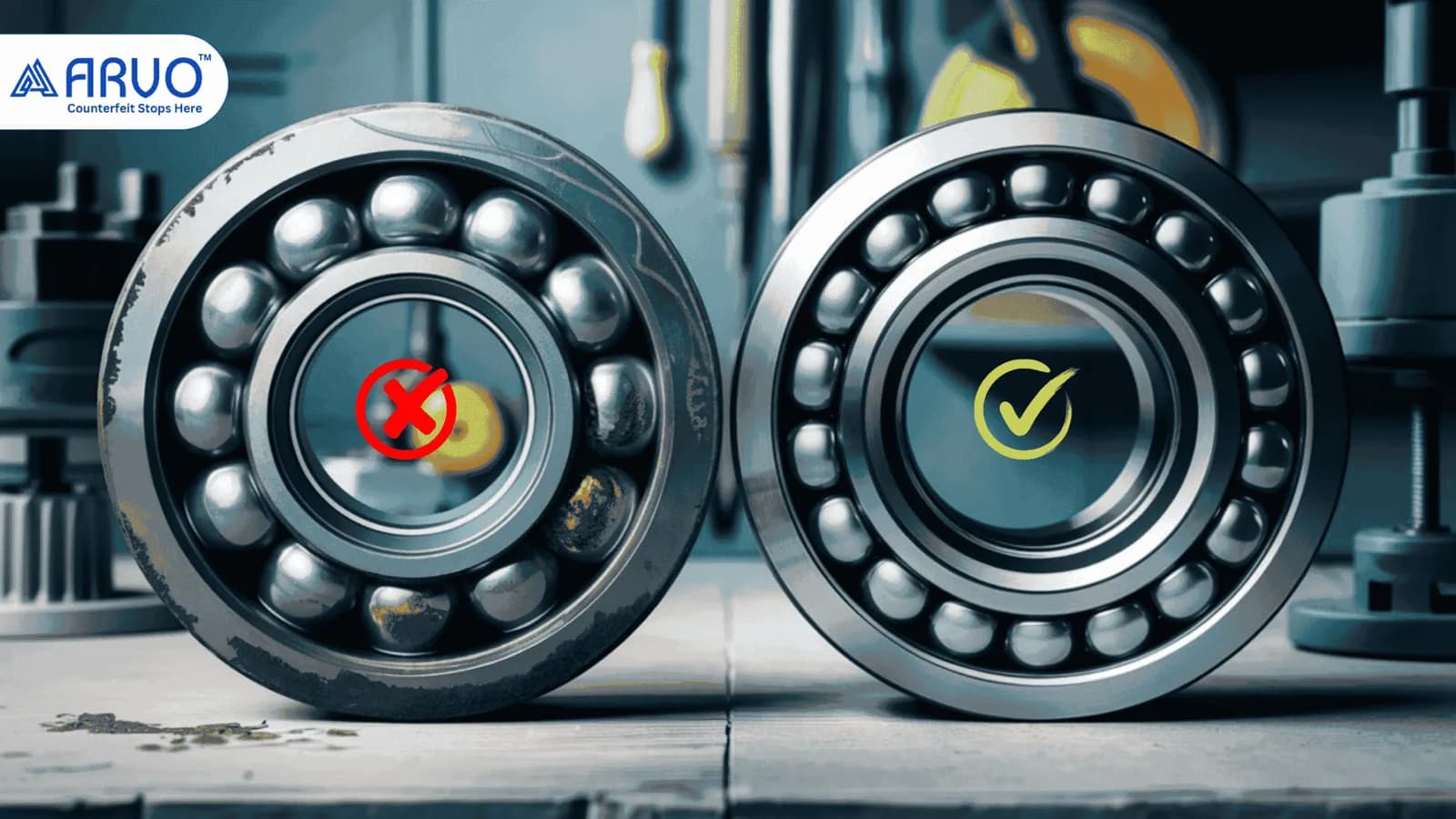
How to Identify Counterfeit Bearings
Spotting fake bearings requires a keen eye and familiarity with authentic products. Here’s how you can differentiate counterfeit bearings from genuine ones:
1. Check the Packaging
Authentic bearings come in packaging that reflects the manufacturer’s precision and branding. Look for:
- Clear labeling with proper brand names and logos.
- Uniformity in design and colors, avoiding faded prints.
- Sealed packaging, as genuine bearings are usually packed securely.
2. Inspect the Bearing Markings
Examine the bearing’s surface for:
- Clear and consistent engraved markings, including the brand name and serial number.
- Any spelling errors, misalignments, or inconsistent fonts are red flags.
3. Verify the Source
Purchase bearings from authorized dealers or the manufacturer’s recommended distributors to ensure authenticity. Trusted names in the industry include:
Avoid third-party vendors with unclear sourcing, as these may deal in counterfeit products. Always check for certifications and reviews before making a purchase.
4. Conduct Physical Tests
Genuine bearings:
- Have a smooth surface finish and exact dimensions.
- Operate with minimal noise when rotated. Counterfeit bearings often show imperfections, such as uneven surfaces or unusual noises.
5. Utilize Anti-Counterfeiting Technology
Leading manufacturers embed QR codes or tamper-proof codes on their products. Scan these codes to verify authenticity through the company’s official platform.
Steps to Prevent Counterfeit Bearings in Your Supply Chain
- Establish relationships with trusted suppliers.
- Train your team to recognize fake bearings.
- Conduct routine inspections on new purchases.
- Use digital tools like verification apps provided by bearing manufacturers.
Why Authentic Bearings Are Worth the Investment
Genuine bearings may come at a higher upfront cost, but their reliability, durability, and performance far outweigh the risks associated with counterfeits. They reduce the likelihood of unplanned downtime, costly repairs, and safety concerns.
How ARVO Can Help You Identify Counterfeit Bearings
At ARVO, we specialize in providing product authentication solutions that ensure the authenticity and security of your machinery components. Here’s how we help:
- Copy-Proof QR Codes: We provide secure QR codes that are attached directly to your products. These codes allow you to verify the authenticity of bearings instantly, ensuring that only genuine components are in use.
- Spectre Tamper-Proof Labels: Our tamper-proof labels show when someone has tampered with them, adding an extra layer of security to your supply chain.
- Blockchain-Backed Security: All product authentication data is securely stored on blockchain technology, ensuring it remains tamper-proof and accessible only to authorized stakeholders.
By integrating our solutions into your operations, you can reduce the risks associated with counterfeit bearings and protect your machinery from potential hazards.
Conclusion
Counterfeit bearings are a hidden danger that can compromise your machinery, safety, and finances. By learning how to identify fake bearings and adopting robust authentication solutions, you can safeguard your equipment and maintain operational integrity.
At ARVO, we are committed to supporting businesses with cutting-edge technologies like copy-proof QR codes to prevent counterfeits and tamper-proof labels to secure your supply chain. Coupled with blockchain security, our solutions ensure the authenticity of your products from production to end-use.
Don’t let counterfeit bearings disrupt your business. Contact ARVO today to integrate our product authentication solutions and secure your operations against hidden dangers.
Questions answered in this article
- How do counterfeit bearings affect machinery?
- They can fail prematurely, causing equipment breakdowns, downtime, safety hazards and financial losses.
- What are the common signs of fake bearings?
- Inconsistent packaging, unclear or misspelled engravings and unusual noise when the bearing is rotated. A scannable authentication code, where the manufacturer provides one, gives a firmer check.
- Where should I buy authentic bearings?
- From authorised dealers or directly from the manufacturer or its recommended distributors. Avoid third-party vendors with unclear sourcing, and check certifications and reviews before buying.
- Can physical testing help detect fake bearings?
- Yes. Rotation tests, dimension checks and surface-finish inspection can reveal counterfeits, since genuine bearings run with minimal noise, a smooth finish and exact dimensions.
- What should I do if I suspect I have counterfeit bearings?
- Stop using the bearings immediately and consult an expert for verification and guidance before they go back into service.
Sources
- NRB Bearings, NRB Bearings
- The Timken Company, The Timken Company
- NBC Bearings, NBC Bearings
- SKF Group, SKF