India’s API Traceability Regulation: How to Comply with API QR Code Mandate
India's API QR code mandate puts a machine-readable code on every pack of active pharmaceutical ingredients. What each code carries and six steps to comply.
By Abhijeet Kumar, ARVOPublished Updated 7 min read
In short
Since 2023, India requires every pack of Active Pharmaceutical Ingredients, from drums and cartons to pallets, to carry a machine-readable QR code. The code carries the API and brand name, manufacturer, batch number and size, manufacturing and expiry or retest dates, licence number, storage instructions and the SSCC, so each pack can be traced.
- From 2023, every API pack in India, whether a drum, carton or pallet, must carry a machine-readable QR code.
- The code holds the API name, manufacturer, batch details, dates, licence number, storage instructions and the Serial Shipping Container Code.
- Practical compliance means GS1 identifiers, codes that survive solvents and humidity, one validated data source, printers and scanners linked to the ERP, and trained staff.
- QR codes can still be copied, so they are paired with blockchain: each event's hash is stored on a ledger to make the records tamper-evident.
API QR Code Mandate India marks a pivotal shift in how pharmaceutical raw materials are tracked and trusted. If you have ever chased a missing courier package, you know the frustration of asking: Where is it? Who received it? Is it gone forever? Now imagine that same uncertainty, not with a T-shirt, but with Active Pharmaceutical Ingredients (APIs), the foundational materials behind medicines used by millions.
That is precisely why India has introduced a QR code mandate for APIs. At its core, the regulation is about accountability, transparency, and most importantly, trust.
From 2023 onward, every pack of APIs, whether a drum, carton, or pallet, must carry a machine-readable QR code. These are not simple barcodes. They function as digital passports, embedding critical information about what the material is, where it originated, and how it is moving through the supply chain.
This mandate reshapes how the industry operates. It brings unprecedented visibility to a historically opaque segment of pharma manufacturing and lays the foundation for real-time verification, audit readiness, and counterfeit prevention. It also explains why concepts such as blockchain “sterilization” are emerging as the next leap, ensuring that data associated with each QR code remains immutable, trusted, and globally verifiable.
For pharmaceutical companies, this is more than a compliance exercise. It is an opportunity to modernize operations, strengthen supply chain integrity, and build confidence across regulators, partners, and patients.
Why India is Betting Big on QR Codes
Counterfeit medicines aren’t a small problem. The World Health Organization estimates that 1 in 10 medical products in low- and middle-income countries is substandard or falsified. In India home to one of the world’s largest pharma manufacturing ecosystems this isn’t just a local issue, it’s global.
The government’s answer? QR codes on APIs.
Here’s what each code carries:
- API name and brand name (if applicable)
- Manufacturer’s name and address
- Batch number and size
- Manufacturing date and expiry/retest date
- Manufacturing or import license number
- Special storage instructions
- Serial Shipping Container Code (SSCC)
In other words, scan that square and you’ve got an instant history lesson about the product you’re holding.
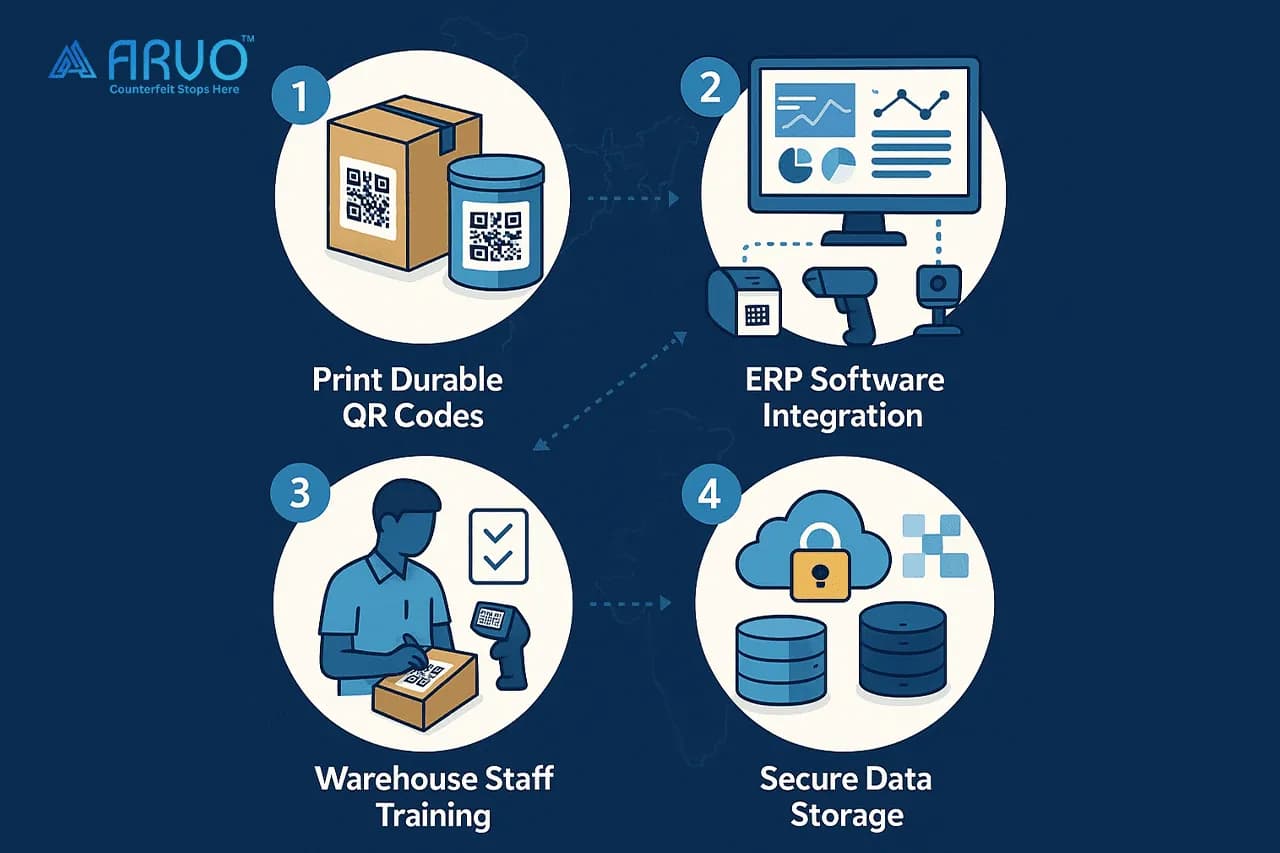
Making Compliance Practical: Explaining It Simply
1. Think GS1, not guesswork
APIs need unique identifiers, the equivalent of Aadhaar numbers for products. GS1 provides these IDs (GTINs, GLNs, SSCCs) that make your packs globally recognizable.
2. Print codes that survive reality
It’s one thing to print a QR code. It’s another to make sure it doesn’t smear when exposed to solvents or fade in a humid warehouse. That’s where material testing and print validation come in.
3. Keep all your data in one “source of truth”
Imagine if every department kept their own Excel sheet. Chaos, right? You need validated serialization software where all data lives securely and can’t be casually edited.
4. Connect your hardware and ERP
Printers, scanners, and vision systems should talk to your ERP/WMS in real time. That way, when a carton is printed or scanned, the data instantly updates.
5. Train your people, it’s not just about machines
A fancy QR system fails if warehouse staff peel and reapply labels incorrectly. SOPs and training sessions are your unsung heroes here.
6. Be future-ready
Regulators are moving towards digital inspection systems where they scan your packs and instantly see compliance. The data needs to be clean and accessible.
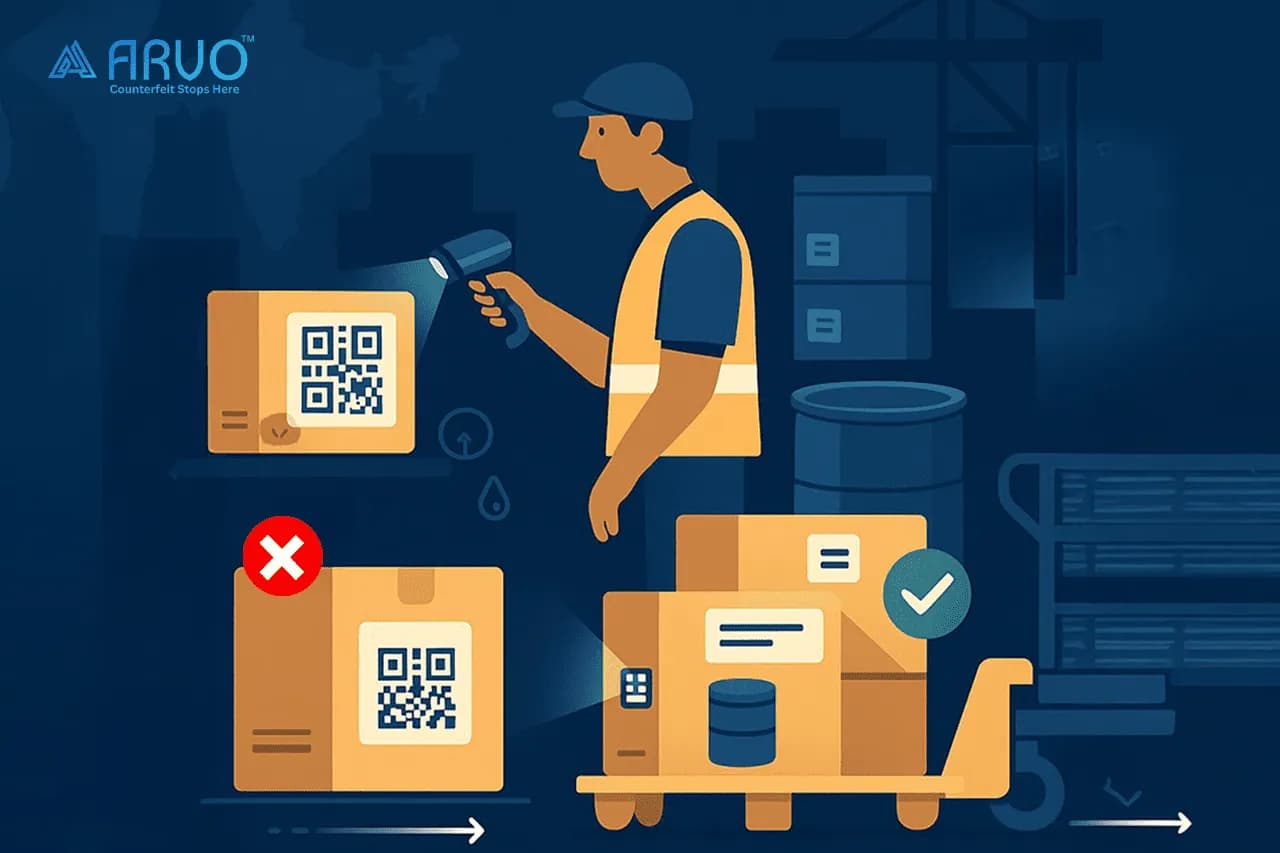
The Human Angle: What This Looks Like on the Ground
A compliance officer at a mid-sized API manufacturer recently told me about a batch that was held up at a port because the codes on a few cartons weren’t scannable. The shipment sat in customs for two weeks. Two weeks of storage costs. Two weeks of missed deliveries. All because the label material wasn’t tested against the solvents used in their plant.
Cases like this show that compliance isn’t just about ticking boxes. Done right, it saves money, builds trust, and even wins new business.
The Catch: QR Codes Aren’t Bulletproof
Here’s the uncomfortable truth: while QR codes add visibility, they’re not invincible. Codes can still be copied. Databases can still be tampered with.
This is where I like to bring in the idea of blockchain sterilization.
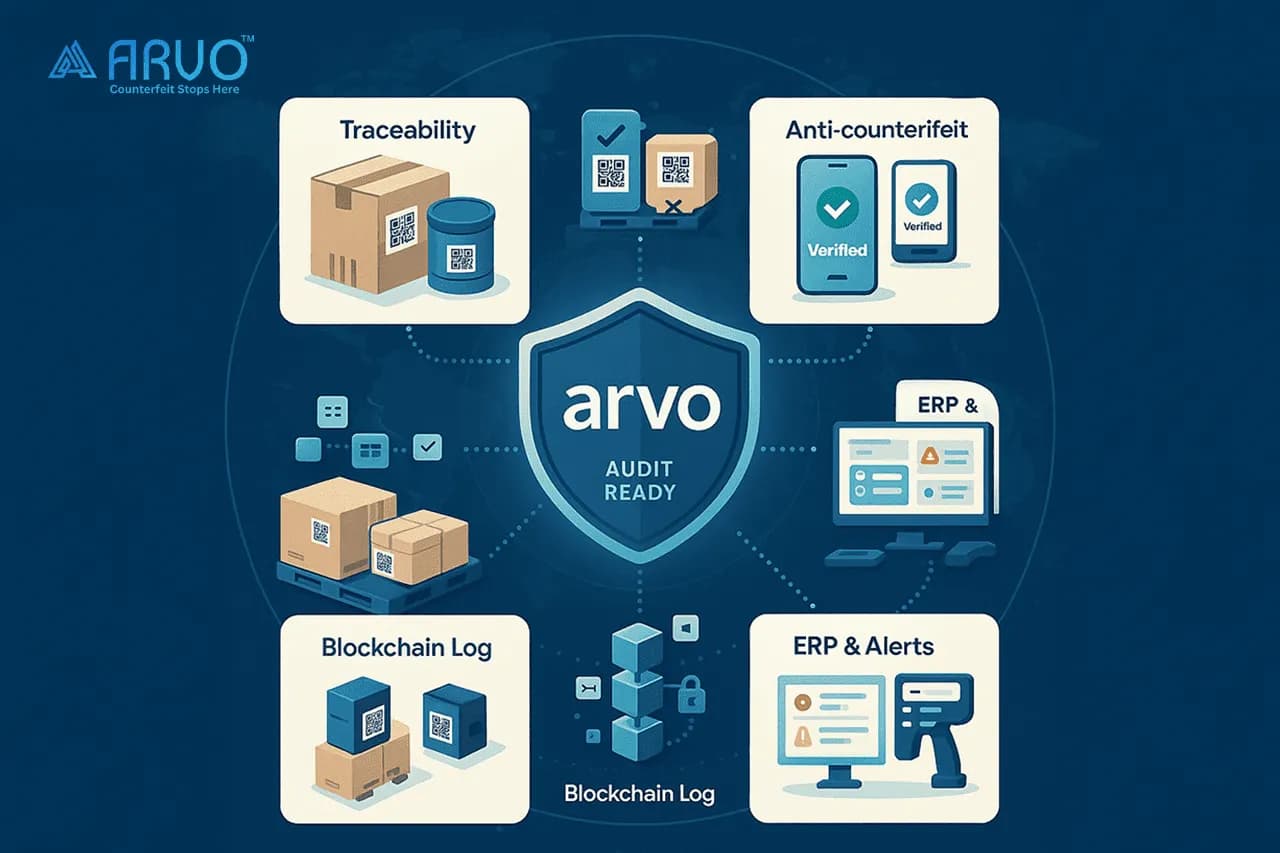
Blockchain Sterilization: Disinfecting the Data Trail
“Sterilization” usually makes us think of killing germs. In traceability, it means something different: making your digital records tamper-evident.
Here’s how it works:
- Every event printing a label, packing a carton, shipping a pallet creates a digital record.
- That record is given a cryptographic hash (like a digital fingerprint).
- The hash is stored in a blockchain ledger that no one can alter without leaving evidence.
- Your actual data sits in your ERP or serialization system, but auditors and partners can always check the blockchain to confirm it hasn’t been fiddled with.
Think of it as putting CCTV cameras on your supply chain’s digital backbone.
Why Pair QR with Blockchain?
Because together, they give you the best of both worlds:
- QR code: The physical marker anyone can scan.
- Blockchain sterilization: The invisible guard ensures the scanned data is authentic.
This pairing strengthens compliance, reduces counterfeiting risks, and makes you audit-ready in a way that regulators (and overseas buyers) love.
Where This Becomes a Competitive Edge
One pharma exporter I spoke with said buyers in Europe started preferring suppliers who could provide both QR traceability and blockchain-backed data. Why? Because it reduced the buyer’s own compliance headaches. That supplier didn’t just follow the rule; they turned compliance into a selling point.
Similarly, a domestic distributor shared that when hospital procurement teams realized they could verify products instantly with QR scans tied to blockchain records, their confidence in that distributor shot up. They went from being “one of many” suppliers to the preferred partner.
Wrapping It Up: Compliance and Trust
The QR code mandate for APIs in India is more than just another rule. It’s a chance for pharma companies to build a transparent, trustworthy supply chain that not only satisfies regulators but also wins customer loyalty.
But here’s the fact, compliance is not always straightforward. Labels fail. Databases get messy. Records go missing. And that’s exactly where end-to-end traceability solutions come in.
At the end of the day, it’s not about printing squares on cartons. It’s about building a system of trust, accountability, and readiness for audits, for buyers, and most importantly, for the patients whose health depends on these medicines being real, safe, and traceable.
Questions answered in this article
- What is the API QR code mandate in India?
- Since 2023, the Government of India has required every pack of Active Pharmaceutical Ingredients, from drums to pallets, to carry a machine-readable QR code. The code stores details such as the API name, batch number, manufacturer, expiry date and Serial Shipping Container Code, so the pack can be tracked across the supply chain.
- Why did India introduce QR codes for APIs?
- The main goal is to fight counterfeit and substandard medicines. Fake APIs in the pharma supply chain put patients at risk and damage brand trust, and QR codes let regulators, manufacturers and buyers check a pack's authenticity and origin instantly.
- What is blockchain sterilization in traceability?
- It means making supply chain data tamper-evident. Every action, such as printing a label or shipping a pallet, creates a digital record whose hash is stored on a blockchain, so any later change to the data becomes visible.
- How do QR codes and blockchain work together for API compliance?
- The QR code gives each pack a visible, scannable identity, and the blockchain shows that the data behind it has not been altered. Together they form an audit-ready trail that also protects against counterfeiting.