How Non-Cloneable QR Codes Streamline Audits and Ensure Global Compliance
How non-cloneable QR codes streamline compliance audits: cryptographic codes that cannot be copied, time-stamped scan records and audit trails for global rules.
By Abhijeet Kumar, ARVOPublished Updated 5 min read
In short
Non-cloneable QR codes streamline audits by giving each product a cryptographically secured code that cannot be copied or altered. Every scan creates a secure, time-stamped record, so auditors can verify a product instantly and trace it across countries. Automatic records replace manual checks and paperwork, which speeds audits and supports rules such as DSCSA and EU FMD.
- An OECD-EUIPO study put trade in counterfeit and pirated goods at about USD 467 billion in 2021, or 2.3% of global trade.
- Ordinary QR codes can be copied; non-cloneable QR codes embed cryptographic security so they cannot be duplicated or altered.
- Each scan creates a secure, time-stamped record that builds an audit trail automatically.
- Automatic, verified records cut the paperwork and errors of paper-based audits.
- The codes support serialization rules such as DSCSA and EU FMD for medicines.
Non-Cloneable QR Codes for Compliance are becoming essential as companies are now required not only to follow regulations, but to prove adherence as a core part of doing business. In 2021, an OECD–EUIPO report estimated that counterfeit and pirated goods accounted for approximately 2.3% of global trade, nearly USD 467 billion, or 2.3% of all imports. Separately, a study by GlobalSCAPE and the Ponemon Institute found that failure to comply with data-protection laws costs organizations an average of USD 14.8 million annually in fines, penalties, downtime, and lost productivity.
Industries such as pharmaceuticals, food safety, aerospace, and luxury goods face mounting pressure to meet stringent international regulations while actively combating counterfeiting. Yet traditional audit and compliance processes remain cumbersome, error-prone, and inadequate for today’s scale and complexity.
Non-Cloneable QR Codes address this gap. These advanced codes embed cryptographic security into a familiar format, enabling rapid, tamper-proof verification. They streamline audits, strengthen trust, and provide a reliable mechanism for enforcing global compliance, transforming regulatory adherence from a burden into a strategic advantage.
The Growing Complexity of Global Compliance
The contemporary supply chains require complete visibility. A single product may pass through numerous countries, and each has its own regulations. The companies are required to comply with the requirements of the U.S., Europe, and Asia simultaneously. This renders reporting difficult, and any minor error can lead to penalties.
Imitation and forgery are large issues. Pharmaceuticals, aerospace, and cars are particularly vulnerable as counterfeit components may threaten their safety, lead to costly recalls, and undermine brand loyalty. Paper records, prone to errors, slow, and missing data, are the characteristics of old audit methods; thus, it is difficult to demonstrate that the entire chain is compliant.
Still, little visibility is a big issue. Compliance issues are concealed in separate tracking systems and missing records. In 2021, fake trade was 467 billion, which indicates the significance of reliable checks in global compliance and faster auditing.
What Are Non-Cloneable QR Codes?
Even scrutinized supply lines cannot stop fake products. Non-cloneable QR Codes provide an easy but powerful response. QR codes can be copied regularly, whereas Non-cloneable QR Codes are highly encrypted and thus, they cannot be copied or altered.
Each code is uniquely identified with a digital identifier, which is part of its product, providing a non-tamperable audit trail. The scanning of the code creates a safe time-stamped record, which allows the auditors to immediately verify that it is real and trace it around the globe.
NCQRCs accelerate audits, reduce errors, and satisfy requirements, making a difficult process smooth and transparent as they substitute manual checks with automatic, reliable checks.
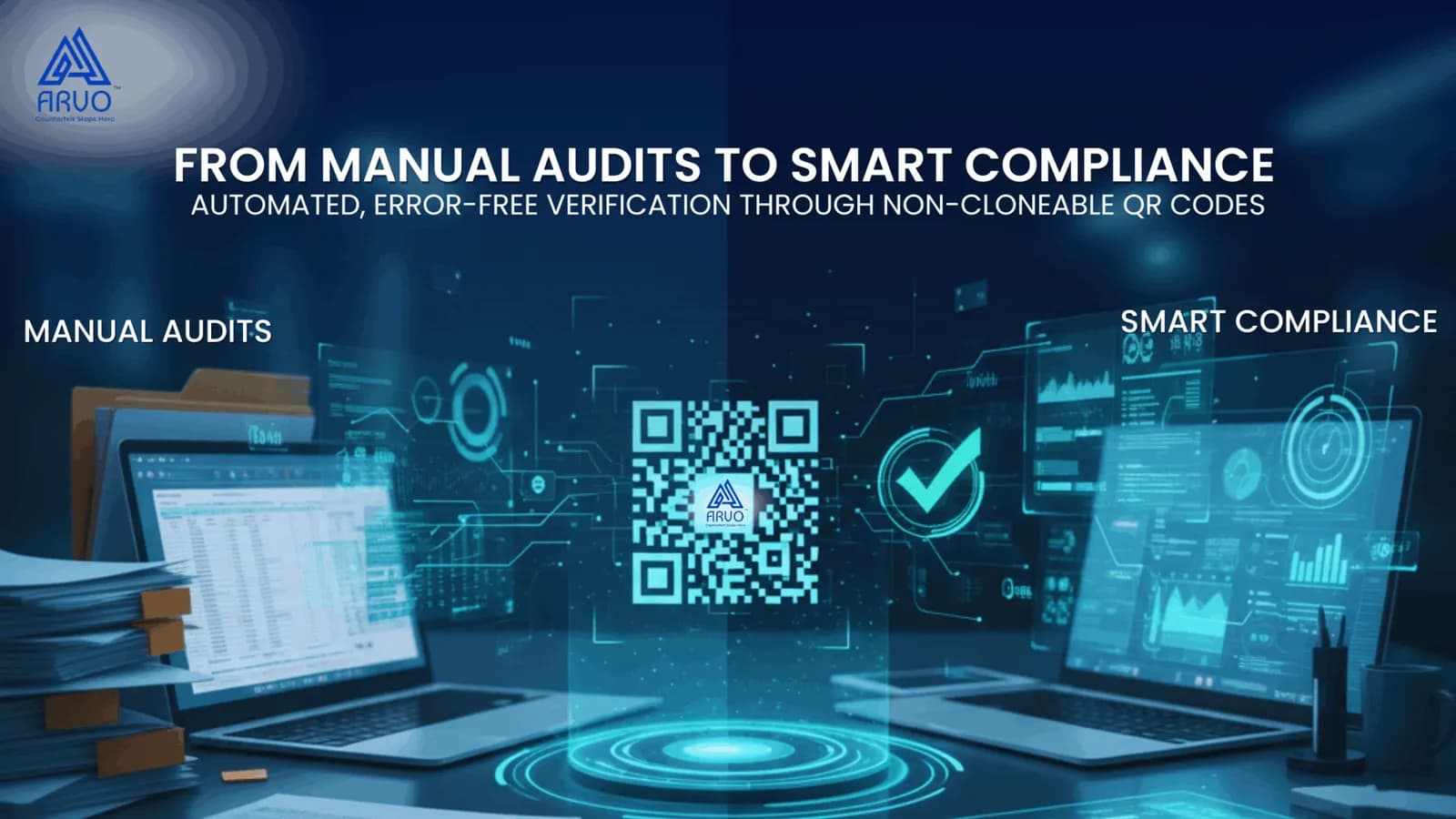
How Non-Cloneable QR Codes Streamline Audits
Audits do not have to be lengthy and inaccurate. Each step is automatically verified by Non-cloneable QR Codes, which, in real time, prove the product to be real and record every scan in a safe and unalterable record. Less paperwork, reduced errors, and an effective audit trail.
In most nations, compliance is not a problem for companies with Non-cloneable QR Codes. Little work is required to get regulators and auditors to correct and receive real-time data. In basic terms, they reduce complex audits in the world into fast, sound, and cost-effective audits.
Ensuring Global Compliance Across Industries
Non-cloneable QR Codes assist businesses in complying with regulations in numerous areas and nations. They comply with DSCSA and EU FMD serialization requirements for drugs. In beverages and food, they monitor FDA regulations. They are used by luxury brands and electronics to prevent fake products and maintain high safety levels.
Since they provide a proven record of each item, which is tamper-free, NCQRCs simplify audits, reduce risk, and ensure that regulators and others trust the supply chain. In a nutshell, they ensure that global compliance is easy, and they secure the companies and the customers.
Conclusion
The supply chains are becoming increasingly complex, and therefore the old ways of auditing are ineffective. NCQRCs provide a secure and tamper-resistant method of demonstrating that a product is authentic, generate audit trails automatically, and simplify compliance with regulations. With the inclusion of Non-cloneable QR Codes, companies reduced errors, accelerated audits, prevented fakes, and gained trust among regulators and customers. Concisely, they make compliance not a pain, but a huge plus.
Questions answered in this article
- What is the difference between non-cloneable QR codes and normal QR codes?
- Non-cloneable QR codes use cryptographic security, so they cannot be duplicated or tampered with. Each code is tied to its product, unlike an ordinary QR code that anyone can copy.
- Do non-cloneable QR codes work across countries with different regulations?
- Yes. They give each product a verifiable, tamper-proof record, which simplifies audits and compliance across the U.S., the EU, Asia and other regions.
- Do non-cloneable QR codes reduce audit preparation time?
- Yes. They automate verification, keep records that cannot be changed and reduce paperwork, so audits move faster.
- Which industries benefit most from non-cloneable QR codes?
- Pharmaceuticals, food and beverage, aerospace, automotive, luxury goods and electronics, where tracking, anti-counterfeiting and compliance matter most.