Why Non-Cloneable QR Codes Outperform Holograms, Barcodes and Typical QR Codes
Holograms, barcodes and standard QR codes can all be copied. See how non-cloneable QR codes verify the code itself with a phone scan, and what brands gain.
By Abhijeet Kumar, ARVOPublished Updated 4 min read
In short
Holograms can be copied almost perfectly with modern printing, barcodes offer no copy deterrent, and standard QR codes can be reproduced by anyone with a camera phone. A non-cloneable QR code carries a unique, cryptographically embedded identity, so a smartphone scan checks the code itself, not just the information it links to.
- Holograms are the most common anti-counterfeit stamp, but current printing can copy them nearly flawlessly.
- Barcodes identify products quickly but hold little information and can be reproduced by anyone.
- Standard QR codes add convenience but little security, because a copy scans the same as the original.
- Non-cloneable QR codes such as ARVO's NOVA code carry a unique embedded identity, so copies fail verification.
- Every scan is recorded, giving brands real-time visibility of product movement and diversion attempts.
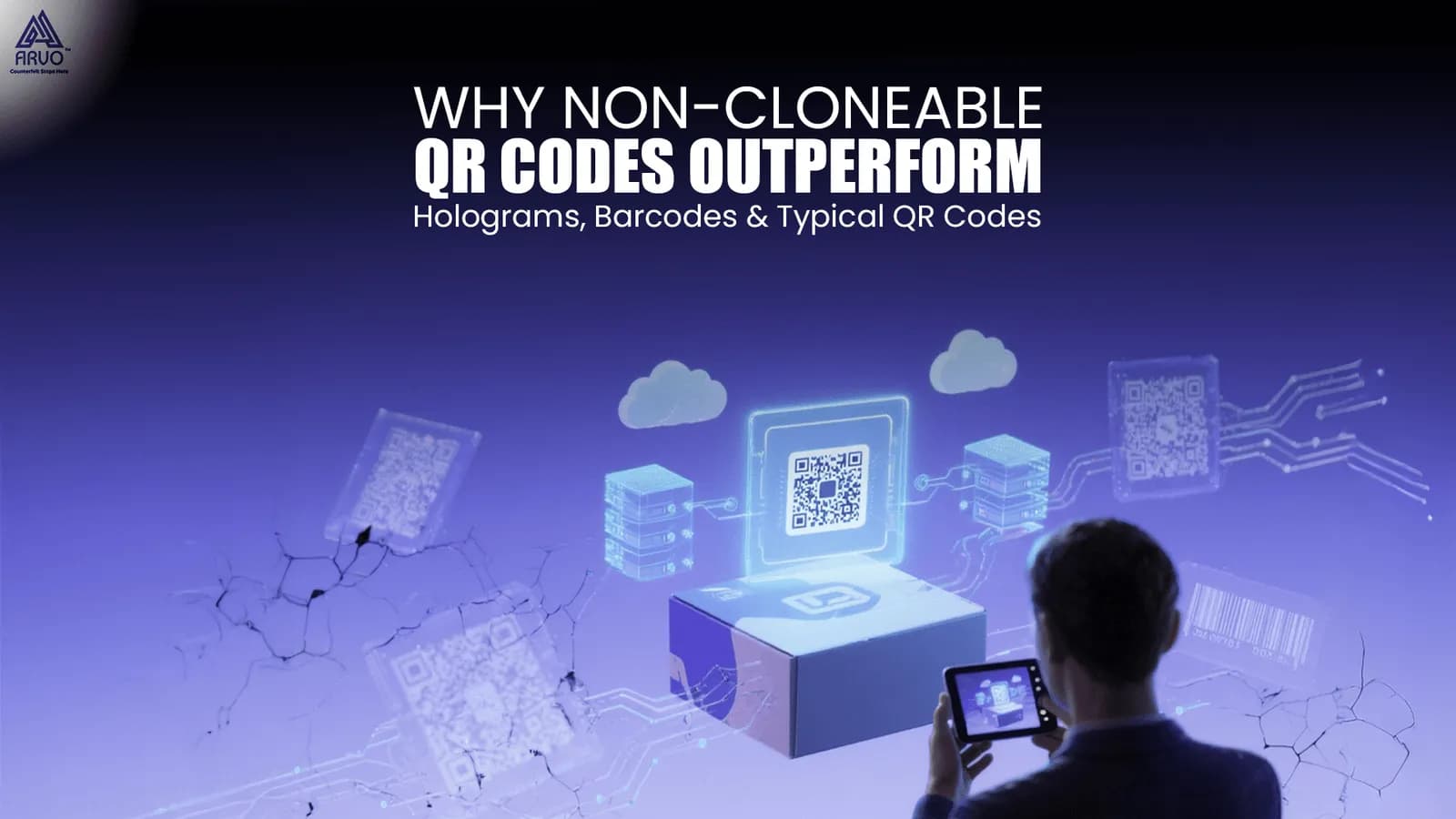
Non-Cloneable QR Codes vs. Holograms highlights a critical shift in how industries protect product authenticity. As operations become increasingly digital, secure product identification and reliable track-and-trace capabilities are more vital than ever. Counterfeiting now costs global industries dearly, and the traditional defenses, holograms, barcodes, and standard QR codes, are no longer sufficient. While these methods provide a basic level of protection, none can deliver failsafe security against today’s sophisticated counterfeiters.
This is where Non-Cloneable QR Codes (NOVA Codes) redefine the standard. They combine the universal accessibility of QR technology with unprecedented cryptographic security, enabling instant verification that cannot be replicated. Unlike holograms or static codes, NOVA Codes are inherently resistant to cloning, providing a modern, scalable foundation for authenticity, traceability, and trust in a digital-first supply chain.
The Drawbacks of Traditional Solutions
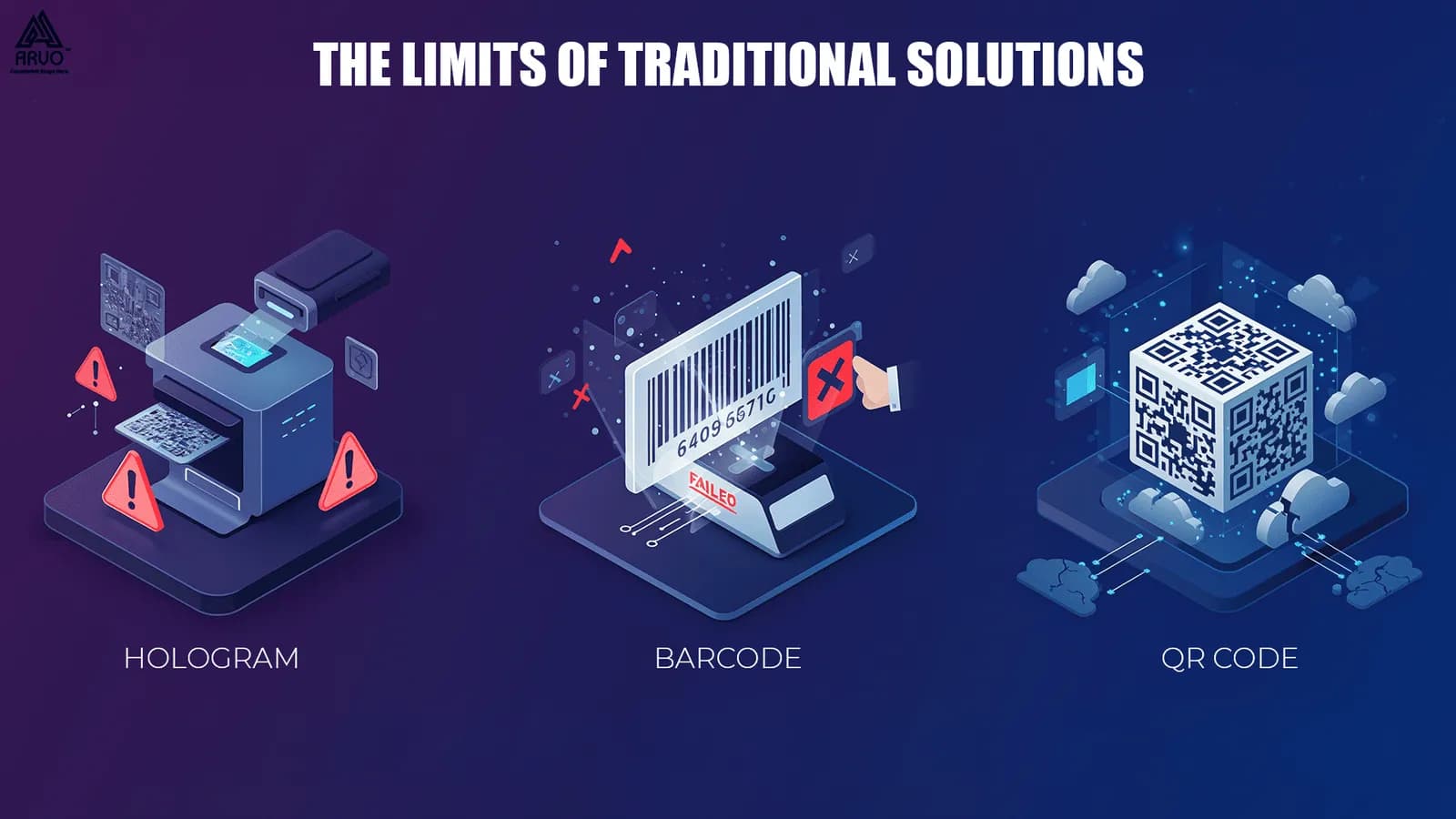
1. Holograms: Obvious but Easy to Copy
Holograms are the most common anti-counterfeit stamps. With current printing technologies, however, these can be copied nearly flawlessly. Consumers are left with the use of visual instinct, which is far from guaranteed.
2. Barcodes: Useful but Easy
Barcodes facilitate immediate identification but hold very little information and offer no copy deterrent. Anyone can reproduce a barcode, rendering it ineffective as a security control.
3. Standard QR Codes: Convenient but Flawed
QR codes link products to digital information, but they are their own downfall through being reproducible by anyone who just happens to possess a camera phone. As a result, they provide convenience but very little real security.
Why Non-Cloneable QR Codes are Special
- Unlike holograms, barcodes, or standard QR codes, Non-Cloneable QR Codes cannot be cloned.
- Every code carries a unique embedded identity, a digital fingerprint.
- Scanned, the system not only reads product information but also verifies the authenticity of the code itself. Any copy attempt is doomed to fail immediately, leaving counterfeiters out in the cold.
Advantages Over Other Labels
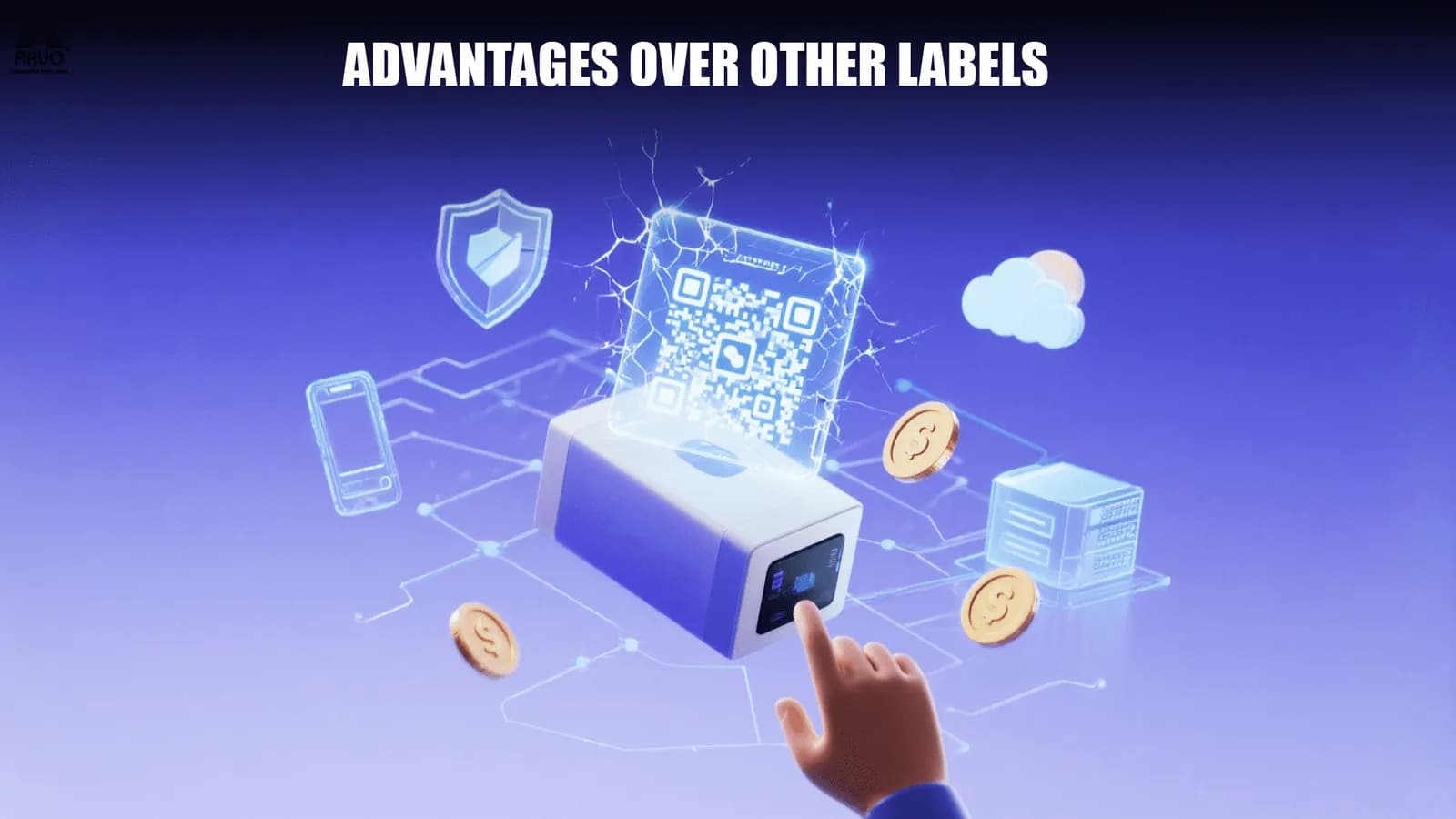
- Tamper-evident at source: Authenticates the code itself, not just the associated information.
- Scalable and user-friendly: Scannable using any smartphone, without additional hardware.
- Real-time tracking: Each scan is added to a secure server, offering businesses visibility into product movement and diversion attempts.
- Cost-effective: Built on top of existing QR code infrastructure, enabling mass adoption without requiring major changes.
The Future of Product Authentication
Automotive, Pharma, Chemicals, and Industrial Equipment– counterfeiting attacks face industries across the board. The answer lies not in updating outdated systems but embedding security into the identifier itself. Non-Cloneable QR Codes bridge the gap, offering consumer convenience and uncompromising brand security. They bring transparency, trust, and scalability under one solution.
How ARVO Helps
Let’s imagine a consumer purchases what they believe to be your premium product. They’ve trusted your brand, saved to purchase it, and made up their mind to purchase. But after they open a package, the quality is bad, performance is low and, unknowingly, they’ve ended up with a counterfeit. It not only damages trust but also loses a customer permanently. Now how can ARVO help you here? Basically ARVO will prevent this from happening by embedding security at the product level. With solutions designed for scalability and real-world supply chains, ARVO helps brands safeguard both their products and their customer relationships.
With ARVO, businesses receive:
- Non-Cloneable QR (NOVA) Code: Copy-proof and scannable with any smartphone. Each scan authenticates the code itself and cannot be duplicated.
- Spectre Tamper-Proof Labels: Protect packaging integrity and provide visible assurance if a product has been opened or altered.
- Cloud-based supply chain traceability: End-to-end visibility with real-time tracking enables brands to monitor movement of products, recognize diversion, and interact with customers where they authenticate.
Each scan is integrated into ARVO Integrated Cloud for real-time authentication, fraud detection, and consumer engagement. ARVO with rapid deployment, smartphone enablement, and ERP integration renders product verification convenient, measurable, and future-proof. Because if brand reputation and customer trust is involved, then security can’t be an afterthought but a design-in.
Future-proof your supply chain with ARVO.
Questions answered in this article
- Why are holograms no longer enough to stop counterfeits?
- With current printing technology, holograms can be copied nearly flawlessly. Consumers are left judging by eye, which is far from reliable.
- How are non-cloneable QR codes different from other anti-counterfeit labels?
- They combine optical variability, a fingerprint-like attribute, with encryption. Each scan checks both the product information and the authenticity of the code itself, which stops duplication at the source.
- Are non-cloneable QR codes expensive to roll out?
- No. They work on top of existing QR code infrastructure and are read by any smartphone, so no extra hardware is needed and they can be rolled out at scale.
- Which industries benefit most from non-cloneable QR codes?
- Automotive and auto components, pharmaceuticals, chemicals and industrial equipment manufacturing, where counterfeits cause real harm and brands need fraud prevention, traceability and consumer engagement.