Copy-Proof QR Codes: The Ultimate Defense Against Counterfeit Cancer Drugs
Why standard QR codes on medicine packs can be cloned, and how copy-proof QR codes, tamper-proof labels and blockchain records help stop fake cancer drugs.
By Abhijeet Kumar, ARVOPublished Updated 5 min read
In short
A standard QR code on a medicine pack can be photocopied and printed on thousands of fake boxes, so on its own it cannot stop counterfeit cancer drugs. Copy-proof QR codes carry microscopic cryptographic patterns that standard printers and scanners cannot duplicate, and with tamper-proof labels and blockchain records they let patients verify each pack.
- The WHO says 1 in 10 medical products in low- and middle-income countries is substandard or fake.
- Standard QR codes show product codes, expiry dates and manufacturer details, but they are easy to clone.
- Copy-proof QR codes use microscopic cryptographic patterns that standard printers and scanners cannot reproduce.
- Tamper-proof labels fracture or show a void message if someone opens or alters the pack.
- The DCGI enforces QR codes on drug packaging under the amended Drugs and Cosmetics Act.
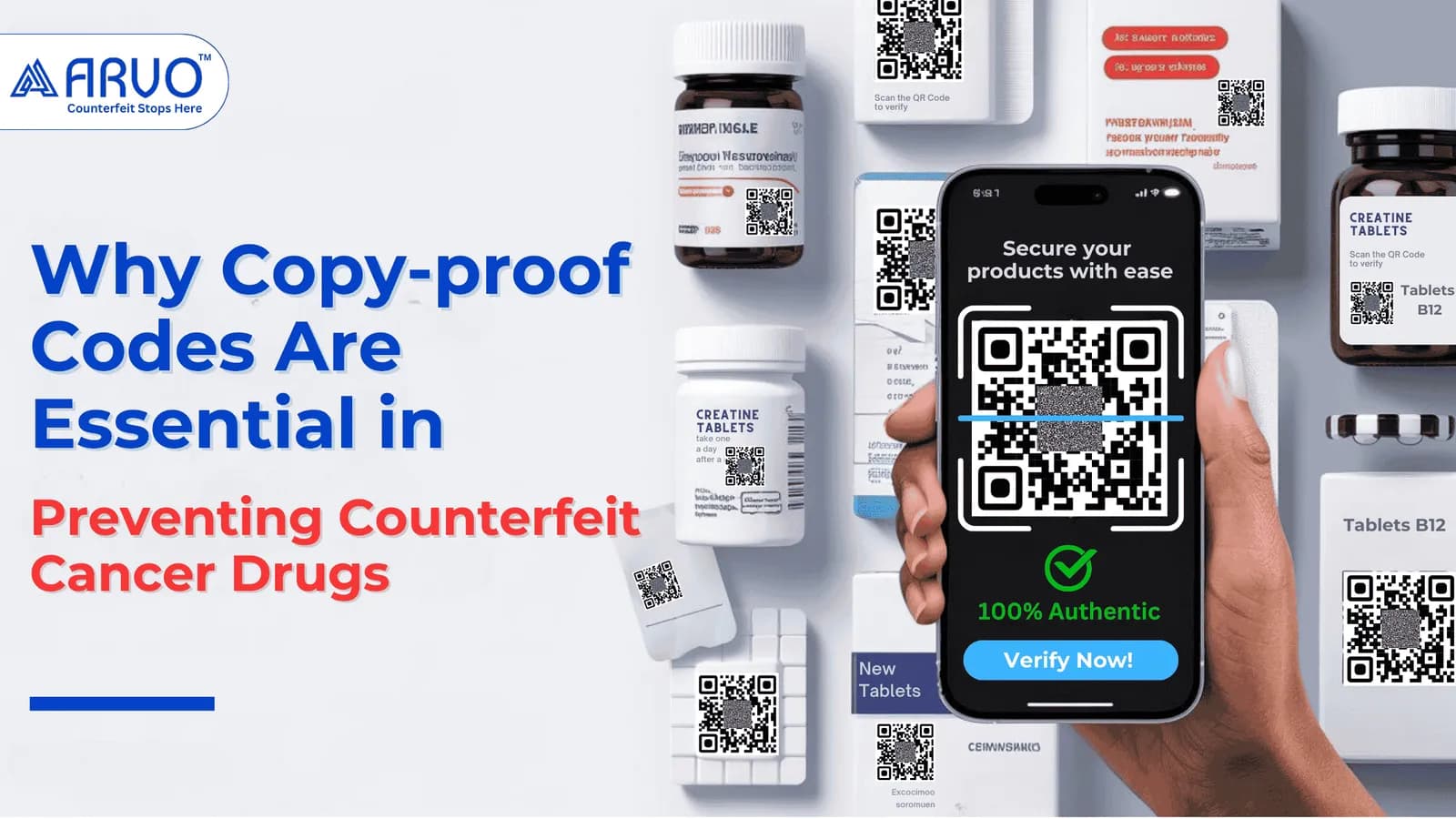
Counterfeit cancer drugs have become a significant concern, particularly in India, where nearly 35% of the world’s fake medicines originate. The impact is severe: these fake medications can lead to treatment failure, serious health complications, or even death.
To address this, the Indian government has mandated the implementation of QR codes on pharmaceutical packaging for over 300 top drug brands, including well-known medications like Dolo and Calpol. But is a standard QR code enough to combat the counterfeit problem effectively? To truly secure the supply chain, the industry must adopt advanced copy-proof QR codes.
The Problem: Counterfeit Cancer Drugs in India
Counterfeit drugs pose a severe threat, especially for life-saving oncology treatments. Consider the stark reality:
- 1 in 10 medical products in low- and middle-income countries are substandard or fake (WHO).
- 20% of the Indian pharmaceutical market is estimated to be infiltrated by counterfeit drugs.
For cancer patients who require precise, highly potent treatments, a fake drug is a death sentence. While the government’s push for QR codes is a step in the right direction, it is only the first step.
QR Codes: A Step Forward with Limitations
The introduction of QR codes aims to enhance drug traceability. When scanned, standard codes provide:
- Product identification codes
- Expiry dates
- Manufacturer details
However, basic QR codes have a fatal flaw: vulnerability to cloning. Counterfeiters can easily photocopy or digitally replicate a standard QR code and print it on thousands of fake boxes. If the technology cannot differentiate between the original print and a photocopy, the security is compromised. The technology behind QR codes must evolve to include tamper-proof and copy-proof features.
The Need for Advanced QR Technology
To address the limitations of basic barcodes, the pharmaceutical industry requires advanced solutions:
- Holistic Tracking Systems: Real-time visibility from the manufacturing line to the patient’s hands.
- Copy-Proof QR Codes: Designed with microscopic cryptographic patterns that are extremely difficult for counterfeiters to duplicate using standard printers or scanners.
- Tamper-Proof Labels: Physical seals that fracture or display void messages if someone attempts to open or alter the packaging.
| Feature | Standard QR Code | ARVO Copy-Proof QR Code |
|---|---|---|
| Data Storage | Basic text/links | Encrypted digital twin |
| Cloning Risk | Extremely High (Easily photocopied) | Very low (copy-proof code) |
| Supply Chain Visibility | Static point of scan | Dynamic, end-to-end blockchain tracking |
Regulatory Support and Industry Collaboration
The Drugs Controller General of India (DCGI) has enforced regulations requiring QR codes under the amended Drugs and Cosmetics Act. For these regulations to truly protect public health, collaboration is required:
- Regulatory bodies: Must advocate for non-cloneable technologies.
- Pharmaceutical companies: Must integrate secure tracking systems to protect brand equity and patient lives.
- Healthcare providers: Must educate patients on how to scan and verify their medications.
By working together, these entities can create a safer pharmaceutical system that ensures patient trust and safety.

Real-World Impact: How Advanced QR Technology Protects Lives
Consider a scenario where a cancer patient receives medication from a trusted pharmacy but is concerned about its authenticity. By scanning the QR code on the packaging with their smartphone, the patient accesses verified information such as the drug’s manufacturing details, batch number, and regulatory approvals. This process provides peace of mind and prevents the use of counterfeit drugs.
Real-life cases have shown that counterfeit cancer drugs can lead to severe health outcomes, including treatment failure and serious side effects. Advanced QR technology could prevent such incidents by ensuring that only authentic medications reach the patient.
ARVO’s Copy-Proof QR Solution
At ARVO, our defense-in-depth solution includes:
- Copy-Proof QR Codes: Our patent-pending technology ensures codes cannot be photocopied or replicated.
- Tamper-Proof Labels: Show any physical tampering with the packaging.
- Blockchain Security: We establish an immutable, transparent record of your product’s data, ensuring unparalleled integrity.
Conclusion: Act now!
The introduction of basic QR codes on pharmaceutical packaging was a positive start, but it’s not enough to stop sophisticated counterfeiters. To truly protect patients, the industry must adopt copy-proof QR codes.
By embracing these advanced solutions, the industry can create a future where patients trust the medications they rely on, ensuring patient safety and the integrity of the healthcare system. For more information on ARVO’s solutions, contact us today!
Questions answered in this article
- How do QR codes help fight counterfeit cancer drugs?
- A QR code stores a drug's origin, batch number, expiry date and manufacturer details. When scanned, it gives patients and healthcare professionals information to check the medicine.
- Can basic QR codes prevent counterfeiting?
- Not on their own. Counterfeiters can photocopy or digitally replicate a basic QR code and print it on fake boxes, which is why copy-proof and tamper-proof features are needed.
- How is ARVO's technology different from a standard QR code?
- ARVO combines copy-proof QR codes that cannot be photocopied or replicated, tamper-proof labels that detect and record physical tampering, and blockchain records of each product's data.
- What role does the DCGI play in QR codes on medicines?
- The Drugs Controller General of India enforces rules that require QR codes on drug packaging under the amended Drugs and Cosmetics Act, to improve traceability and transparency in the pharmaceutical supply chain.
- Why is industry collaboration needed to fight counterfeit drugs?
- Regulators should advocate non-cloneable technology, pharmaceutical companies should integrate secure tracking, and healthcare providers should teach patients to scan and verify their medicines. Together they can secure the whole supply chain.
Sources
- WHO, World Health Organization
- Drugs Controller General of India (DCGI), Central Drugs Standard Control Organisation