OEM Battery Passport Expectations 2026: What Indian Manufacturers Must Prepare For
OEM battery passport expectations for 2026: what OEMs want from battery suppliers, what India's draft BPAN proposes, and five steps to get your plant ready.
By Abhijeet Kumar, ARVOPublished Updated 5 min read
In short
OEMs now expect battery suppliers to provide a digital, machine-readable battery passport for every pack, not static certificates. It should link the pack to its materials, production and QA data, usage and end-of-life records. India's draft Battery Pack Aadhaar Number (BPAN) guidelines propose a 21-character identity per pack, so suppliers are preparing now.
- OEMs are moving from static certificates and manually shared documents to digital, verifiable, lifecycle battery passports.
- India's draft Battery Pack Aadhaar System, proposed by MoRTH, would give each battery pack a 21-character unique digital identity.
- The draft covers static and dynamic data, such as material composition, carbon footprint, state of health and usage history.
- Scattered data across ERP, MES, QA and legacy systems is the main reason suppliers struggle to meet OEM requests.
- Assigning an identity at production and keeping lifecycle data in one machine-readable platform makes records audit-ready for OEMs.
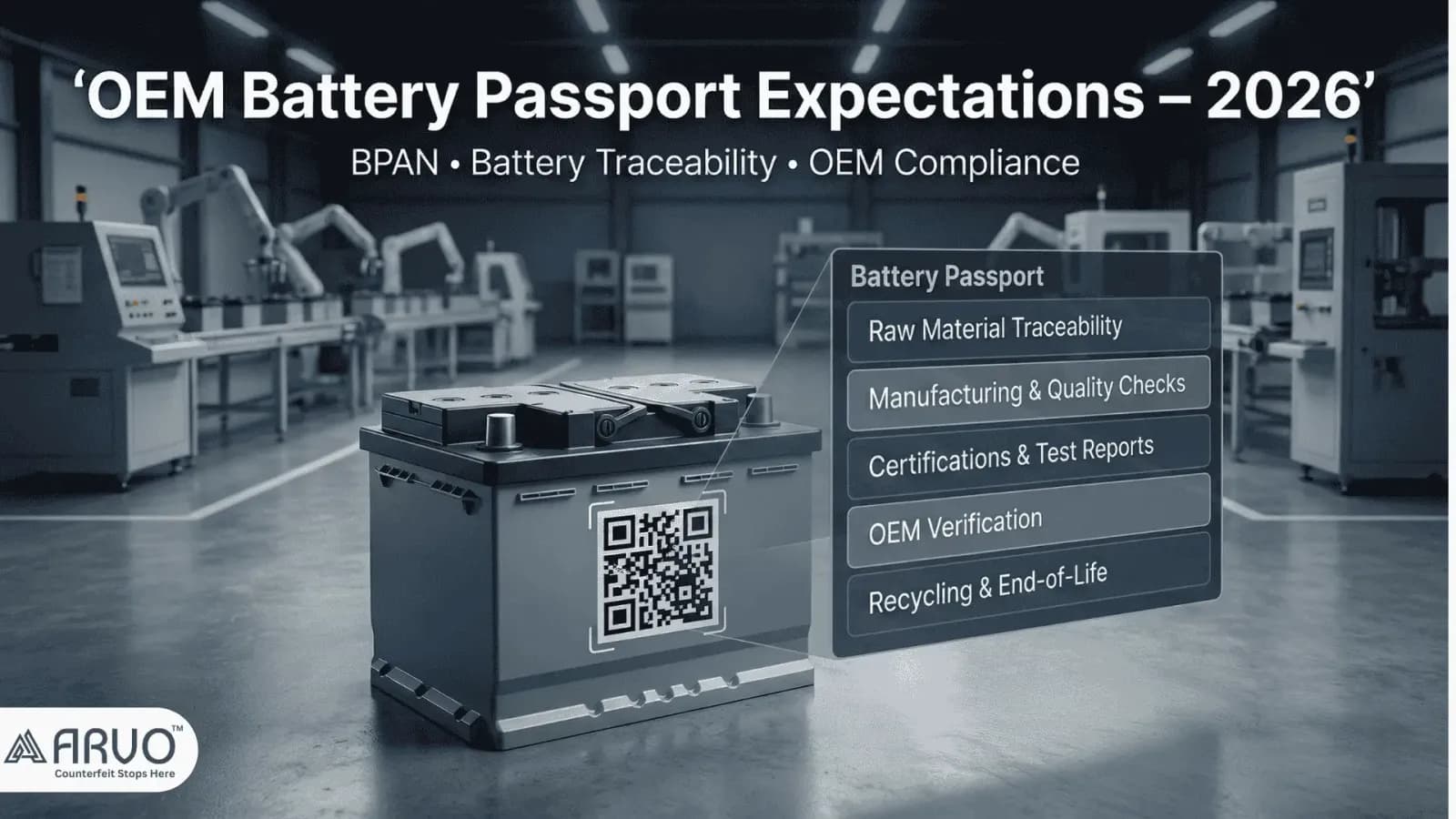
As India accelerates its electric mobility revolution, the era of “stick a QR code on a battery and call it traceable” is officially over. In 2026, OEM battery passport expectations are shifting from simple documentation to a digital lifecycle record. Global standards and India’s own Battery Pack Aadhaar Number (BPAN) initiative, a framework assigned to EV and industrial batteries above 2 kWh, are redefining the competitive landscape.
This blog breaks down what OEMs really expect, what India’s draft BPAN regulation means for manufacturers, and how you can prepare your operations to be compliant, efficient, and competitive.
What’s Changing: From Compliance to Digital Traceability
Today:
- OEMs accept static certificates and documents
- Suppliers manually share data
- Quality teams handle ad-hoc requests
In 2026:
- OEMs expect digital, verifiable, lifecycle battery passports
- Traceability must be instant, auditable, and machine-readable
- Compliance cannot be retrofitted; it has to be built into manufacturing processes
This transformation is driven by:
- Global battery passport standards focused on transparency and sustainability
- India’s own Battery Pack Aadhaar Number (BPAN) draft regulation
India’s BPAN (Battery Pack Aadhaar Number): A Snapshot of the Draft Regulation
India’s Battery Pack Aadhaar System is a draft framework proposed by the Ministry of Road Transport & Highways (MoRTH) to create a unique digital identity for each battery pack introduced in the Indian market.
What BPAN Is
- A 21-character unique digital ID assigned to every battery pack (including EV and industrial batteries above 2 kWh).
- Functions like an Aadhaar for batteries, enabling full lifecycle traceability, from raw material sourcing to disposal.
- Includes both static and dynamic data (e.g., material composition, carbon footprint, state of health, usage history).
Why BPAN Matters for Manufacturers
- Establishes a standardized digital identity for each battery pack.
- Makes battery regulation data accessible to regulators, OEMs, recyclers, and other stakeholders via an official portal.
- Requires batteries to be marked with the BPAN in a permanent, visible way that won’t degrade.
- Helps ensure safety, prevent counterfeits, and improve circular economy compliance.
What’s Still in Draft
The BPAN guidelines are currently in draft stage, undergoing stakeholder consultation and refinement. However, forward-looking OEMs and manufacturers are already preparing because this framework is likely to become a central compliance requirement.
The BPAN Revolution: India’s “Aadhaar” for Batteries
The Ministry of Road Transport & Highways (MoRTH) has proposed a 21-character unique digital identity for every battery pack. This BPAN functions exactly like an Aadhaar card for hardware, ensuring that raw material sourcing, carbon footprint, and state of health (SoH) are instantly auditable.
The 3 Pillar Expectations for OEMs in 2026
1. Verified Digital Identity (BPAN Readiness)
OEMs now demand that every battery has a machine-readable, 21-character BPAN. This is no longer a PDF; it is a live digital link that confirms:
- Manufacturer and Cell Origin.
- Material composition (Lithium, Cobalt, Nickel percentages).
- Compliance with the ACC PLI scheme for local value addition.
2. Dynamic Lifecycle Traceability
The “OEMs Battery Passport Expectations 2026” require dynamic updates. Static data is insufficient. Manufacturers must record:
- Production Phase: Quality Assurance (QA) and Batch testing.
- Usage Phase: Charge/discharge cycles and thermal events.
- End-of-Life: Recycling or second-life repurposing details.
3. Automated Compliance & Risk Mitigation
Manual document sharing is a bottleneck of the past. OEMs expect real-time queries through centralized portals like ARVO to verify safety standards and ESG (Environmental, Social, and Governance) targets.
1. Full Digital Battery Passport
OEMs want a digital battery passport, linking the physical battery to:
- Origin of raw materials
- Manufacturer details
- Supply chain data
- Performance metrics
- End-of-life or recycling history
This isn’t a PDF anymore, it must be:
- Machine-readable
- Accessible in real-time
- Tied to the BPAN identity
2. Lifecycle Visibility & Trust
OEMs demand transparency across the entire battery lifecycle because:
- Safety liabilities are increasing
- Environmental, Social, and Governance (ESG) criteria matter
- Second-life reuse and recycling require trusted data
True lifecycle visibility means capturing:
- Raw material traceability
- Production and QA reports
- Logistics and ownership history
- Usage and aging data
- Disposal or repurposing details
3. Instant OEMs Compliance Verification
Manual compliance reviews or document exchanges are becoming unacceptable to OEMs. They expect:
- Automated data access
- Real-time queries
- Audit-ready digital records
This accelerates approvals, reduces errors, and strengthens supplier credibility.
Factory Floor Reality: Why This Is So Hard
Many manufacturers today struggle because:
- Data is scattered across ERPs, MES, QA, and legacy systems
- Compliance data lives in silos
- OEM demands vary per partner
- Retracing lifecycle data is time-consuming
Without a central digital framework, meeting OEM expectations becomes chaotic, reactive, and error-prone.
Step-by-Step Preparation
- Assign unique digital identities (BPAN) at production.
- Centralize lifecycle data in one platform.
- Make data machine-readable (not just human-readable).
- Ensure audit-ready digital records are accessible to OEMs.
- Update records dynamically with usage and recycling data.
This approach turns compliance from a burden into a competitive advantage.
Why OEMs Prefer Suppliers with Digital Passports
Manufacturers using digital battery passports and BPAN-aligned systems gain:
- Faster OEM approvals
- Fewer compliance escalations
- Higher trust in tenders and bids
- Better integration with global traceability standards
In essence, compliance becomes a business accelerator, not a roadblock.
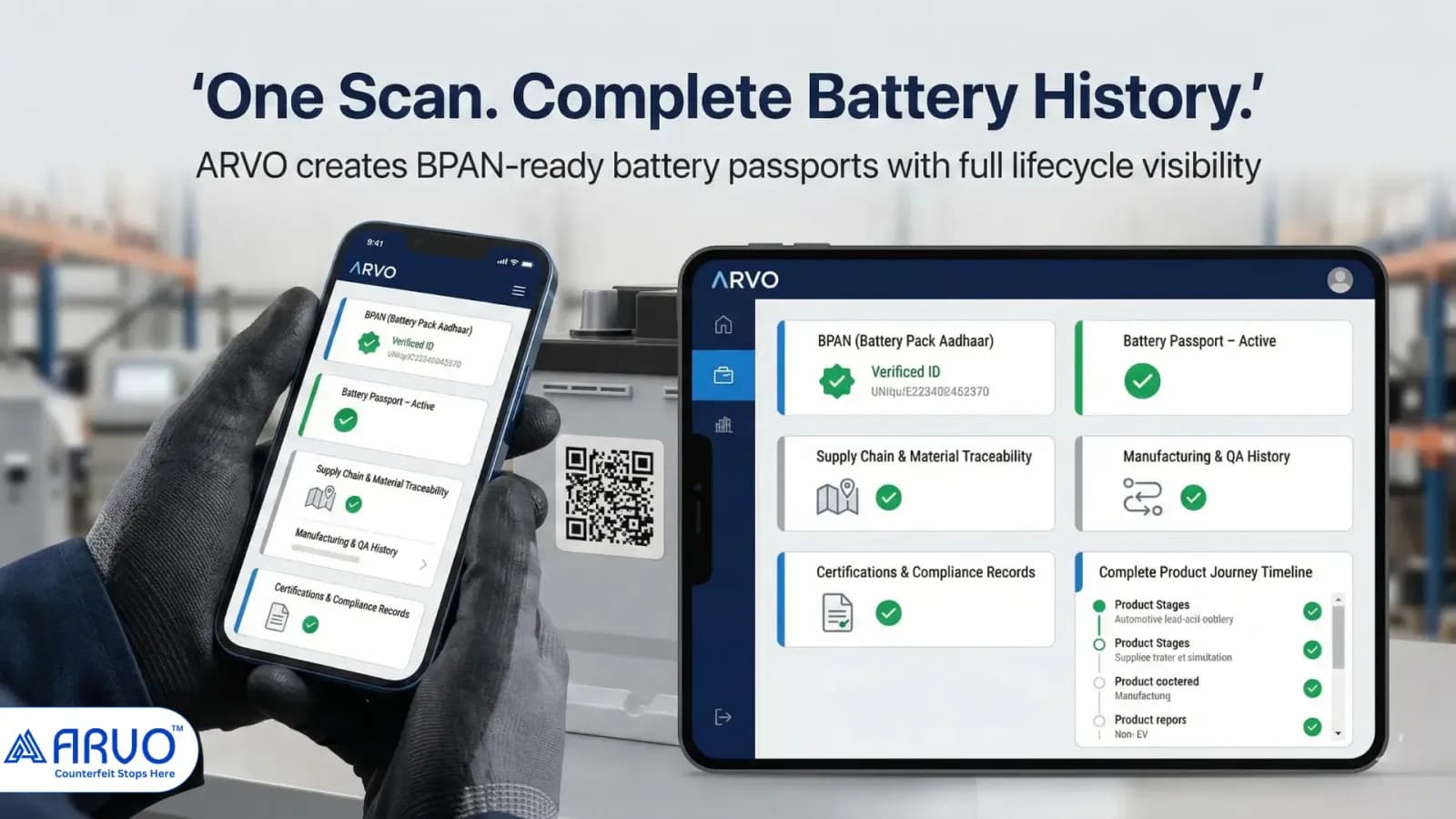
How ARVO Simplifies Your 2026 Compliance
At ARVO, we turn the complexity of BPAN and OEM expectations into a business advantage. Our platform provides:
- BPAN Generation: Automatic 21-character ID creation.
- Copy-Proof NOVA Codes: Secure physical marking for every battery pack.
- Audit-Ready Dashboards: Instant data access for your OEM partners.
With ARVO, battery passport readiness is no longer complex or disruptive, it becomes part of your operational DNA.
Ready to build BPAN-ready battery passports with full lifecycle visibility? Contact ARVO and prepare your compliance today.
Questions answered in this article
- What do OEMs expect from a battery passport in 2026?
- OEMs expect a digital, verified battery passport linked to each pack's lifecycle. The data should be machine-readable, trace the pack from raw materials to disposal and be available to them instantly rather than as PDFs.
- What is BPAN in India?
- BPAN, the Battery Pack Aadhaar Number, is a 21-character unique digital identity for each battery pack proposed in MoRTH's draft guidelines. It is meant to make each pack traceable across its life. The guidelines are still a draft under stakeholder consultation.
- Which batteries would need a BPAN?
- The draft guidelines cover electric vehicle batteries and industrial batteries above 2 kWh. They propose that the BPAN is marked on the pack in a permanent, visible way and that its data is uploaded to an official portal.
- Would BPAN include performance data?
- Yes, under the draft. It covers static data such as material composition and carbon footprint, and dynamic data such as state of health and usage history.
- How does ARVO help battery makers meet OEM expectations?
- ARVO creates BPAN-aligned digital identities, marks each pack with a copy-proof code and keeps lifecycle records on audit-ready dashboards that OEM partners can access.
Sources
- Draft Guidelines for Implementation of Battery Pack Aadhaar System, Ministry of Road Transport and Highways
- Ministry of Road Transport & Highways, Ministry of Road Transport and Highways