
Counterfeit auto parts have become a growing challenge for the global automotive industry. From brake pads to engine components, fake parts are infiltrating the aftermarket supply chain, causing financial losses and serious safety risks.
According to industry reports, counterfeit automotive components cost manufacturers billions annually while damaging brand reputation and consumer trust.
This is where automotive traceability plays a critical role.
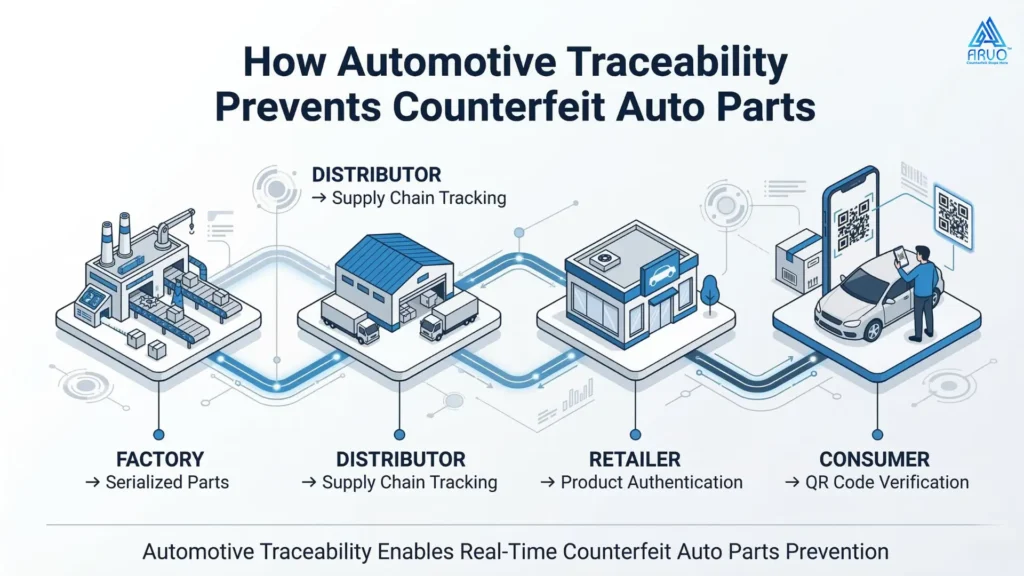
Automotive traceability allows manufacturers and aftermarket brands to track parts across the entire supply chain, from production to the end consumer. By implementing traceability technologies, companies can ensure product authenticity and strengthen counterfeit auto parts prevention strategies.
In this article, we explore 7 effective ways automotive brands can use automotive traceability to protect their aftermarket products from counterfeiting.
What is Automotive Traceability?
Automotive traceability refers to the ability to track and verify automotive components throughout the entire supply chain using technologies like serialization, QR codes, blockchain, and digital authentication labels.
With automotive traceability systems, manufacturers can:
- Track every product from factory to consumer
- Verify product authenticity instantly
- Monitor distribution channels
- Identify counterfeit products in the market
This visibility helps brands build stronger counterfeit auto parts prevention frameworks while ensuring transparency in the automotive supply chain.
Why Counterfeit Auto Parts Are a Growing Threat
The automotive aftermarket industry is particularly vulnerable to counterfeit products because of its complex distribution networks.
Common counterfeit automotive parts include:
- Brake pads
- Filters
- Engine components
- Electrical parts
- Lubricants
These fake parts can lead to:
- Safety risks for consumers
- Brand reputation damage
- Revenue loss for manufacturers
- Warranty fraud
- Legal liabilities
Implementing automotive traceability solutions helps automotive companies detect and eliminate counterfeit parts before they reach customers.
7 Ways Automotive Brands Can Prevent Counterfeiting Using Automotive Traceability
1. Implement Unique Product Serialization
Serialization is one of the most effective foundations of automotive traceability.
Each automotive component receives a unique serial number or digital identity, making it easy to track and verify throughout the supply chain.
Benefits include:
- Identifying counterfeit products quickly
- Monitoring distribution channels
- Authenticating products at any stage
Serialization ensures every automotive part has a traceable digital footprint.
2. Use Secure QR Code Authentication
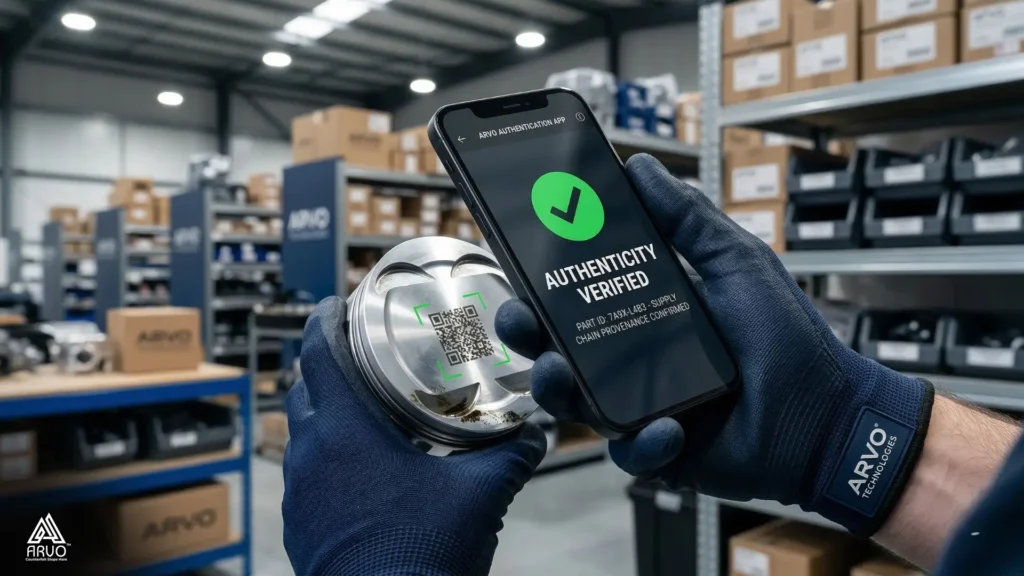
Secure QR codes allow customers, distributors, and retailers to verify product authenticity instantly.
With automotive traceability systems, scanning a QR code can reveal:
- Manufacturing details
- Batch information
- Supply chain history
- Product authenticity verification
This creates a powerful layer of counterfeit auto parts prevention while also engaging customers.
3. Track Products Across the Entire Supply Chain
Automotive traceability enables brands to track products from:
Manufacturing → Distribution → Retail → Consumer
Supply chain visibility allows companies to:
- Identify unauthorized distributors
- Detect product diversion
- Monitor geographic distribution
This transparency helps manufacturers detect counterfeit activities early.
4. Enable Consumer-Level Authentication
Consumers are becoming more aware of counterfeit products.
Automotive brands can empower customers to verify parts themselves using traceability technologies.
With a simple smartphone scan, customers can:
- Confirm product authenticity
- Access product information
- Report suspicious products
This strengthens counterfeit auto parts prevention by turning consumers into active participants in brand protection.
5. Monitor Market Activity Through Data Analytics
Modern automotive traceability platforms generate valuable data insights.
Brands can analyze scan data to identify:
- High-risk markets
- Suspicious distribution patterns
- Unauthorized resellers
- Counterfeit hotspots
These insights help companies proactively address counterfeit threats.
6. Strengthen Brand Protection in the Automotive Aftermarket
Automotive aftermarket products are especially vulnerable to counterfeiting because they pass through multiple distributors.
Automotive traceability helps brands:
- Protect aftermarket product lines
- Monitor distributor networks
- Identify grey market activities
- Maintain product authenticity across markets
This builds stronger automotive aftermarket brand protection strategies.
7. Improve Customer Trust and Brand Reputation
Consumers want assurance that the automotive parts they buy are genuine.
By implementing automotive traceability, brands can demonstrate transparency and product authenticity.
Benefits include:
- Increased consumer trust
- Higher brand credibility
- Reduced counterfeit risk
- Stronger customer loyalty
Traceability transforms brand protection into a competitive advantage.
The Future of Counterfeit Auto Parts Prevention
As the automotive industry becomes more digital and globalized, the risk of counterfeit products will continue to grow.
Technologies like:
- Digital traceability systems
- Smart packaging
- Blockchain authentication
- AI-powered supply chain monitoring
They are becoming essential tools for counterfeit auto parts prevention.
Forward-thinking automotive brands are already investing in automotive traceability solutions to secure their supply chains and protect consumers.
How ARVO Can Help You Implement Automotive Traceability
At ARVO, we help automotive brands protect their products and supply chains through advanced traceability solutions.
Our automotive traceability technology enables manufacturers to:
- Track automotive parts across the entire supply chain
- Authenticate products instantly using smart labels and QR codes
- Detect counterfeit products in the market
- Gain valuable insights through scan analytics
- Strengthen aftermarket brand protection strategies
With ARVO’s traceability solutions, automotive companies can improve counterfeit auto parts prevention, enhance transparency, and build stronger trust with distributors and customers.
Protect Your Automotive Brand Today
Counterfeit automotive parts pose serious risks to safety, brand reputation, and revenue. Implementing automotive traceability is one of the most effective ways to protect your aftermarket products and secure your supply chain.
Contact ARVO today to discover how our automotive traceability solutions can help safeguard your brand and prevent counterfeit auto parts.
FAQs
What is automotive traceability?
Automotive traceability is a system that allows manufacturers to track and verify automotive parts throughout the supply chain using technologies such as serialization, QR codes, and digital authentication.
How does automotive traceability prevent counterfeit auto parts?
Automotive traceability assigns unique digital identities to products, enabling manufacturers and consumers to verify authenticity and detect counterfeit products in the market.
Why is counterfeit auto parts prevention important?
Counterfeit auto parts can cause safety risks, financial losses, and damage to brand reputation. Prevention strategies help manufacturers protect consumers and maintain product quality.
What technologies are used in automotive traceability?
Common technologies include QR codes, RFID tags, blockchain tracking, serialization systems, and smart packaging authentication.