Accelerating Pharma Recalls with Instant Product Identification
How instant product identification speeds up pharma recalls: unit-level serialisation, 2D Data Matrix codes and scan histories that pinpoint affected units.
By Abhijeet Kumar, ARVOPublished Updated 4 min read
In short
Instant product identification speeds up pharma recalls by serialising every saleable unit with a 2D Data Matrix code holding product code, lot, expiry and a unique serial number. Scans along the supply chain record where each unit went, so a company can pull only the affected units and see which distributor, pharmacy or clinic scanned them last.
- Slow recalls put patients at risk, damage trust in the manufacturer and add retrieval, legal and regulatory costs.
- Serialisation labels the smallest saleable unit with a 2D Data Matrix code carrying the product code (NDC or GTIN), lot number, expiry date and serial number.
- Laws such as the US Drug Supply Chain Security Act and the EU Falsified Medicines Directive require unit-level serialisation and traceability.
- Linking units to cases and cases to pallets builds a digital pedigree, so a recall can target only affected units and show who last scanned them.
- The same serial checks help catch counterfeits, because a fake serial is either unrecorded or flagged as a duplicate.
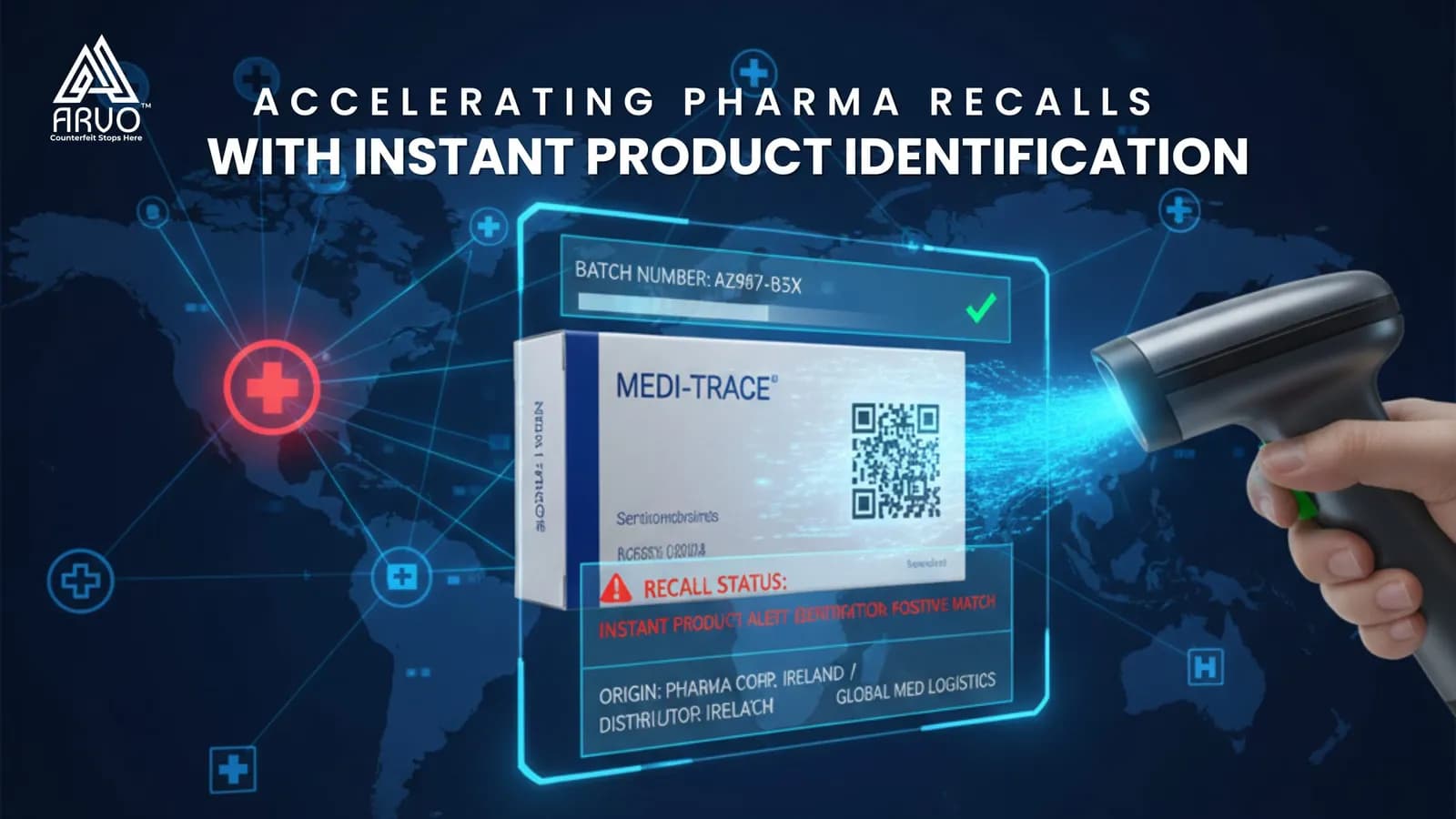
A product recall is a very important occurrence in the pharmaceutical industry. It is not only the issue of logistics and cost, but also patient safety and the trust of the population. Every second matters when a product turns out to be defective, contaminated, or mislabeled. Lives are directly impacted by the rate at which a company can locate, find, and eliminate the impacted medicine in the supply chain.
The challenge? The pharma supply chain is huge and complicated, and it may include manufacturers, distributors, wholesalers, pharmacies, and hospitals across the globe. In this case, instant product identification technology is no longer a nice-to-have but a necessity.
The Cost of a Slow Recall
Delays in recalls are dangerous. They:
Put Patients at risk: Defective or contaminated drugs left on shelves can result in severe health issues, injuries, or death, particularly in Class I recalls.
Damage Reputation: A sluggish, messy reaction undermines the confidence of the population in the manufacturer and the healthcare system. Millions and years can be spent to repair this damage.
Cause Financial Loss: Direct costs consist of retrieval, shipping, destruction, and investigation. Other indirect costs include lost sales, legal expenses, and regulatory fines, which can amount to tens of millions in the case of a major recall.
The old, paper-intensive method of aligning the recall notices with the physical inventory is just too slow to meet the needs of the modern global and high-volume market.
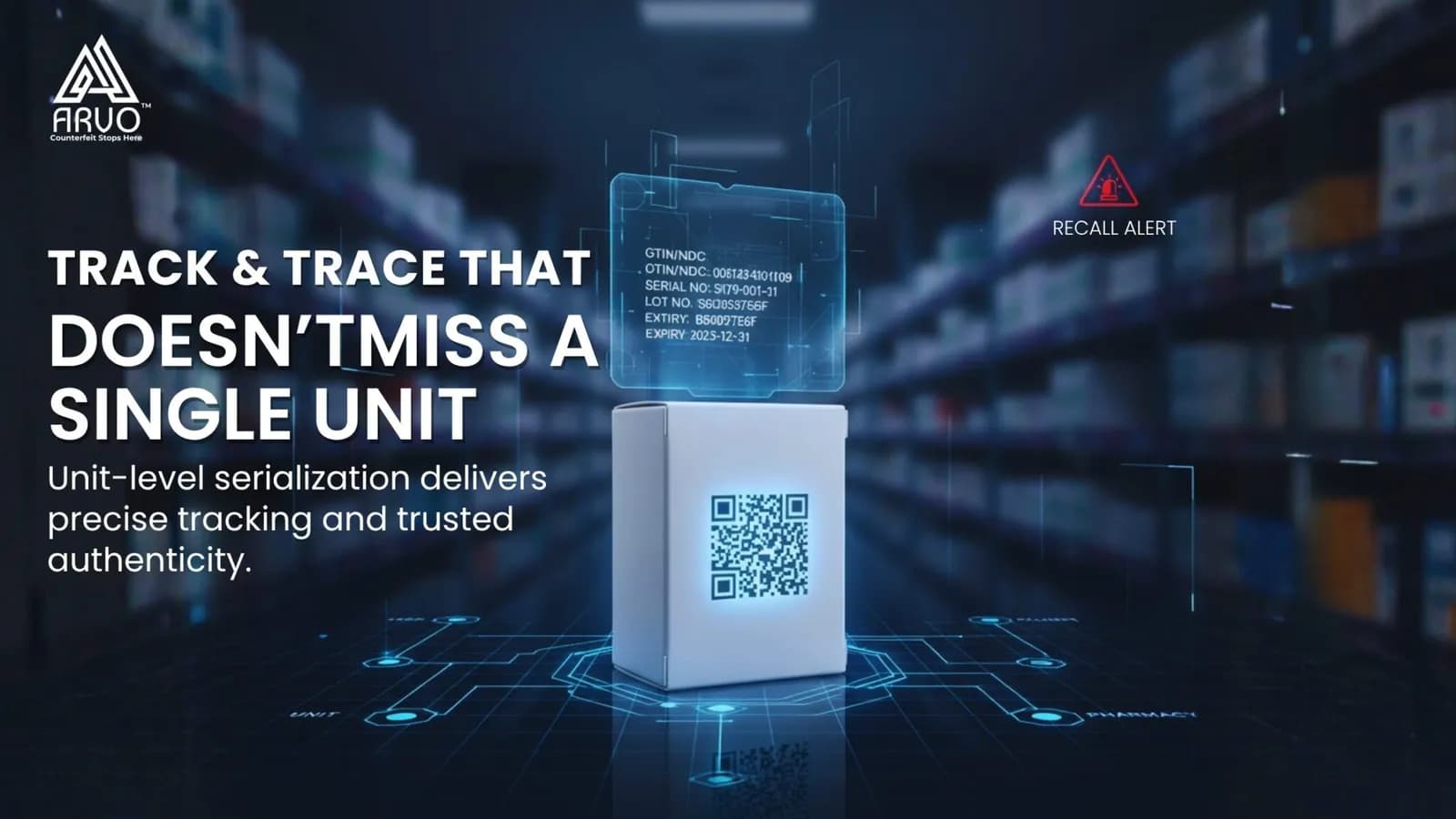
The Power of Instant Product Identification: Track & Trace Technology
Strong unit-level traceability solutions primarily enable instant product identification, which is frequently mandated by international laws, including the U.S. Drug Supply Chain Security Act (DSCSA) and the EU Falsified Medicines Directive (FMD). The fundamental technology is serialization: labeling the smallest marketable unit of a drug (a bottle or box) with a serial number. It typically appears in the form of a 2D Data Matrix barcode, which includes important information: Product Code (NDC or GTIN), Lot Number, Expiration Date, and Unique Serial Number.
Instant ID is a revolution in the recall process:
- Pinpoint Accuracy: Rather than recalling a whole lot, which may contain millions of units, instant identification allows companies to recall only the affected specific units, which are typically the ones that are serially numbered. To illustrate, in case there was a defect in one line of production during an hour, only the boxes produced during that hour are pulled.
- Real-Time Location: The serial numbers of products are scanned and stored as they pass through the supply chain, connecting each unit to a case and a case to a pallet. This forms an unalterable digital history – a digital pedigree. During a recall, a central system can immediately request the network to display the name of the specific distributor, pharmacy, or clinic that scanned the affected numbers last.
- Rapid Notification and Retrieval: Digital notification can be sent and automatically compared with the current inventory of a recipient. This aspect removes manual inspection, reduces the amount of time required by the staff to conduct a shelf walk, and quarantines the defective product instantly.
- Counterfeit Prevention: Although it is not the primary objective of recalls, such technology combats counterfeit drugs as well. A distributor can scan a serial number and ensure that the product is not a fake that was put in the chain.
Moving Forward: Beyond Compliance
Although regulatory compliance is a motivator to most traceability implementations, operational excellence and enhanced safety are the actual benefits. The pharmaceutical companies that employ instant product identification shift from a reactive method of scrambling to locate the products after a defect is discovered to a proactive one. They also have complete visibility of the supply chain, which enables them to isolate and freeze defective inventory before it is delivered to the consumer. The future of pharmaceutical safety depends on quick, precise information. The immediate identification of products can be seen as a digital barrier that safeguards patients and maintains the integrity of the drugs they need.
Questions answered in this article
- What is the difference between a lot recall and a unit-level recall?
- A lot recall pulls every product made in a period or under one batch number, even though most units are not defective, which is costly and wasteful. A unit-level recall, made possible by instant identification, pulls only the affected units.
- Is unit-level product identification mandatory for pharma companies?
- In most major markets, yes. The US DSCSA and the EU Falsified Medicines Directive require product serialisation and unit-level traceability, so companies can confirm genuine drugs and remove counterfeit or suspicious products quickly.
- How does instant product identification help stop counterfeit drugs?
- Each unique 2D code is linked to a secure central database. A scan checks that the serial number, product code, lot number and expiry date match the record. A counterfeit's serial is either missing or flagged as a duplicate, and the user is warned.
- What is the standard format for the unique identifier?
- The 2D Data Matrix barcode. It stores the GTIN or NDC, serial number, lot number and expiry date in a small space, holds far more than a linear barcode and can be read even when partly damaged.
Sources
- Drug Supply Chain Security Act (DSCSA), U.S. Food and Drug Administration
- Falsified medicines, European Commission