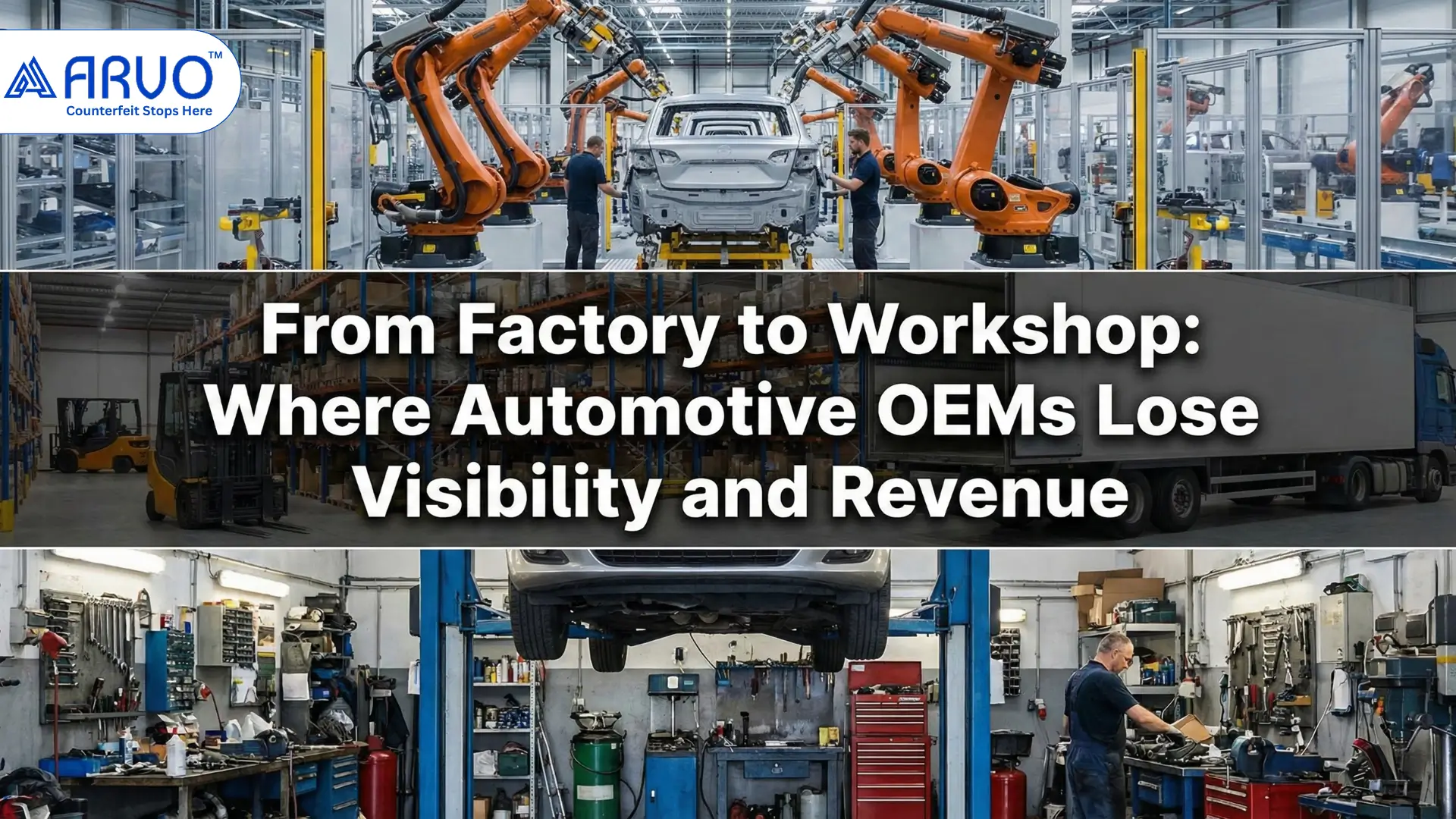
Automotive supply chain visibility has never been more complex or more exposed for modern OEMs. While manufacturing operations are increasingly digitized, visibility often breaks down the moment parts leave the factory floor. As components move through distributors, dealers, and finally into workshops, data becomes fragmented, assumptions replace verification, and risk quietly accumulates.
The result? Lost revenue, inflated recalls, warranty leakage, and reduced aftermarket control.
This is why end-to-end supply chain visibility in automotive ecosystems is no longer a technology upgrade; it is a strategic necessity.
The Illusion of Control in Automotive Supply Chain Visibility
On paper, most OEMs appear to have strong systems in place:
- ERP platforms track production and dispatch
- Inventory systems record stock movement
- Dealer systems capture sales and service activity
Yet despite this, OEMs continue to face:
- Unexpected recall expansion
- Warranty claims that they struggle to validate
- Counterfeit and grey-market part circulation
The core issue isn’t the absence of data.
It’s the absence of verified visibility across the full journey.
Where Visibility Breaks Down Across the Supply Chain
1. Manufacturing: Visibility Stops at Shipment
Inside the factory, OEMs maintain strong control:
- Parts are produced, labeled, and quality-checked
- Shipments are recorded in ERP systems
However, once parts are dispatched:
- Tracking often remains at the batch or shipment level
- Individual part lineage is lost
- OEMs can no longer confirm where specific parts ultimately end up
This creates the first major gap in automotive supply chain visibility.
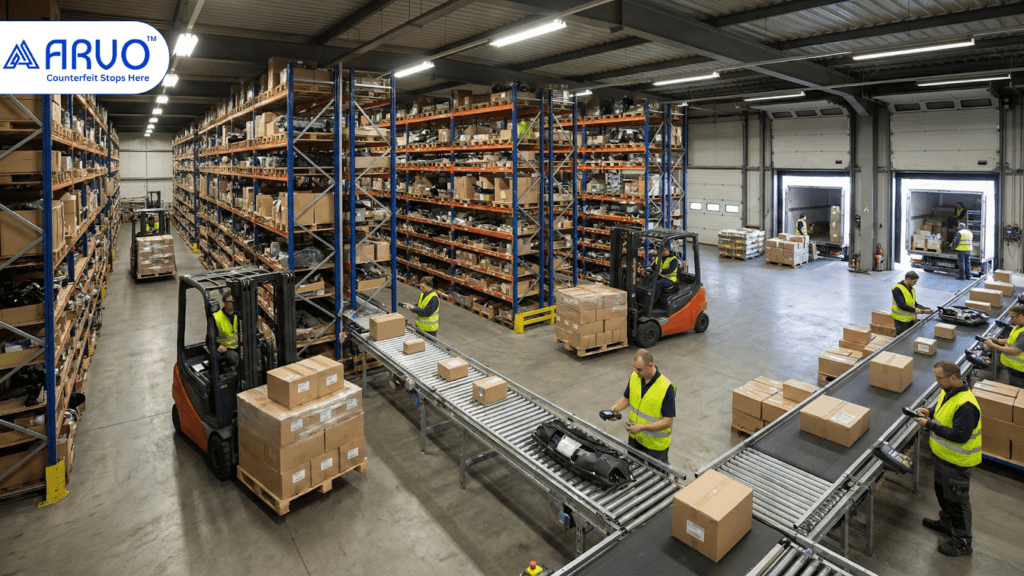
2. Distribution: Aggregation Creates Blind Spots
At distribution hubs, parts are:
- Consolidated
- Split across regions
- Repacked and re-routed
ERP systems record stock movement, but they rarely confirm:
- Whether the right parts reached the right locations
- Whether diversions occurred in transit
This is where OEM supply chain risk begins to scale silently without operational alerts.
3. Dealers: Data Exists, Verification Doesn’t
Dealers typically operate multiple systems:
- OEM portals
- Dealer management systems
- Manual or semi-digital processes
From the OEM’s perspective:
- Parts appear as “sold” or “installed.”
- Warranty claims are processed post-facto
What’s missing is dealer and workshop verification at the moment of handoff:
- Was the part genuine?
- Was it installed on the intended vehicle?
- Was it replaced, reused, or substituted?
Without verification, OEMs are forced to trust downstream data they cannot validate.
4. Workshops: The Final and Largest Visibility Gap
Independent workshops represent the most difficult environment to control.
Here:
- OEM parts mix with aftermarket alternatives
- Counterfeit and lookalike components circulate easily
- Installation data is inconsistent or unavailable
For OEMs, this leads directly to:
- Aftermarket revenue leakage
- Increased brand and safety risk
- Disputed warranty and recall claims
Without visibility at this stage, aftermarket control becomes nearly impossible.
Why ERP Data Alone Is Not Enough
ERP systems are built for:
- Planning and forecasting
- Financial reporting
- Internal operational control
They are not designed for real-world verification across external stakeholders.
ERP can tell you:
- What should have happened
It cannot reliably tell you:
- What actually happened at each handoff
True end-to-end supply chain visibility in automotive operations requires extending beyond ERP, into the physical flow of parts.
What End-to-End Visibility Actually Means in Practice
End-to-end visibility is not a dashboard or a report.
It is a continuous, verified awareness of part movement and usage.
In practical terms, it means:
- Every part has a unique digital identity
- Every transfer is verified, not assumed
- Every installation can be validated
- OEMs can trace parts forward and backward from the factory to the workshop
This level of visibility transforms traceability from a compliance function into a strategic control system.
How Verification at Handoffs Changes Everything
The shift from tracking to verification fundamentally changes OEM control.
Verification enables OEMs to:
- Confirm authenticity at each handoff
- Detect diversion and substitution early
- Limit recall scope to actual exposure
- Approve warranty claims based on verified installations
This is where platforms like ARVO play a critical role by embedding verification directly into real-world supply chain operations.
How ARVO Helps OEMs Regain End-to-End Visibility
ARVO is designed to close visibility gaps beyond the factory, where most revenue and risk leakage occurs.
Part-Level Digital Identity
ARVO assigns a unique, scannable identity to each part or batch, creating a persistent digital record that travels with the product across the supply chain.
Verified Handoffs Across the Network
ARVO captures real-world verification at:
- Manufacturing dispatch
- Distribution receipt and transfers
- Dealer handovers
- Workshop installations
Each scan confirms where the part is, who handled it, and when.
Dealer and Workshop Verification Without Disruption
ARVO enables simple verification workflows that integrate seamlessly into dealer and workshop operations, without requiring system overhauls or process complexity.
Stronger Aftermarket Control
By extending visibility into downstream channels, ARVO helps OEMs:
- Reduce counterfeit exposure
- Identify grey-market diversion
- Protect genuine aftermarket revenue
Traceability That Drives Business Decisions
ARVO links traceability data to recall, warranty, and risk decisions, helping OEMs move from reactive firefighting to proactive control.
The Business Impact of Automotive Supply Chain Visibility
OEMs that achieve end-to-end visibility gain:
- Faster and more precise recall containment
- Lower warranty leakage
- Reduced operational risk
- Stronger dealer and workshop accountability
Most importantly, they protect revenue that would otherwise disappear quietly across unverified handoffs.
Conclusion: The Path to Total Visibility
Visibility loss does not happen in one place.
It happens gradually, at every unverified transfer of responsibility.
For Automotive OEMs, the real question is no longer where visibility is lost, but how long they can afford to operate without closing those gaps.
End-to-end supply chain visibility is no longer optional.
It is the foundation for sustainable growth, risk control, and aftermarket confidence.
Frequently Asked Questions (FAQs)
What is end-to-end supply chain visibility in automotive?
It is the ability to track and verify automotive parts across their full lifecycle, from manufacturing to dealer and workshop installation, using real-world, part-level data.
Why is ERP not enough for automotive supply chain visibility?
ERP systems capture planned transactions, not verified physical events. They lack part-level validation at external handoffs, where most visibility gaps occur.
How does poor visibility affect OEM revenue?
It leads to larger recalls, higher warranty fraud, aftermarket revenue leakage, and increased brand and compliance risk.
Why is dealer and workshop verification important?
Verification ensures genuine parts are installed correctly and warranty claims are based on factual, validated data, not assumptions.
How does ARVO support automotive supply chain visibility?
ARVO provides part-level digital identity and real-time verification across the supply chain, enabling accurate traceability beyond ERP systems.
Can ARVO help reduce recall and warranty costs?
Yes. Verified data allows OEMs to limit recall scope, validate claims, and reduce unnecessary operational expenses.